
The United Nations commemorated the first Day against Islamophobia on Friday at a special event in the General Assembly Hall.
Speakers stressed “the need for concrete action in the face of rising hatred, discrimination and violence against Muslims.
Last year, the GA unanimously adopted a resolution proclaiming March 15 as the International Day against Islamophobia.
The resolution calls for a “global dialogue to promote tolerance, peace and respect for human rights and religious diversity”.
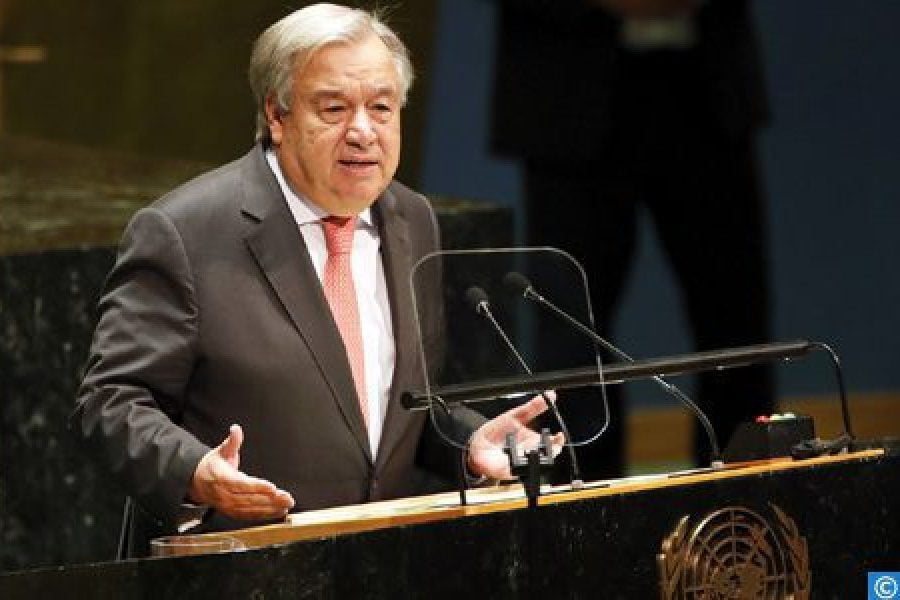
The UN Secretary General, António Guterres, says that nearly two billion Muslims in the world come from all corners of the globe.
They “reflect humanity in all its magnificent diversity,” but often face “bigotry and prejudice simply because of their faith.
Muslim women face “triple discrimination” because of “their gender, ethnicity and religion,” the UN said in a background note.
The event was co-hosted by Pakistan, whose Foreign Minister, Bilawal Bhutto Zardari, stressed that Islam is “a religion of peace, tolerance and pluralism.”
“Although Islamophobia is not new, it is a sad reality of our times that is only increasing and spreading,” he said.
Also chairman of the Council of Foreign Ministers of the Organization of Islamic Cooperation (OIC), Zardari said that “since the tragedy of 9/11, animosity and institutional suspicion towards Muslims and Islam around the world have only grown to epidemic proportions,” through a narrative that “associates Muslim communities and their religion with violence and danger.
For his part, the president of the UN General Assembly, Csaba Kőrösi, noted that Islamophobia is “rooted in xenophobia, or fear of foreigners and the unfamiliar, and is reflected in discriminatory practices, such as travel bans, hate speech, bullying, and targeting of the Other.”
In this sense, he called on countries to “respect freedom of religion or belief, which is guaranteed by the International Covenant on Civil and Political Rights.”Guterres stressed the responsibility of all to “challenge Islamophobia or any similar phenomenon, to denounce injustice and to condemn discrimination based on religion or belief – or lack thereof.
He said the rise of this phenomenon “is an inexorable part of the resurgence of ethno-nationalism, neo-Nazi white supremacist ideologies, and violence targeting vulnerable populations, including Muslims, Jews, certain Christian minority communities, and others.”




add your comment
Terms of publication : Not to offend the writer, people, sacred things, or attack religions or the divine self, and refrain from racist incitement and insults.