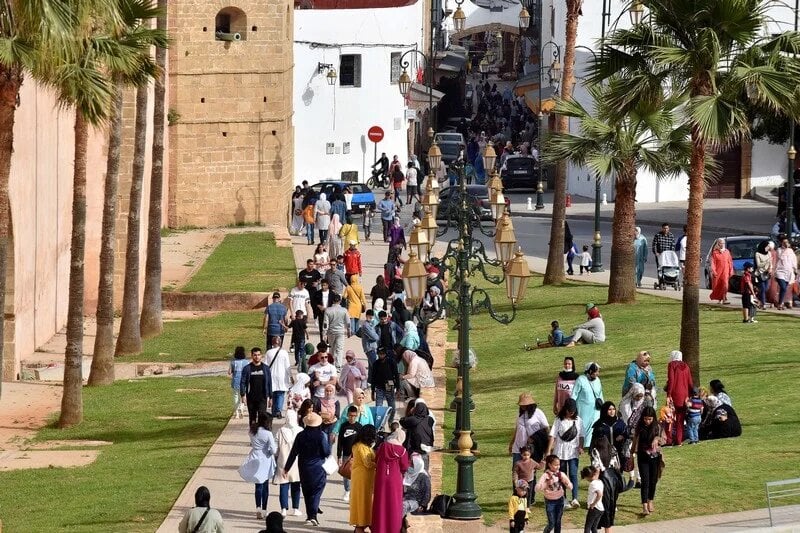
Moroccans believe that couples struggle when the wife makes more money than the husband, according to a recent field study conducted by the House of Representatives of the Moroccan Parliament, issued this week.
The study monitors the expectations of female and male citizens, by diagnosing their reality, dissecting expectations, answering public concerns, and translating them into summaries and recommendations, monitored by a solid scientific study.
The Parliamentary field-based output, first of its kind since 1963, unveils the dormant male-dominated mentalities still ruling Moroccans’ interpersonal relations, within families, couples and professionally.
Consisting of sample of units not exceeding 1,600, the study used questionnaire forms to collect data, which included 49 questions.
This study highlighted the family as the first building block of society in Morocco, the school and the university for their roles in forming the citizens of the future, and the hospital as the original space to ensure the effective enjoyment of women and male citizens of the right to health, pointing out that the administration occupied a large area within the study’s attention, as it provides services to all.
The study showed that most Moroccans prefer to resort to the male head of household in family dialogue, as 624 respondents supported this option, which is double the proposed security and judicial solution, which did not exceed 212.
In contrast, only 5% of respondents suggested turning to civil society associations active in women’s rights to resolve issues related to women in difficulty or at the heart of inter-personal conflicts.
Moroccans do not favor women resorting to friends and neighbors to protect themselves from husband violence, as the rate of support for this proposal did not exceed 0.9%.
More surprisingly, respondents agreed on the need for spouses to contribute together to expenses for the household, and considered that the wife’s access to a higher income than the husband creates problems within couples.
The majority of respondents believed that obtaining employment is the means for women to obtain their independence, while agreeing it is the men’s responsibility to financially take care of the home and children.
Most respondents supported prioritizing men in the right to work over women when there were few job opportunities.
The study showed that Moroccan society suffers from a crisis of confidence among citizens, as 40% are characterized by zero and weak confidence in most people.
36% have moderate confidence in others, while only 4% of those who have full confidence in others, and 23% said that their trust towards others “is okay.”
In contrast, most Moroccans mainly trust the family, with 1,014 interviewees expressing confidence in their families.
The school, the university and the maintenance of public security received moderate confidence, while the public hospital, the court, the association, radios, social networks and public administrations received little confidence.
The study dealt with trends and expectations of female and male citizens regarding the extent to which society values are manifesting in public, private and civil institutions such as the family, hospital, school, contracting, administration, court, university, media, and association.
The study indicates that values are an important component of society’s functioning, as they guide decisions, choices and behavior of institutional actors, and society’s relations with the outside world, drawing for its members broad outlines that they do not have the right to deviate from.
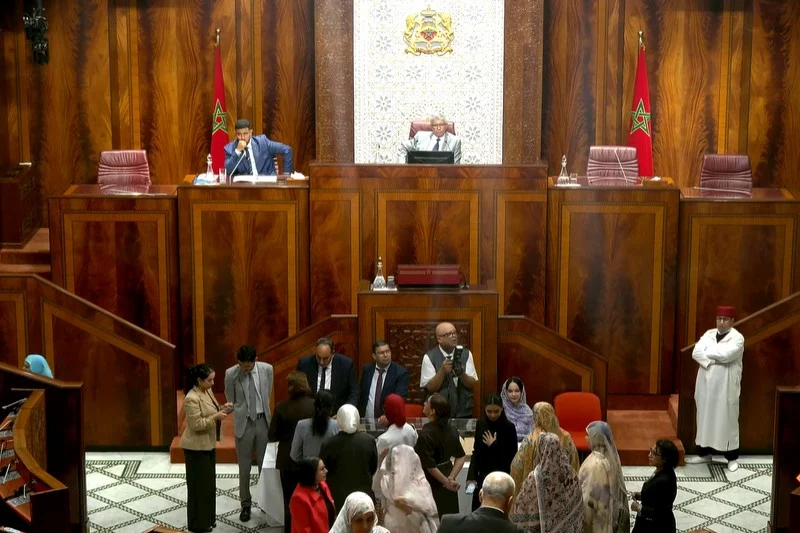
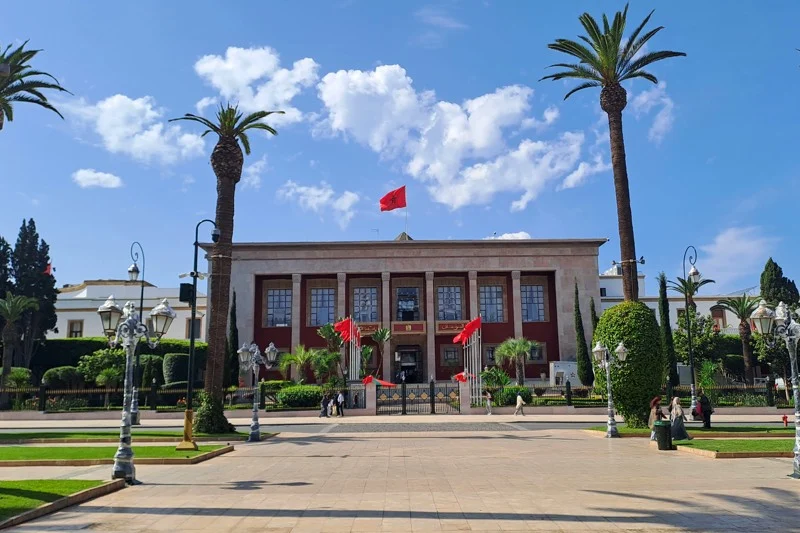
Speaker of the House of Representatives Rashid Talbi Alami, revealed on Wednesday the details of the national field study on “values and their institutional implementation: changes and Moroccan expectations.”
Talbi Alami explained in a speech during the opening of the meeting to present this field study in the House of Representatives, that this study comes in the context of a strategic direction that embodies the permanent openness of the House of Representatives to the scientific environment, and enhances the accumulations achieved by our country in the field of national studies and reports.
The Speaker pointed out that in order to ensure results that reflect the attitudes of female and male citizens in the regions of the Kingdom, the Council was keen to include all Moroccan regions, taking into account the demographic disparity between research fields by medium (urban-rural), in addition to the gender variable (males-female), and distribution by age groups.
He stressed that the conclusions and recommendations of this study will constitute an important beacon and reference, which will help the members of the House of Representatives in their parliamentary tasks, in a way that makes the expectations of citizens and citizens produced by the summaries of field research for the study, essential elements absorbed by legislation, control and evaluation.






add your comment
Terms of publication : Not to offend the writer, people, sacred things, or attack religions or the divine self, and refrain from racist incitement and insults.