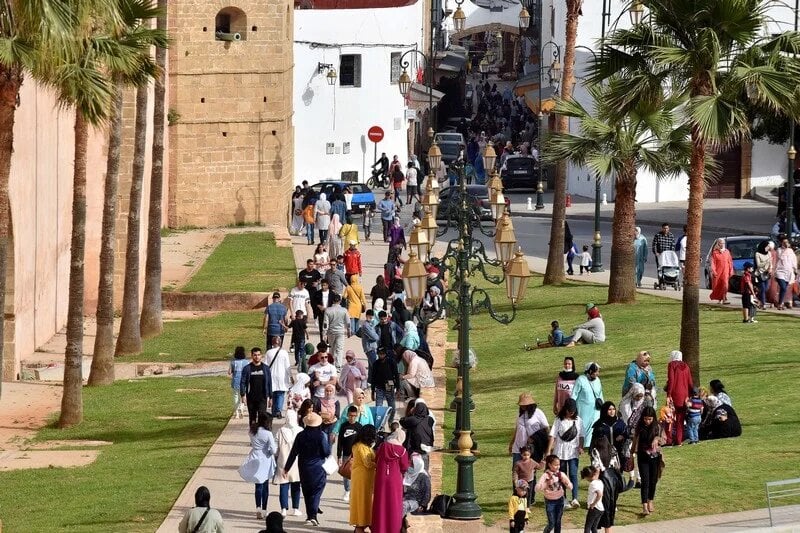
Rural Moroccan women are migrating to urban areas at unprecedented numbers, reveals a recent study from the High Commission for Planning (HCP).
The study, titled the “Summaries of the HCP,” describes the situation of rural migrants in Morocco, which saw a feminization of the exodus.
the number of women, young people, and married couples leaving rural municipalities to settle in cities between 2009 and 2014 has increased significantly.
The report focused on what is considered a fundamental challenge of growth and urbanization: the current of rural migration.
This remains a comparatively little documented topic due, in part, to a shortage of data covering the entire Moroccan territory.
Between 2009 and 2014, 760,000 Moroccans left rural municipalities to settle in cities, representing an average annual flow of 152,000 migrants.
According to HCP, this rural migration accounts for almost 20.7% of Morocco’s total internal migrant population and 1.1% of the rural population in 2014.
The rural exodus’ contribution to city population increase is visibly reducing. Estimated at roughly 43% between 1971 and 1982, 40% between 1982 and 1994, and 35% between 1994 and 2004, this contribution is at 33% between 2004 and 2014.
The report indicates that women outnumber men in the rural migrant population, with a feminization rate of 55.5%.
Surprisingly, migrants’ marital status is characterized by a majority of marriages: 67% are married compared to 60% of rural dwellers; 27.3% are unmarried (compared to 33.2%); and 5.6% are divorced or widowed (compared to 6.8%).
The reduction in the weight of rural exodus in urban demographic growth can be explained by the relative retention exercised by the countryside on its populations as a result of rural development efforts, particularly in the fields of electrification, drinking water supply, school construction, and opening up through the development of the road network.
Furthermore, the advancement of communication and transportation, as well as the dissemination of information conveyed by the media (satellite television, radio, telephone, and so on), have become important factors in the retention of rural people in the countryside, acting in opposition to the secular attractiveness of cities, explained the report.
However, HCP observed that the urban environment is gaining more and more territory at the expense of the rural environment as the number of cities and urban centers increases and their perimeters expand.




add your comment
Terms of publication : Not to offend the writer, people, sacred things, or attack religions or the divine self, and refrain from racist incitement and insults.