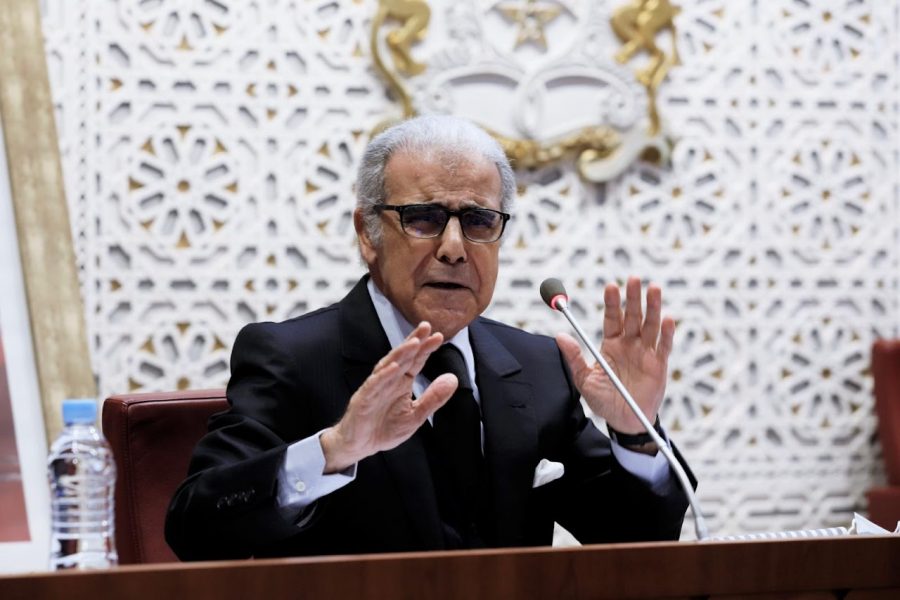
Bank Al-Maghrib recently published four new research notes, diving into current inflation, its affects and possible projections.
Bank Al-Maghrib explained that the research notes pertain to “the contributions of domestic and external factors to the growth of inflation in Morocco”, “the financial cycle, the real cycle, and the transition of monetary policy in Morocco”, and “Determinants of recovery efforts” in the country.
These publications represent an opportunity to share the results of researchers at Morocco’s central bank, their partners and the general public, shedding light on the driving factors that led to BAM’s recent policies.
The new research paper notes that since the international financial crisis in 2007, Morocco, like many countries, has witnessed “a long period of moderate inflation, accompanied by stagnation of economic activity and low interest rates.”
“2022 marked a turning point,” says BAM, after this trend began to reverse, before inflation continued to rise « amid strong pressures caused by high commodity prices. »
The research document is the output of an ad-hoc a panel of experts and analysts, and reduces the impact of domestic demand on the development of inflation in Morocco.
“Results of empirical research proved the dominant role of external factors in explaining inflation dynamics, especially in recent years,” says the document, pointing out through the presentation of datagraphics and various indicators that “the inflationary trajectory in the world and Morocco is a repercussion of the health crisis, which noted a clear rise since the end of 2021, even before the outbreak of the war in Ukraine.”
The BAM experts stressed that “the aim of this output is to analyze the determinants of inflation in Morocco over the past decade, as this period was marked by many important points and prominent events at the national and international levels,” that disturbed the planned trajectory and contradicted projections.
While the researchers highlight “the disproportionate impact of the pandemic and the resilience of enterprises clearly varying between the economies of countries,” they say that “it is likely to have helped ease downward pressures on inflation, giving more severity to upward pressures.”
“Supply difficulties caused by disruptions associated with value chains and the increase in transport and logistics costs following the rise in the prices of raw materials, especially energy and food, also contributed significantly to the high inflation rate in Morocco.”
The first section of the research note dealt with “the contribution of controlled inflation to the stability of the macro-economic framework”, while the second explained “the major developments of inflation in Morocco in recent years”, as the third was devoted to reviewing the results of estimating metrics of the “Phillips curve.”
The Phillips curve is defined as a “standard” model that analyzes inflation dynamics according to three components: “economic activity, past inflation, and inflation expectations.”
The results of BAM’s estimates revealed significant scientific research findings and conclusions for the national economy, most notably that “domestic demand has an increasingly weak impact on the development of inflation in Morocco.”
This finding could be the precursor to many institutions’ conclusion that, although authorities wish to slow down demand through monetary policy, little to no affect can be seen on inflation rates.
The second conclusion was that “inflationary dynamics are mainly influenced by the past (continuity and stability),” says BAM’s research, adding that “in the wake of Morocco’s accelerated integration into the global economy, it is recorded that the role of external factors is greatly enhanced in the dynamics of inflation in the Kingdom.”
“In light of shifts and changes in monetary policy, inflation expectations are getting more influential,” the researchers concluded.
The publication of this research make it possible to contribute to the debate on economic and financial issues, which has become a subject of concern in Morocco’s current economic climate.
Indeed, this most recent inflation has been the subject of great public interest, considering it was most felt after the “devastating” affects of the pandemic.





add your comment
Terms of publication : Not to offend the writer, people, sacred things, or attack religions or the divine self, and refrain from racist incitement and insults.