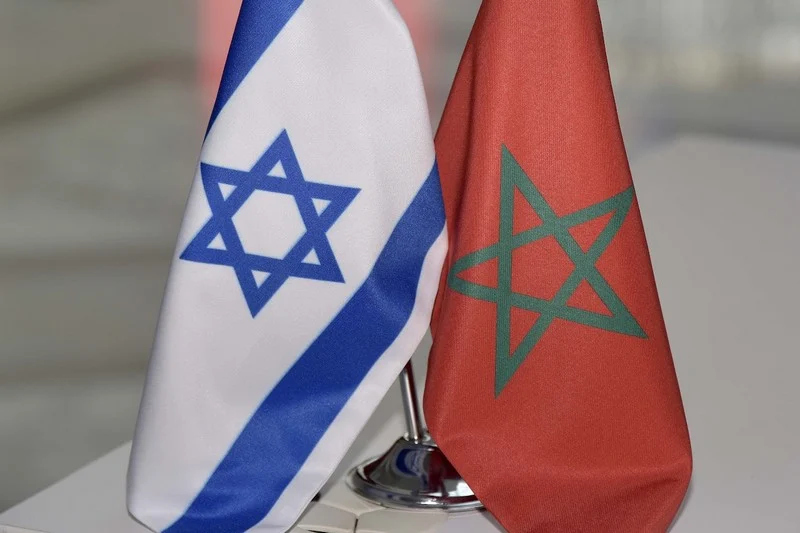
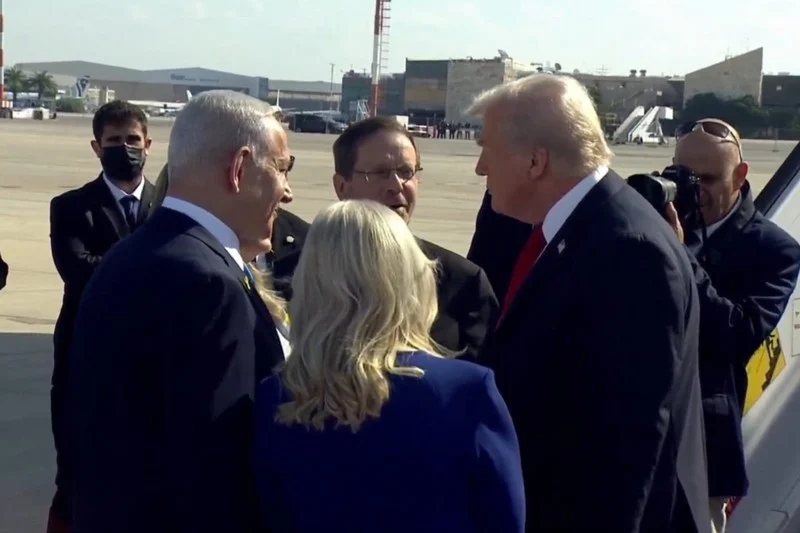
Israel President Isaac Herzog sent a formal letter to King Mohammed VI commemorating historical ties of support and solidarity for the 2nd year of the Morocco-Israel diplomatic normalization.
Isaac Herzog hailed King Mohammed V for Morocco’s treatment of Jewish people during the Holocaust in a letter he sent on Tuesday, where he thanked Morocco’s King for granting Jews a “safe haven” in times of severe injustice.
The letter marks two years since Morocco normalized ties with Israel, also was the first time an Israeli state official formally paid tribute to the Moroccan Monarchy’s efforts to protect the Kingdom’s jewish community during the World War II period, according to the presidency.
Herzog expressed Israel’s gratitude to the king “and the people of Morocco who, for generations, have acted to protect the security, welfare and cultural heritage of the kingdom’s Jewish community.”
“When millions of Jews faced the horrors of the Holocaust in the 20th century, King Mohammed V provided a safe haven for his Jewish subjects,” Herzog said in the letter dated December 22.
Relations between the two nations have been improving since the normalization, consolidating generational ties of culture, art, history and traditions that can be traced back to the 15th century.
A look back at Morocco’s Jewish history
Morocco had a large Jewish population before Israel’s establishment in 1948, where hundreds of thousands of Jewish Moroccans decided to migrate to the middle eastern country.
Although Muslim Moroccans at the time were living in perfect harmony with Jew nationals, in 1948, shortly after the end of the Second World War, some Moroccans vehemently opposed zionist ideals, resulting in riots in the eastern cities of Oujda and Jerada.
The riots occurred in the two towns that were primary departure points for Moroccan Jews seeking to reach Israel, a few weeks after a speech by King Mohammed V, where he affirmed Jews’ traditional protected status in Morocco, but warned them against demonstrations of Zionism.
These popular demonstrations took place against the backdrop of a raging pan-arabism, where Arab States in the Middle East and North Africa opposed the establishment of the Israeli state, stating in solidarity with Palestinian people.
King Mohammed V made it clear that jewish Moroccans should stay in their motherland, hoping to mediate with Moroccan Muslims who believed that Moroccan Jews will join the forces fighting Muslims in Palestine.
However, many left to Israel in fear of future prosecution. But those that stayed thrived in the only Morocco they had always known: tolerant, diverse, protected and free.
King Hassan II’s tempered diplomacy
Given Morocco’s position in the Arab League, and the country’s identity highly influenced by Muslim values, Israeli-Moroccan ties will continue to be a challenge for King Hassan II’s reign.
But the Monarch will utilize subtle policy-making, an acute sense for political influence, and more importantly, a love for the unconventional to maintain Moroccan jews’ attachment to their homeland, all while playing a key role in the Palestine-Israel conflict.
During his reign, Israel was a topic riddled with controversy, and as is the case for diplomatic tie severance, Morocco and Israel maintained contact that remained unofficial.
It was during the early 1960s that Operation Yachin took place, where Morocco orchestrated the passage of 97,000 Jews to emigrate to Israel for a fee.
King Hassan II later attempted to formally recognize Israel by meeting with Israeli Prime Minister Shimon Peres in 1986, which was met with heavy backlash and protests from the Arab League.
Nonetheless, King Hassan II maintained a bond with Peres, who voiced his condolences when the King passed away in 1999.
King Mohammed VI’s extension of a Moroccan tradition
King Mohammed VI, whose reign began in 1999 followed in his father’s tempered relations with Israel.
Israel had a Liaison Office in Rabat decades before the Abraham accords, but it was closed in 2000 in protest of the Israeli violence policy during the second Intifada.
The Moroccan government had protected and shielded its Jewish community, even after the establishment of the State of Israel in 1948, as rumors of a normalization circulated.
On December 10, 2020, it became official: US President Donald Trump announced on Twitter Morocco’s normalization with Israel, and the American recognition of Moroccan sovereignty over Western Sahara.
The recognition was followed by a signing ceremony in Rabat with the presence several Israeli and Moroccan officials, as well as Trump’s senior adviser Jared Kushner.
Moroccan head of government at the time, Saad Eddin El Othmani, signed the deal with Israel amid his party’s condemnation of the accords. An Israeli liaison office was then opened in Rabat.
The normalization was followed by launching direct flights between the two countries, and various Israeli officials’ visits to Rabat for the signing of multiple cooperation agreements, from defense, education, science, and culture.

add your comment
Terms of publication : Not to offend the writer, people, sacred things, or attack religions or the divine self, and refrain from racist incitement and insults.