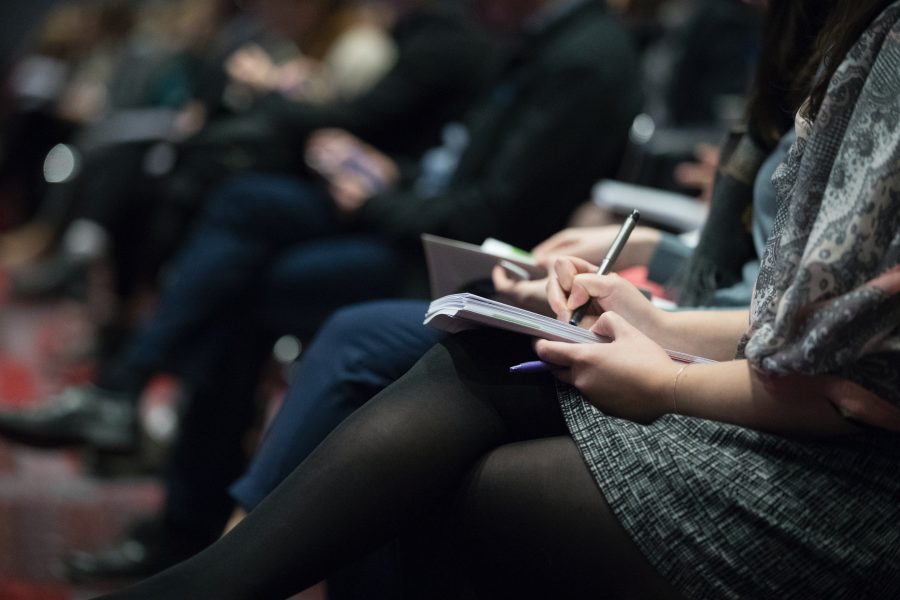
Female Moroccan presenters and reporters in newspaper, television, and radio news make up 36% of the workforce, while men make up the remainder 64%.
Similarly, 16% of subjects & sources quoted directly in newspapers are women, while the percentage goes up to 84% for men.
Again, female reporters in print, television, and radio news for major topic areas, e.i politics and economics, only account for 35%, while 65% are men.
These staggering differences between male and female Moroccan media professionals’ presence opened discourse on Thursday in Fes, as the city hosts the 22nd African Women in Media conference, to shed light on African women’s ongoing fight for gender equality in media.
For women in the industry, the prognosis is clear both on paper and in real life: female journalists are getting the shorter end of the stick in Africa, and Morocco.
The struggle for equality within the international media landscape may seem straightforward at first glance. Concepts such as pay gaps, representation, and equal access to the profession are widely discussed among sector professionals.
However, experts are arguing that women are facing bigger challenges that remain undiscussed, which they hammer, can only be resolved through institutional reforms, solidarity with the equality cause, and dialogue.
A collective effort for true equality
“Women should no longer be given the individual responsibility to fight sexism and inequality, the responsibility lies with institutions and legislators just as much,” Amina Lemrini, human rights, and women’s rights activist tells Hespress EN.
The previous High Authority of Audiovisual Communication (HACA) director emphasized “the importance of implementing the gender approach across the board,” explaining to Hespress EN that the fight is collective, and should include men, women, legislators, the government and private media actors.”
“The false idea that men and women’s differences go beyond the biological is highly damaging to society, which transforms these natural differences into a hierarchical system that values one over the other,” said the doctor.
This patriarchal system, says Lemrini, can only be remedied through the involvement of all to reform our view on gender differences and implementing the gender approach on all levels.
Conceptual approach: What is the gender-approach ?
When addressing gender, gender equality, and the active participation and impact of girls and women in society, one cannot ignore the conceptual approach.
Experts define the gender approach as the means of integrating a gender equality perspective at all stages and levels of policies, programmes, and projects, both politically and socially.
Also called gender mainstreaming, this theoretical lens aims to solve both obvious and implicit gender inequalities.
Implementing this view entails evaluating the extent of the needs and priorities of women, those of men, and opportunities to avoid or reduce gender imbalances in development actions undertaken under this approach.
According to Dr. Lemrini, this tool is what’s lacking, mostly in the private sphere of the media landscape.
“We should demand from our legislators and employers to stay true to their gender equality promises,” argues the activist, saying: “gender equality is our constitutional right.”
Benevolent sexism, the silent killer
Through her work in the Moroccan media scene and years of feminist activism, Dr. Amina Lemrini assures that although some progress has been made, a semblance of gender equality can only be expected to bear fruit in three generations.
“The pace is lamentable, and will remain so unless every institution, both private and public, includes gender as a driving factor in all of its decisions,” she tells Hespress EN.
“Gender needs to be included in the decision-making process, women should be given more opportunities for leadership roles, not to outnumber men, but simply to equate them.”
Lemrini maintains that female stereotypes, no matter how well-meaning or positive they may be, are highly hurtful to the long protest for gender equality.
According to the activist, this “benevolent sexism entrenches the idea that women and men are different beings, beyond the physical, which simply put is a fallacy.”
“It’s like saying that black and white people are different beyond the color of their skin,” she explains, adding that “even if women are complimented on certain collective gender-based traits, those compliments amplify ideas of ‘otherness’ in contrast to men.”







add your comment
Terms of publication : Not to offend the writer, people, sacred things, or attack religions or the divine self, and refrain from racist incitement and insults.