The Moroccan government held its weekly council today, headed by Aziz Akhannouch, devoted to presenting a sectoral presentation on the 2022-2026 roadmap for the national public education reform.
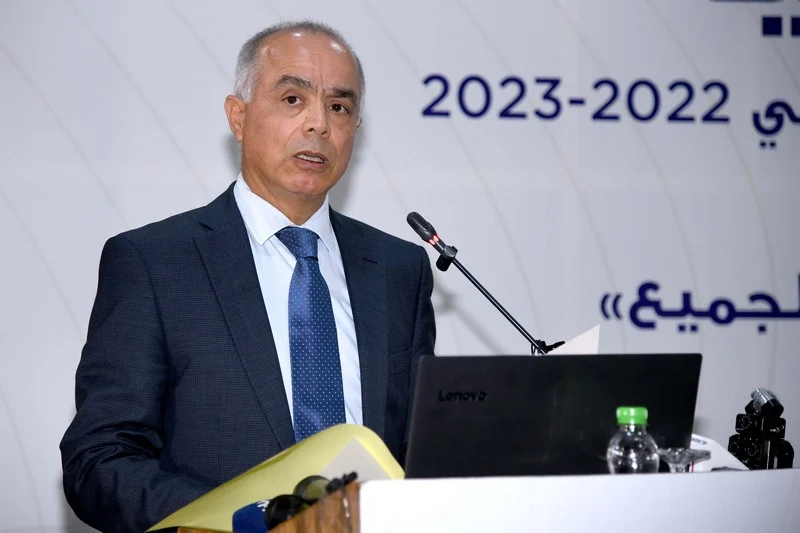
A press release issued after the meeting stated that the council followed up a presentation for “quality public school for all,” presented by Chakib Benmoussa, Minister of National Education, Primary Education and Sports.
Benmoussa highlighted that “the road map is based on quality, and is based on the provisions of the law, the framework related to the education, training and scientific research system, the contents of the new development model, and the objectives of the government program, which paid great attention to strengthening the pillars of the social state, and to developing human capital.”
He added that “it seeks to establish a new model for reform management by 2026, based on impact on the students, and on providing practical solutions and measures to improve the quality of public schools; Its contents were enriched by the conclusions of the national consultations, to which nearly 100,000 participants contributed.”
The Minister explained that the road map aims to achieve three strategic goals by 2026, reflected in enhancing the acquisition of basic knowledge and competencies, by doubling the percentage of students who comprehend basic subjects on a primary school level, and consolidating the values of citizenship, by doubling the percentage of students benefiting from extra-curricular school activities, and reducing school waste by 30%, in order to give a strong impetus to compulsory education.”
To achieve these goals, the road map revolves around 12 commitments for a quality public school for all, organized according to three strategic axes of intervention, and distributed as follows:
Five commitments for the benefit of the student, regarding primary education, books and syllabuses, individual follow-up and support for students, and guidance social support.
Three obligations related to the professor, they concern the development of basic and continuous training, improving the conditions for practicing the profession, and adopting a new statute for employees.
And four commitments concern the educational institution, and it is related to improving the conditions for receiving students, leading the educational institution, providing a school environment stimulating learning and openness, and promoting parallel and sports activities.
In order to achieve these goals and commitments, the road map laid down three basic conditions for success, which are the establishment of governance based on impact and responsibility, coupled with quality assurance mechanisms, adopting a charter that defines the obligations of the various actors and stakeholders, and securing sufficient funding to sustain the reform.








add your comment
Terms of publication : Not to offend the writer, people, sacred things, or attack religions or the divine self, and refrain from racist incitement and insults.