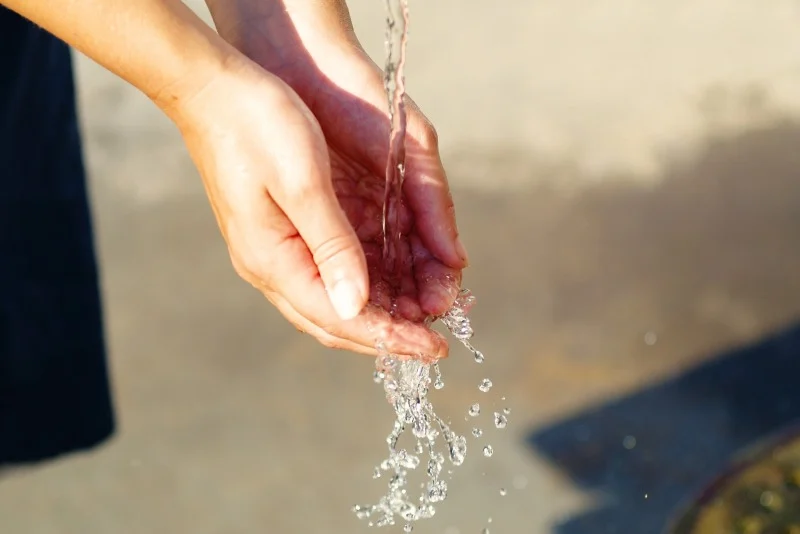
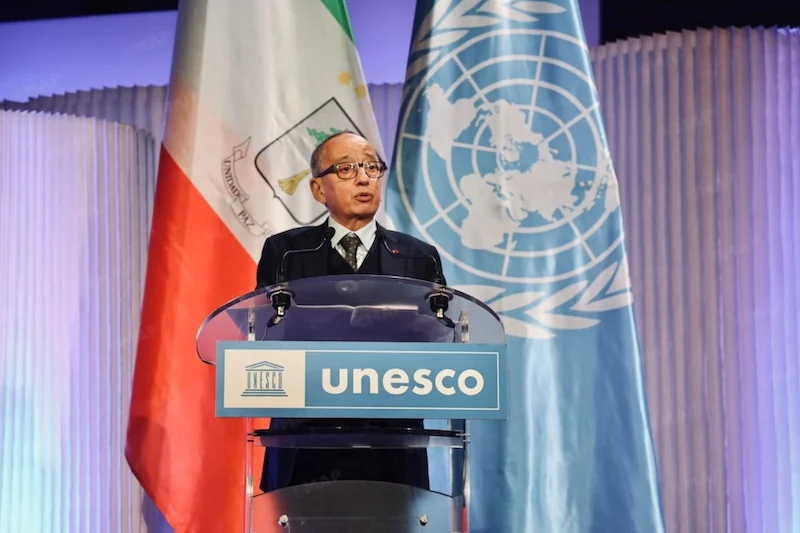
The World Health Organization (WHO), the World Bank, and the United Nations Educational, Scientific, and Cultural Organization (UNESCO) released a report titled “An urgent call to action to accelerate progress on ensuring safe drinking water for all” on October 25.
It is the first of its kind and includes a thorough analysis of the connections between water, health, and development as well as some attainable recommendations to ensure access to safe drinking water worldwide.
The report details how the availability of appropriate supplies of clean, usable water in homes, workplaces, and healthcare facilities, whether for drinking or other household uses, directly supports human health in a variety of ways.
“Providing greater access to safe drinking water has saved many lives, most of them children. But climate change is eating into those achievements,” said Dr. Maria Neira, WHO Director, Department of Environment, Climate Change and Health.
“We have to accelerate our efforts to ensure every person has reliable access to safe drinking water something that is a human right, not a luxury,” said the director.
Safely managed drinking water has both immediate and long-term economic advantages. For instance, people spend less time and effort physically obtaining water from more accessible sources, allowing them to be more productive in other ways.
Given that they suffer a disproportionate amount of the burden of collecting water, women and girls gain significantly from time saved in collecting, storing, and processing water.
Reduced healthcare costs for people and society, profits from avoiding premature mortality, and increased productivity and involvement at work are all economic advantages that could be achieved.
Water availability rates in rural and urban areas have historically differed significantly.
Universal access to water will contribute to the reduction of inequalities between the wealthy and the poor, marginalized groups and the general public, and rural and urban residents.
This makes safely managed drinking water good for society as a whole.
“Between 2000 and 2020, the global population with access to safely managed drinking water services at home has increased by over 2 billion, from 3.8 billion to 5.8 billion people,” said the report.
An estimated 74% of the global population had access to safely managed drinking water services in 2020.
A chapter of the report called “Imagining a better future: A dramatic acceleration in progress is possible” explains how governments could successfully leverage their position in order for acceleration to occur, noting that both public and private investments must be utilized and maintained.
“Governments should view the availability of reliable and pertinent data as a crucial first step because it enables them to pinpoint the most urgent gaps and difficulties in the provision of clean drinking water so that investments may be made with the greatest efficiency.”
Governments should then strive to achieve gradual advancements while preserving a clear vision of their long-term objectives.
If the world is to achieve universal access to safe drinking water and mitigate the effects of climate change, governments must strategically invest in the development of safe drinking water systems by not only increasing funding but also bolstering capacities to plan, coordinate, and regulate service provision, stressed WHO, UNICEF, and the World Bank in the report.
Governments and partners must significantly boost political commitment to drinking water and quadruple investments by 2030 if they want to guarantee everyone access to clean water.







add your comment
Terms of publication : Not to offend the writer, people, sacred things, or attack religions or the divine self, and refrain from racist incitement and insults.