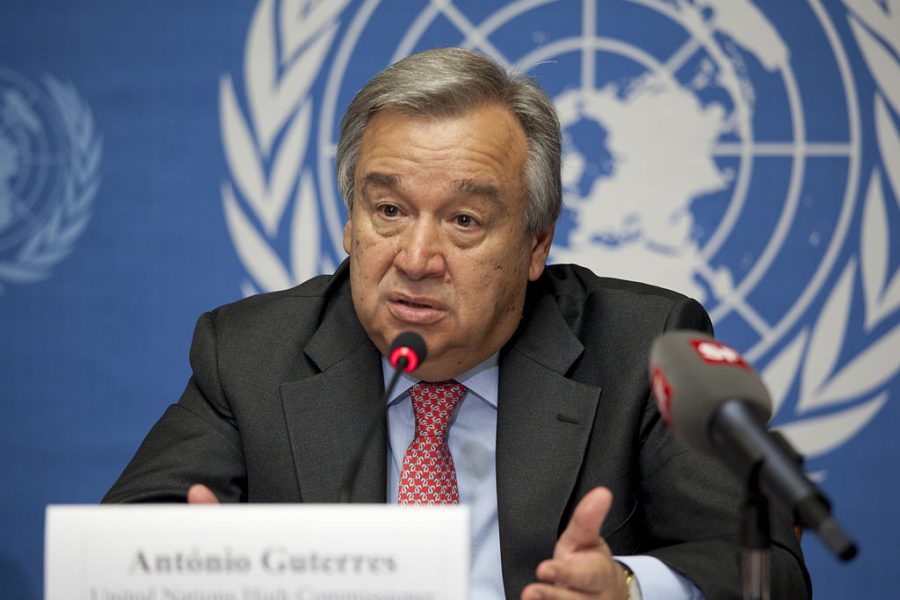
UN Secretary-General Antonio Guterres has appointed on Friday, Senegalese diplomat Abdoulaye Bathily as the UN envoy to Libya.
The Senegalese diplomat will also be head of the United Nations Support Mission in the North African country, succeeding his Slovakian predecessor Ján Kubiš, to whom “the Secretary-General expresses his gratitude for his services to the Organization,” as the UN spokesperson said in a statement to the press.
The former Senegalese minister had previously served as an independent expert for the UNMIL strategic review in 2021. He also served as Deputy Special Representative of the Secretary-General in the United Nations Multidimensional Integrated Stabilization Mission in Mali (MINUSMA) between 2013 and 2014.
He was appointed for a two years mission as a Special Representative for Central Africa and Head of the United Nations Regional Office for Central Africa (UNOCA) in Gabon between 2014 and 2016.
In 2018, he served as a Special Adviser to the Secretary-General on Madagascar and in 2019 as an Independent Expert for the Strategic Review of the UN Office for West Africa.
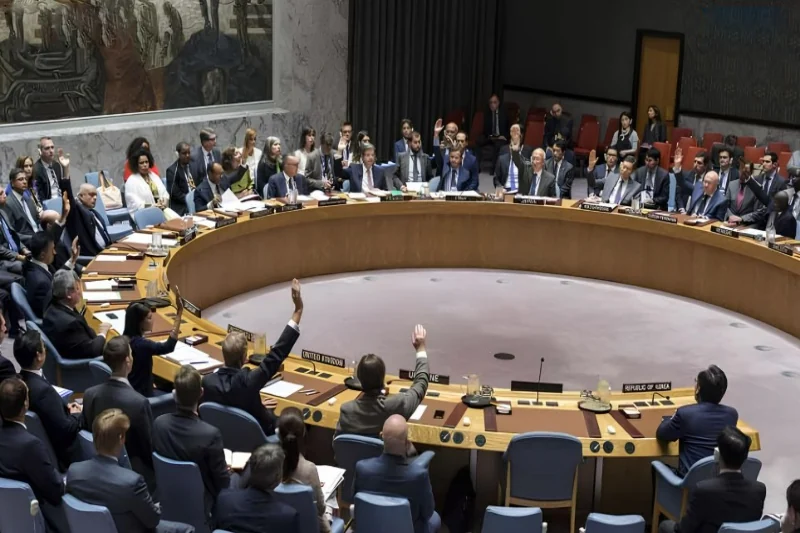
The envoy position has remained vacant since November last year. The Security Council, which requires its approval, rejected several of the Secretary-General’s naming proposals.
The council agreed on Bathily’s name, while the Tripoli-based government expressed its “reservations,” according to what a Diplomatic source stressed to AFP.
Since March, two governments have been battling for power in Libya. The first is led by Abdel Hamid Dbeibah and based in Tripoli, while the second by Fathi Bachagha and backed by Marshal Khalifa Haftar.
Libya was supposed to hold presidential and parliamentary elections in December 2021, the culmination of an UN-initiated peace process following the 2020 violence event.
However, due to differences between political opponents and local tensions, these elections have been postponed until further notice, as further armed clashes between rival militias were recorded in Tripoli.
Morocco has been playing key mediating role in the Libya peace process for years now. Moroccan diplomacy had launched a wide movement to open a dialogue between the various Libyan political parties, during which it hosted the House of Representatives, the Supreme Council of State, the UN envoy to the region, and several rounds of direct dialogue between the various parties, in Bouznika and Tangiers.
Libyan officials from various parties to the conflict have referred to Morocco as “a brotherly neighbor and reliable mediator, whose only goal is to bring peace, stability, and development to Libya.”
While hosting Libyan political actors and parties, Morocco reiterated on several occasions that it aims to provide Libyan officials with a safe ground for dialogue, as a brotherly Maghreb nation.
At the same time, Morocco clings to the need for the Libyan parties to commit themselves to hold democratic presidential and legislative elections, to resolve the issue of legitimacy.
In light of the ongoing global economic crisis resulting from the COVID-19 pandemic and the Russia-Ukraine war, Libyan citizens have become increasingly outraged at the political deadlock the country is facing.
Protests erupted this summer across the country, demanding the dissolution of the two rival governments and the holding of the long-delayed democratic elections the rulers promised.
In addition to the political unrest, Libyans have also been angered by rising prices and chronic power cuts.
As early as last week, the Libyan capital Tripoli witnessed two days of violent clashes between two militia groups that left 32 dead and 159 injured, according to the country’s Ministry of Health.
Tripoli had not seen this level of violence for nearly two years, which revived the urgency around the peace process, under the auspices of the UN.



add your comment
Terms of publication : Not to offend the writer, people, sacred things, or attack religions or the divine self, and refrain from racist incitement and insults.