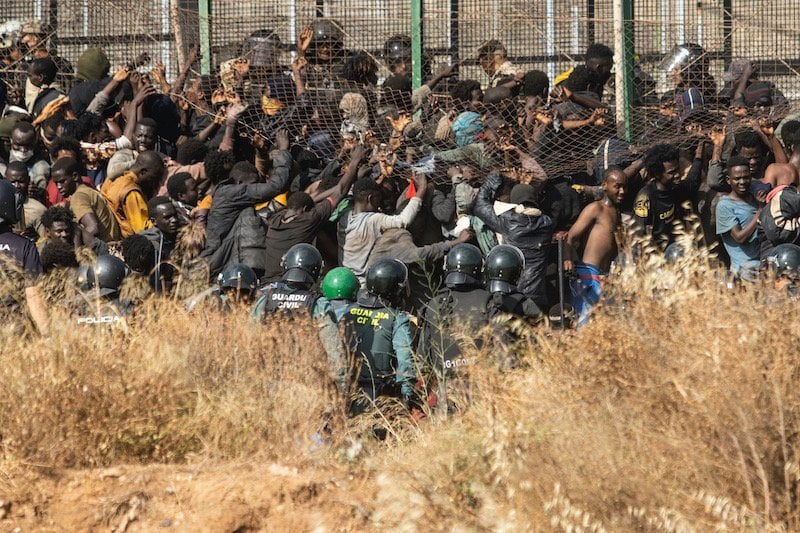
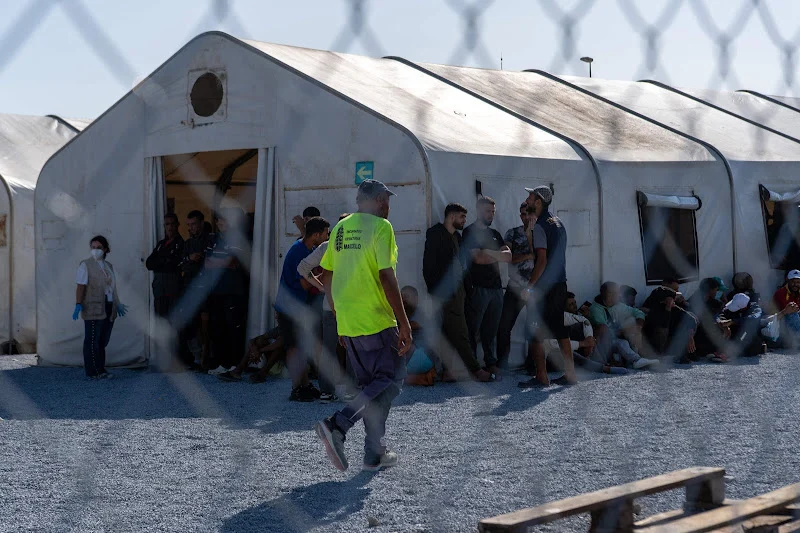
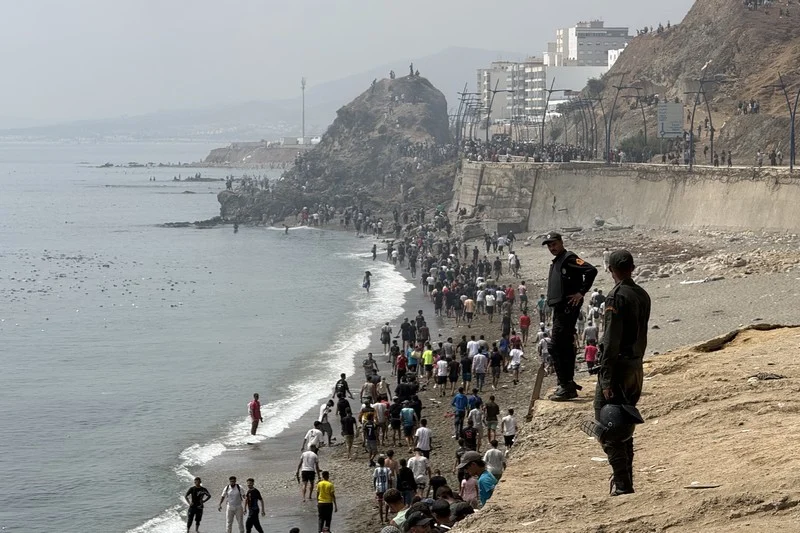
The Spanish Ministry of Interior ordered the repair of the “Barrio Chino” crossing, separating Nador and Spanish enclave Melilla, which was, about two months ago, the scene of tragic events that led to the death of 23 irregular migrants, mostly from Sudan.
According to El Periodico de España, technicians from the Ministry of Interior and several public companies are studying the reform of the border center, on the ministry’s expenses, with the support of European funds.
The same source also confirmed that the repair of this crossing is part of the “great understanding” between Madrid and Rabat, as both governments continue to advance bilateral plans and discussions over pending common issues.
Based on statements from the local police in the enclave, El Periodico de España reports that the Barrio Chino crossing is the “worst border point in Europe” as the smallest entrance to Melilla and the weakest in terms of protection, as it is stationed on a side slope and a very narrow corridor. That the intruders chose this point last June because of this weakness that it suffers from.
The aforementioned crossing has been closed for about 3 years, and it was not concerned with the agreement to revitalize the land border last May between Morocco and Spain, according to which the “Bani Ansar” crossing in Melilla and Tarjal in Ceuta was opened, which, along with other crossings, contributed to the Marhaba operation this year.
Among the plans of the Spanish Ministry of Interior is the continuation of the closure of the crossing for another long period. In exchange for the reinforcement of this border point with high-tech mechanisms and the support of its fence with inverted combs (which compensated for sharp blades), similar to an important part of the fence surrounding the city, to prevent potential climbing.
Spain and Morocco also intend to rely on “smart border” technology to identify faces and enter biometric data through two modern surveillance systems with high-resolution cameras at land border crossings. However, this technology will not be possible to operate at the Barrio Chino crossing, which dates back to 1988 and was last updated in 2015.
The latest attempt to break into the aforementioned fence was a source of concern for Moroccan and Spanish authorities and the European Union alike. This prompted the governments to strengthen cooperation in various related fields, the most important of which is police cooperation and the fight against human trafficking networks.








add your comment
Terms of publication : Not to offend the writer, people, sacred things, or attack religions or the divine self, and refrain from racist incitement and insults.