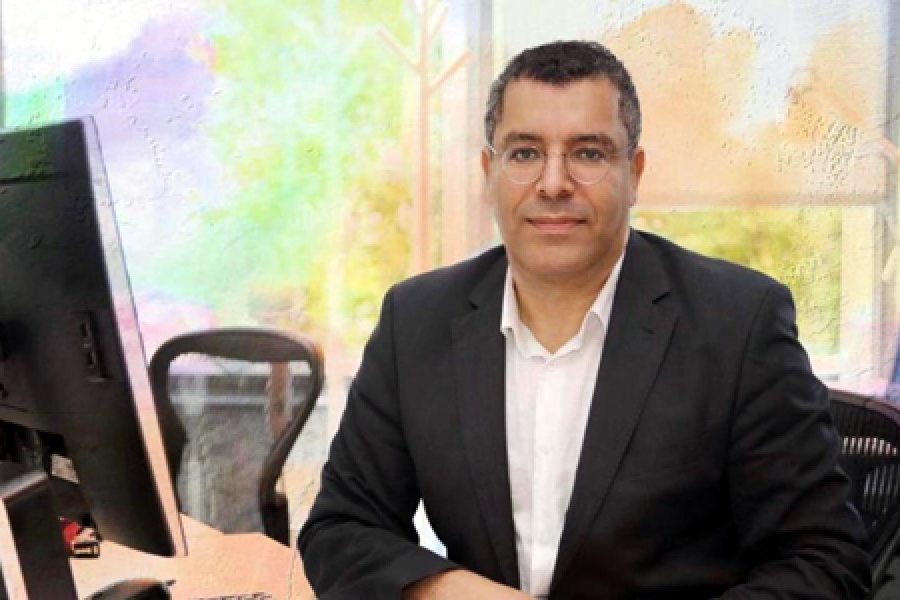
The positioning of the Islamist sphere in the Maghreb in favor of the “polisario” raises questions about its objectives and its aims, political scientist Mustapha Tossa said on Saturday.
“It is a situation that surprises and disturbs. Islamist parties in the Maghreb express overt empathy with the polisario separatists. The stance is all the more surprising as it comes from political structures belonging to an ideological movement that advocates a form of federalism and destruction of national borders through the historical substratum of the unity of the Ummah,” wrote Tossa in an article entitled “Islamists of the Maghreb in the Polisario trap” and published on Atlasinfo website.
“Whether it is the Algerian Islamists of the MSP led by Abderrazak Mokri, the Tunisians of Rached Ghanouchi’s Annahda or the Mauritanians of Tawasol, they have always positioned themselves in overt sympathy with the polisario separatists, as if this cause was suddenly part of their political strategy and their programs of power conquest,” the political scientist said.
Moreover, “the latest outbursts on the subject, both from Algeria’s Abderrazak Mokri and Tunisia’s Rached Ghanouchi, have satisfied the Algerian military institution that seeks to take whatever shot it can at Morocco to stay in power, even when it involves instrumentalizing the Islamist fiber that it pretended to be fighting during the black decade,” the author added.
According to the political scientist, the position of the Islamist movement is “a source of questions” although there are “several reasons that explain the starry eyes that the galaxy of Maghreban Islamists has for the polisario separatists.
“Officially, the rapprochement between Morocco and Israel is the reason for the support and openness of the Algerian and Tunisian Islamists towards the Polisario. But in reality, this rapprochement has only served as a pretext for this movement to lead a campaign against Morocco and its institutions. These Islamist parties consider that attacking the Kingdom on its unity participates in weakening it,” he added.
According to Tossa, the other broader and more ideological reason can be found in the strategic choices of political Islam, both in its Muslim Brotherhood version and in that of the militant Shiite Islam of Iranian obedience.
The Muslim Brothers as a whole see in this separatist fight an opportunity to weaken regional governance by stirring tension, instability, chaos, the only way to come to power on smoking ruins, he said.
This strategy of scorched land has already been tried with relative success during the famous “Arab Spring” when the Islamist movement had ridden the anger and protest of the people to reach power as was the case in Tunis or Cairo, Tossa added.
As for the political Islam produced by the Iranian regime, “it clearly displays its animosity towards Morocco as evidenced by the presence of military instructors from Lebanese Hezbollah among the polisario separatists to teach them the art of guerrilla warfare and targeted terrorism,” he went on.
“In this score, Iran plays a huge chess game where the polisario is a tiny pawn serving the interests of a much more ambitious agenda.
Another reason can explain the empathy of these Islamist movements towards the polisario separatists and their armed militias. It is “the ease with which bridges have been established between these political movements and organizations that advocate terror in this region in the name of Islam as Al Qaeda or ISIS,” the expert concluded.
add your comment
Terms of publication : Not to offend the writer, people, sacred things, or attack religions or the divine self, and refrain from racist incitement and insults.