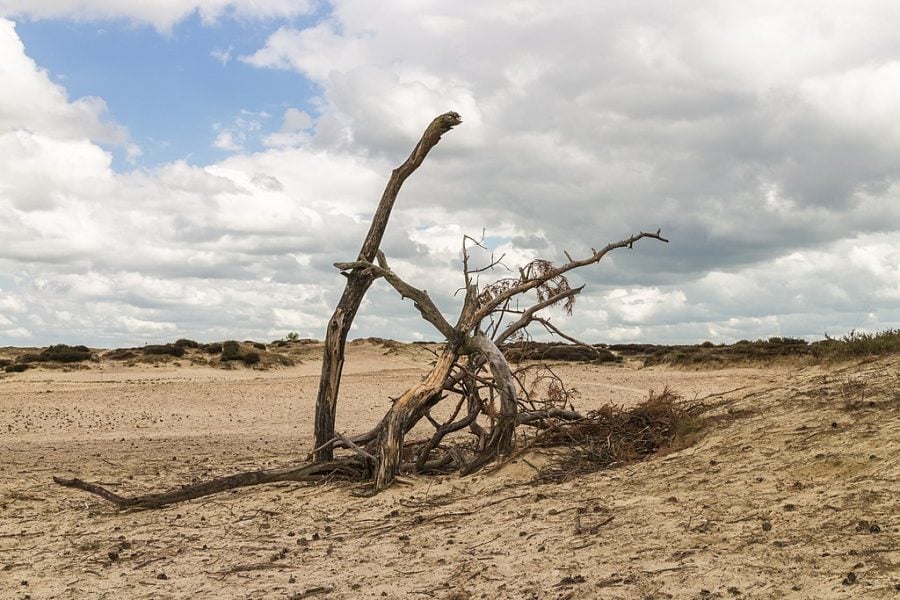
Morocco experienced an estimated rainfall deficit of 48% nationwide since last September, with rates ranging from 10.5mm to 308 mm, in comparison to the same period last year.
These recorded figures raised concerns among experts and actors in environmental affairs, sustainable development, and parliamentary deputies, prompting the question on practical and urgent measures to provide populations with drinking water from sustainable water systems.
Taking into account, the level of water shortage, the scarcity of rain precipitation, and especially the completion of dams, and the acquisition or rental of tanker trucks.
The Ministry of Equipment and Water confirmed that, in light of this exceptional water situation, a set of measures and attainable solutions were proactively developed, to overcome the shortage that may occur in some cities, centers, and villages.
In coordination between various stakeholders, a set of urgent measures were taken during the month of December 2021, aimed at ensuring the supply of drinking water by preparing a set of agreements between the various stakeholders in order to address the water deficit.
It added that these agreements concern the Moulouya, Tensift and Oum Er-Rbia basins and, more recently, Guir- Ziz-Rhéris, with a total cost estimated at 2,335 million dirhams.
The ministry stated in a response to Hespress that, as of May 20, 2022, the volume of water stockpile with dams’ filling amounted to 5.28 billion cubic meters, equivalent to 32.8% in total filling rate, compared to 49.8% recorded on the same date last year.
It disclosed that the water stockpile, currently available with dams’ injections, would make it possible to secure drinking water needs for all major cities supplied from dams in normal conditions, with the exception of drainage basins of, Oum Er-Rbia, Tensift and Ziz, which may know water shortages given the current weak water stock of these basins’ dam injections.
Mohammed Benabbou, a climate expert, stressed that the shortage of water imports is serious and exceptional.
The expert argues that “This is mainly due to the succession of years of drought that Morocco has experienced over the last decade, and is best demonstrated by the fact that 56.2 % of the dams were recorded in 2019, while the proportion was about 67.2 percent in 2018.”
Benabbou cautioned that such a decline requires a declaration of a state of water emergency and raised the alarm to mobilize all interpositions to cope with the worst-case scenario.
He adds that Morocco is moving rapidly towards the so-called water shock, that will transcend into absolute water scarcity. Noting that in the next few years, the per capita share of water would reach 500 cubic meters per year, while in the 1960s it was 2300 cubic meters per year per citizen.
The climate expert pointed out that the drought, that Morocco experienced during the last five years, showed the fragility of some water supply systems in the face of long droughts, which dictated the formulation of the National Program for the Supply of Drinking Water and Irrigation Water 2020-2027, in implementation to the Royal Instructions.
The program, in one of its most important axes, is the development and diversification of water supply, management of demand, the economy, and valorization of water through openness to non-traditional water resources, foremost of which, are the desalination of seawater, the reuse of treated wastewater, and the search for new groundwater resources. While the most imperative thing remains to work on awareness-raising campaigns on the importance of rationalization of water usage, especially in the most depleting sectors of the underground and surface water resources.
In order to overcome the water shock, Benabou adds that Morocco is working within the framework of the hydrological plan 2050, to connect water basins, expand the network of water systems to ensure flexible management of water resources and reduce spatial disparities, diversify and sustain the water supply for the benefit of future generations, and continue the dam policy that has demonstrated its efficiency during the past decades.
******************
Written by: Soukaina Sadiki & Translated to English by: Rhaz Mohamed Amine




add your comment
Terms of publication : Not to offend the writer, people, sacred things, or attack religions or the divine self, and refrain from racist incitement and insults.