It is becoming more and more evident that the strong ties between Morocco and Spain would not only benefit both countries but most certainly Europe and Africa as well.
At this juncture, it is necessary to remember that the geographic location of both countries has long served as a gateway to Europe and Africa, placing Morocco as a financial hub that would assist many nations and facilitate business transactions both locally and internationally.
The revival of cooperation between the two countries is coming at the right time. The diplomatic efforts and mutual understanding to bridge the gap between the two nations seem to be fruitful and show the immensity of the great economic and social potential opportunities and advantages that are forthcoming on the horizon of this new era.
Strong cultural everlasting ties:
As far as the cultural aspect is concerned, it is evident that Spain benefited from the Islamic cultural and architectural aspects that are exhibited through many of its building and historical monuments throughout the country. Similarly, we can also notice the Spanish model of architecture and structure of villages, towns and cities, mainly in the northern area of the country such as those in Tangier, Tétouan, Chefchaouen, and others. The cultural influence and similarities in both countries are carried out by language and peoples’ behavior and practices. Therefore, we can easily notice the spread of the Spanish language in the Northern part of Morocco and along its borders, and similarly we can notice the influence of the Arabic language on the Spanish language itself (according to researchers, there are more than 4000 words in Spanish that are borrowed from the Arabic language. Common words that are daily used can be easily spotted out such as “azúcar ” (sugar), el aceite (oil), “al aceituna” (olives), “al-tūn” (tuna) bearing almost the same pronunciation in Arabic, “ojalá” (means hopefully in English and comes from the Arabic expression: “law sha Allah” which means if God should want, and so on. Linguistically speaking, most words that start with “al” or “el” are originally derived from Arabic). Furthermore, according to researchers, Arabic influence on the Spanish language overwhelmingly dates from the Muslim rule in the Iberian Peninsula between 711 and 1492. The influence results mainly from the large number of Arabic loanwords and derivations in Spanish, as mentioned above, plus a few other less obvious effects. Also, we can strongly advocate that there are so many words in the Moroccan dialect (Darija) that are borrowed from Spanish (as well as from French). Not only that, but we can also advocate that the rapid vocalic paste of the Moroccan Arabic seems to be much influenced by the paste of Spanish. As for food and drinks, folklore dance, clothing, and music, both nations seem to share many aspects and rhythms at different levels, such as famous sea-food dishes (la paella Spanish dish which is found in Morocco as well). Those vivid musical rhythms and colorful clothing styles still constitute main pieces of the mosaic of the long existing cross-cultural elements of both countries.
Restoring the relationship is a plus for both nations:
Described as the “return of water to its flow,” the resumption of ties between Morocco and Spain is in no doubt ushering a new era. Hence, the resumption of immediate cooperation and the opening of a new phase of partnership on “more solid foundations”, is considered a “historic reconciliation” between the two countries.
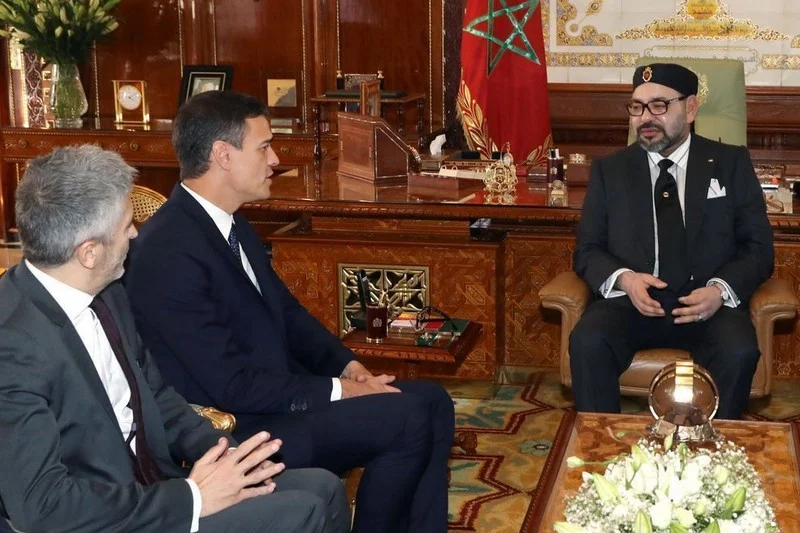
This event was crowned by a meeting that brought together King Mohammed Sixth and Spanish Prime Minister Pedro Sanchez. There is no doubt that Spain’s abandonment of its traditional neutrality on the Western Sahara issue opened the door to normalizing relations with Rabat. Moreover, many experts believe that such a relationship might most certainly make a difference in the economy of both countries. Hence, opening the gates for the people of both nations would most certainly ease the flow of tourists and merchants in both directions.
Would education benefit from this relationship?:
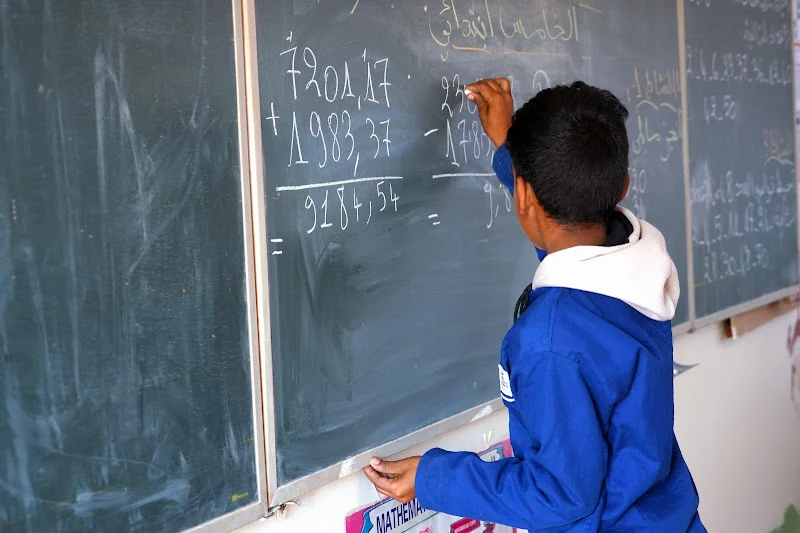
Since Morocco is seeking venues and solutions aiming at a total reform for the betterment of its educational system, Spain seems to have the potential and convenient resources in order to help in that respect.
The Spanish education system is strong and education is compulsory and free for all children aged between 6 and 16 years and is supported by the national government together with the governments of each of the country’s 17 autonomous communities.
Moroccan communities may take the Spanish schools as a model and look into their curricula and teaching methods since like in Morocco, in Spain as well, primary school and secondary school are considered basic (obligatory) education.
As for secondary and higher education, Spain possesses some well-known universities and vocational centers that would contribute to the reform that Moroccan universities are nowadays seeking. Moreover, since the English language is becoming the medium of instruction and research in some Moroccan higher institutions, they can possibly seek collaboration with the various well-established Spanish institutions and universities that deliver their services in English.
In fact Spain has over 75 universities, and several of those are known for having entire degree programs entirely in English.
Therefore, Moroccan students who wish to complete their Bachelors Degree or higher education abroad or just take a few classes in their programs, they might possibly consider enrolling directly in an English-speaking university in Spain.
This will definitely enlarge the scope of collaboration and services available in both countries, and will also strengthen the cross-cultural students’ exchange programs and enhance better education and teaching methods in both countries.
Finally, both countries might be more engaged in corporate social programs aiming at better serving kids and families in the rural and remote areas, and be more engaged in business sustainability and circular economy that would support education needs in both countries and better assist current and future generations.






add your comment
Terms of publication : Not to offend the writer, people, sacred things, or attack religions or the divine self, and refrain from racist incitement and insults.