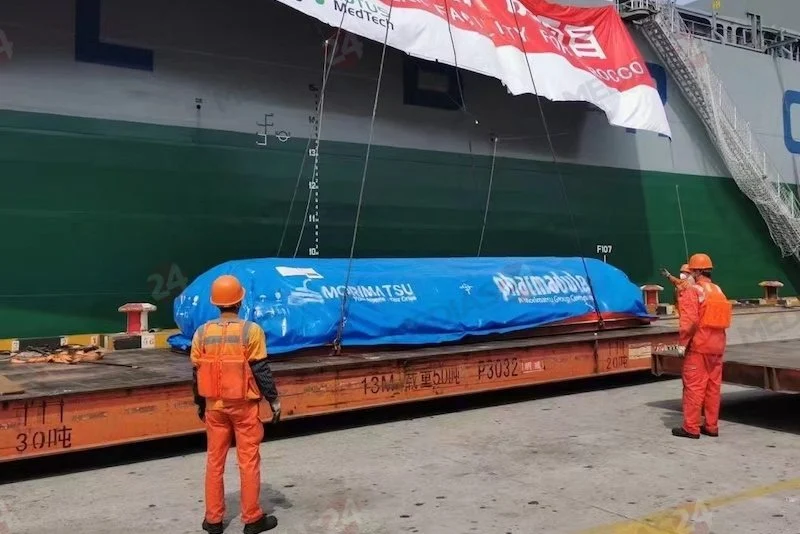
The first batch of vaccine production equipment from China will be delivered to Morocco in Mid-June to enable the manufacturing of COVID-19 vaccines in the newly launched Benslimane plant.
Manufactured in China by a Japanese company, the equipment that will make up the future aseptic filling and packaging unit for vaccines was loaded on a ship and left the Shanghai port during the first week of May.
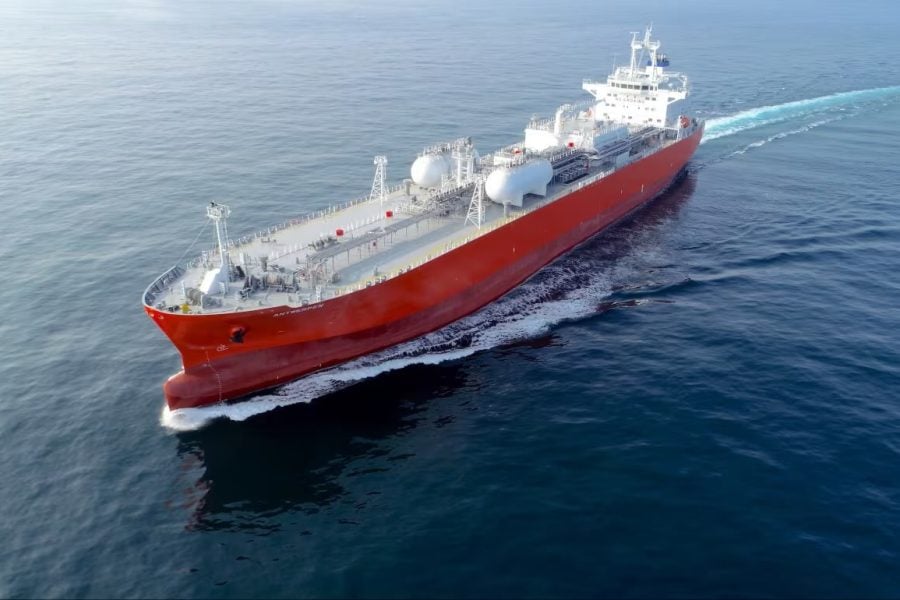
Multipurpose crane ship Pilecki will provide Morocco’s new vaccine manufacturing plant, which the Kingdom is aiming will be Africa’s much needed COVID-19 vaccine supplier.
The first stage of production in the Benslimane plant will mostly be the syringing of anti-COVID and other vaccines, starting off with three industrial lines whose combined production capacity should reach 120 million units by 2022.
This manufacturing capacity is equivalent to an output ranging from 300 to 450 million vaccine doses. A budget of 200 million euros has been allocated for this purpose, while the test batch production phase is scheduled for late July 2022.
Towards the end of 2022, the plant will initiate the manufacturing of industrial batches intended for distribution, once the testing phase is validated.
By 2024, Morocco’s vaccine manufacturing offer should be diverse enough to not only produce Sinopharm’s anti-COVID vaccine but should branch out to other immunizers, with ambitions to end vaccine imports and achieve self-sufficiency.
Continental challenge
Morocco’s ambitions however span beyond responding to domestic demand, as the estimated output value of the Benslimane project is able to cover approximately 60% of Africa’s vaccine needs.
As of this March, Africa has received more than 587 million COVID-19 vaccine doses, 58% through the UN’s Covax system, 36% through bilateral agreements, and 6% through the African Vaccine Acquisition Fund (AVAT) established by the African Union.
As of January 2022, a total of 96 million doses of vaccine have been shipped to Africa, more than double the number of doses of vaccine the continent received six months prior. The increased shipments have alleviated shortages and drawn attention to the need for countries to accelerate the pace of vaccination.
“The vaccination rate must be multiplied by six for Africa to reach the international 70% COVID-19 vaccination coverage target set for the end of the first half of this year,” the World Health Organisation (WHO) warned in early February this year.
Supply is a major challenge hindering the continent’s vaccination target, which Morocco is aiming to help fix. In addition to Morocco’s plant, WHO announced back in February that six countries would be equipped with production lines to manufacture COVID-19 vaccines, namely South Africa, Egypt, Kenya, Nigeria, Senegal, and Tunisia.
As African nations aim for export potential, the peoples’ reluctance to get vaccinated, specifically against COVID-19 is posing a major threat to a production that does not match demand.
In fact, after suffering from a fatal shortage of vaccines at the peak of the pandemic, Africa is now overwhelmed by millions of doses that most countries are unable to absorb. Nigeria, South Sudan, and Malawi, Kenya have been forced to destroy 840,000 doses received from Covax.
A lack of logistical means for distribution and strong resistance from people, in addition to expiration limits that are too short, are behind the vials’ mass waste.
The Kingdom’s rhetoric and plans for the Benslimane have therefore slowly transitioned to emphasis on ambitions of self-sufficiency, instead of relying on foreign demand to justify production. Matched with dwindling global COVID-19 infection rates, Morocco’s plant will alleviate charges of vaccine imports, to ensure immunization at a lower cost, regardless of the needs resulting from history’s most recent pandemic.





add your comment
Terms of publication : Not to offend the writer, people, sacred things, or attack religions or the divine self, and refrain from racist incitement and insults.