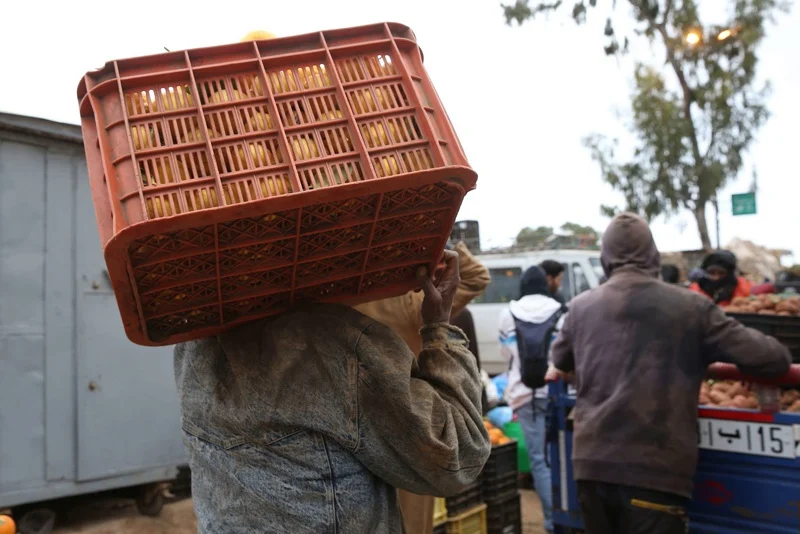
A recent study revealed the negative effects of the Russian-Ukrainian war and Moroccan-Algerian diplomatic tensions may have on Maghreb economies, especially concerning contraband and the smuggling of goods.
Arab Maghreb countries “must use a new approach to manage disparities in prices and ensure traceability of subsidized products,” said Friday the Arab Institute of Business Leaders (IACE) in its new report.
Entitled “Impact of the Russian-Ukrainian conflict on the Arab Maghreb countries,” the think tank indicates that the conflict in Ukraine “will be able to fuel parallel trade … and directly affected energy prices,” which have experienced an unprecedented surge exceeding USD 100 a barrel.
Analysts at the IACE indicate that the rise in these prices will have repercussions in the majority of Maghreb countries, since they import gas and oil, including Tunisia, Mauritania, and Morocco.
The study believes that it is imperative for Maghreb countries to unite further in the face of the multitude of common challenges, especially since they “must put aside their differences and their differences to move, rather, towards strengthening diplomatic relations and jointly fight against smuggling through a common tax system and a revised subsidy system.”
The study recommended adopting a trend at the level of the Arab Maghreb Union that addresses price differences and enhances the ability to trace subsidized products.
The continuing hostility between Morocco and Algeria, and the failure to reach an agreement between Tunisia, Libya, and Algeria, will allow smugglers to open loopholes in strategic borders.
The study stressed the need to develop a strategy in the short and long term, to strengthen relations between the countries of the region, by harmonizing trade and tax policies, deepening free trade agreements, strengthening relations, and supporting economic blocs.
Since the Russian-Ukrainian war damaged food security in the Maghreb, and the arrival of shipments to Tunisia had been delayed, and Libya had witnessed a shortage in supplies of important food commodities, and Algeria had stopped buying wheat from France after a diplomatic dispute, the Grand Maghreb’s economies are expected to suffer.
The think tank’s analysts indicated that the economies of North African countries depend largely on the parallel sector, which contributes to 28% of Tunisia’s GDP, according to recent estimates by the National Institute of Statistics, 45% in Algeria and 34% in Morocco.



add your comment
Terms of publication : Not to offend the writer, people, sacred things, or attack religions or the divine self, and refrain from racist incitement and insults.