
The Moroccan parliament’s Committee on Justice, Legislation and Human Rights within the House of Representatives will begin discussing an updated version of the draft Organic Law framing filings to the Constitutional Court.
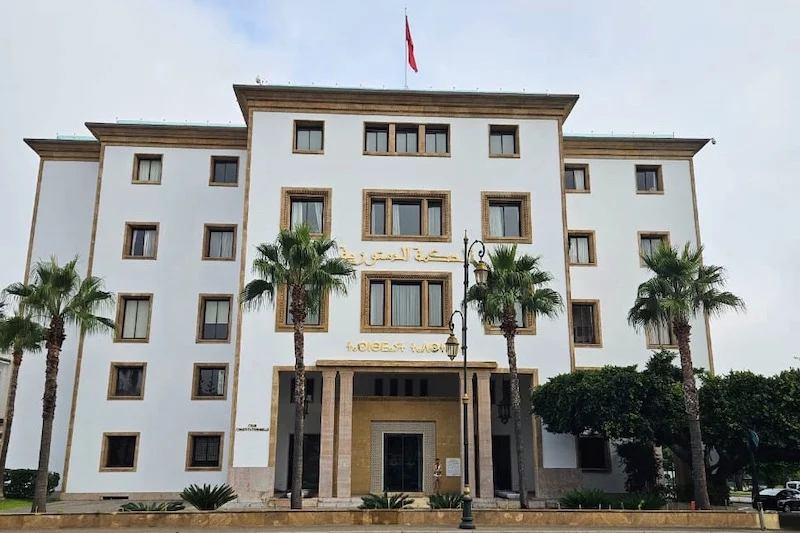
The constitutional court, established through the constitutional reform of 2011, receives complaints from various civil and governmental organs to “approve of the constitutional conformity of legislation,” and has been the subject of discourse in terms of framework regulation.
In 2018, the Constitutional Court considered that a number of articles of the first version of this organizational text are inconsistent with the constitution, which prompted the government to amend this project and return it to Parliament.
MPs began studying the law for a third review, after a first reading in the House of Representatives and a second reading in the House of Councilors.
The organic law comes in implementation of Article 133 of the Constitution, which provides for the jurisdiction of the Constitutional Court to “consider every argument related to the unconstitutionality of a law, raised during the consideration of a case if one of the parties argues that the law to be applied in the dispute infringes on the rights and freedoms guaranteed by the Constitution.”
This requirement is considered a novelty in Morocco, where one of the parties to a case before the court can argue that the application of law will lead to a breach, violation, or deprivation of one of the rights or freedom of freedoms guaranteed by the constitution.
The defense of the unconstitutionality of law may be raised before the various courts of the Kingdom, as well as directly before the Constitutional Court, on the occasion of deciding on appeals related to the election of members of Parliament.








add your comment
Terms of publication : Not to offend the writer, people, sacred things, or attack religions or the divine self, and refrain from racist incitement and insults.