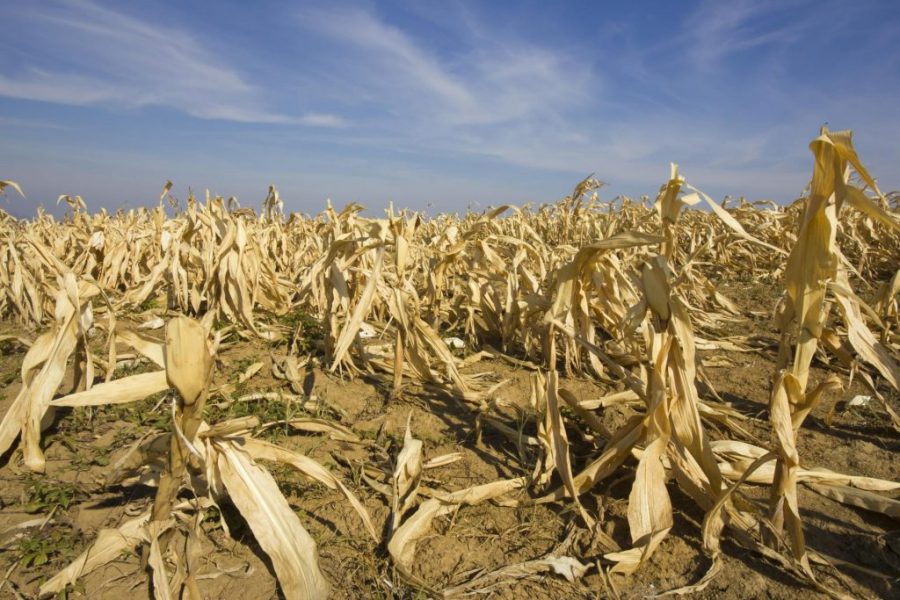
The consequences of climate change are being felt in Morocco, as the country is experiencing the worst drought of the last 30 years.
The entirety of the North African region is currently experiencing extreme rainfall scarcity, according to the latest US departments of agriculture and commerce weekly weather and crop bulletin.
Initially reported by American news outlet Bloomberg, Morocco’s wheat is wilting, and “cities such as Marrakech and Oujda are planning to ration water.”
Regional Average rainfall deficits since September have topped 220mm across Morocco’s primary croplands between the central Atlantic Coast and the Atlas Mountains, “less than one-third of normal.”
The country’s southwestern growing areas have fared even worse, with season-to-date rainfall totaling a paltry 25 mm, approximately 15% of the normal rates for the region.
Growing degree day data “suggested Morocco’s winter wheat was progressing through the jointing stage of development and will reach the heading stage by the end of February,” read the US weather report.
With the amount of moisture in Morocco since September being at its lowest in at least three decades, eastern neighbors are also experiencing the same effects of low precipitation.
The report states that large parts of Algeria and Tunisia are also severely dry, “running the risk of smaller harvests that may boost reliance on foreign supply,” at a time of near-record food costs.
Central Tunisia’s Steppe Region has likewise been ravaged by drought, with season-to-date precipitation deficits topping 110 mm, 33% less than normal.
Short-term dryness was also beginning to take a toll in the Tell Region of western Algeria, reaching a 60% precipitation rate since September 1, as well as its eastern counterpart, recording two-thirds of normal precipitation.
In fact, only Algeria’s Central Tell Region was reporting near-normal precipitation
for the 2021-22 growing campaign due to November’s excessive rainfall.
In the 1990s, Morocco experienced droughts every 7 to 10 years. Today, these moments of weak rainfall occur every 2 to 3 years, largely due to climate change.
Reduced harvests are bound to leave Morocco and other North African governments to fend for imports, as domestic supply will highly not meet the demand of citizens.
Agriculture, a sector that employs 1 in 3 workers in Morocco, is at a standstill, as crops for livestock and water for produce remain scarce.
Rachid Benali, vice-president of the Moroccan farmers’ lobby group Comader told Bloomberg that his group “is trying to save what can be saved, to save the minimum amount of water we have.”
Last week, King Mohammed VI invited Moroccans to perform a “rain prayer,” in hopes of more precipitation.
Since then, national weather reports have yet to forecast rainfall for the upcoming week.








add your comment
Terms of publication : Not to offend the writer, people, sacred things, or attack religions or the divine self, and refrain from racist incitement and insults.