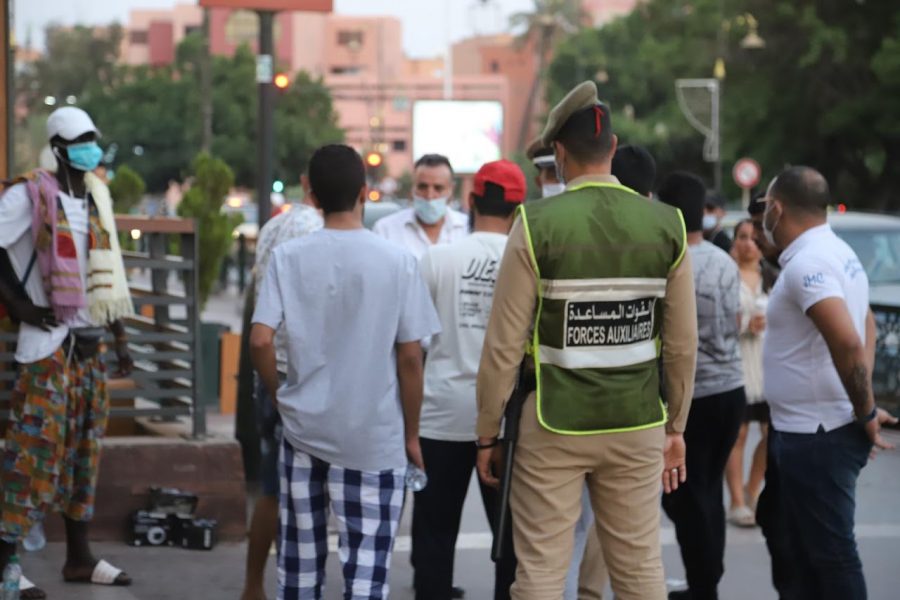
In the upcoming weeks, Coronavirus cases are expected to surge in Morocco to more than 6000 daily cases, putting more pressure on the already exhausted health system, said Minister of Health and Social Protection Khaled Ait Taleb.
“If we suffer a major setback, “no capacity is left,” people should know that we must cooperate to get out of this crisis,” said the minister in an interview with Hespress.
Ait Taleb said the only proven information health experts have about the Omicron variant, which is still shrouded in ambiguity, is its highly contagious factor that raised the number of cases worldwide to the highest numbers since the beginning of the pandemic two years ago.
“The data currently available about “Omicron” are insufficient, and we have not yet been able to know whether it causes complications in the medium and long term,” said the health minister.
Morocco recorded its first Omicron variant in December 2021, after suspending all passenger flights at the end of November.
Ait Taleb stated back then that Morocco’s first Omicron case, recorded in Casablanca, was nationally mutated in the country. The statement evoked much controversy in social media, as scientists questioned the possibility of such an event.
In his interview with Hespress, Ait Taleb responded to the controversy saying that amid the lack of information about any recorded communication with foreigners, determining the first location when the virus was detected in the country is enough according to epidemiology terms.
“As you know, the virus has no nationality and does not require a transit visa. Rather, it moves from one country to another, and it can spread through humans, goods, and so on,” added Ait Taleb.
The Health Minister said the only possible choice Moroccans have now to face the highly contagious variant is to get vaccinated and boosted, as data proved that 50% of critical cases in Morocco are among those who aren’t vaccinated, while the rest is among those who got their last shot before more than 6 months.
“It has been scientifically proven that the protection granted by the first and second doses begins to diminish after three months; This means that a third dose is needed to boost immunity, and it has been confirmed that this dose restores 75% of the immunity against the virus.”
Morocco recently reduced the required period between the second vaccine shot and the booster one from 6 to 4 months, as the health authorities are trying to boost Moroccans’ immunity and avoid a breakdown of the health system.
“We were limited to only four months, while some countries started reducing this period to three months; Because they noticed that after three months the immunity decreases by about half. We must protect the vulnerable groups of the elderly and those with chronic diseases,” said Ait Taleb.
To date, 12 million Moroccans still need to get their third doses, according to the minister.
“When we finish the third dose, then we can talk about a fourth dose, knowing that some countries have not yet received the first dose; While we, thanks to the royal vision, were able to achieve gains, and brought vaccination to Morocco,” said the Moroccan health minister.






add your comment
Terms of publication : Not to offend the writer, people, sacred things, or attack religions or the divine self, and refrain from racist incitement and insults.