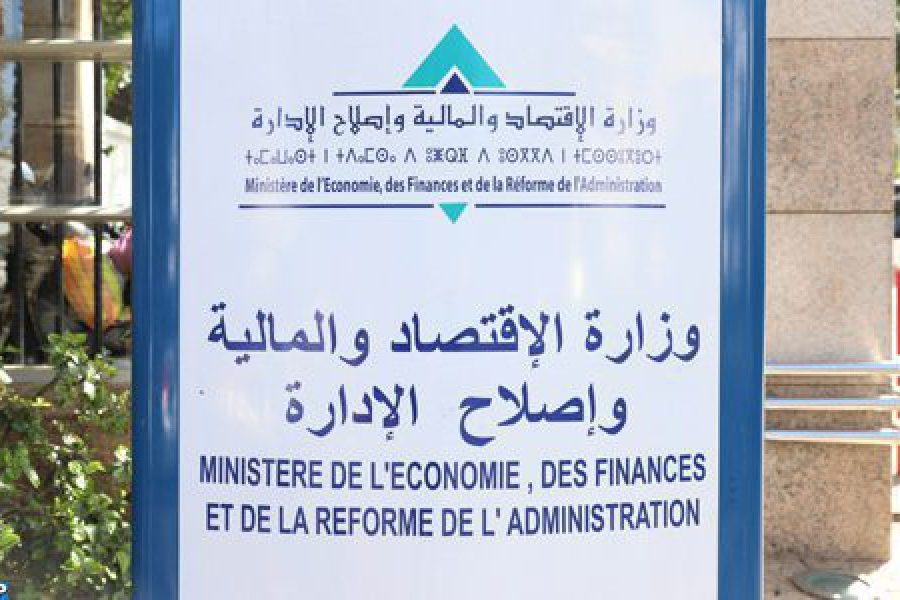
The National Financial Inclusion Council (CNIF), which convened Wednesday in Rabat, underlined the need to adapt the National Financial Inclusion Strategy (SNIF) in the face of the recently-launched structural reforms.
It concerns reinforcing the role of this strategy as a catalyst intended to facilitate and support the reform of the national system of social protection, said the ministry for Economy, Finances and Administration Reform in a press release on the 2nd CNIF meeting.
During this meeting, Mohamed Benchaâboun, president of the CNIF, and Abdellatif Jouahri, president of the Strategic Committee, under the Board, recalled the priority given to financial inclusion with regard to its direct and tangible effects in terms of improving economic and social conditions of target segments, mainly young people, women, rural people and very small businesses (VSEs).
The Board then examined the items on the agenda relating in particular to the mechanism for monitoring and steering the strategy, the progress of the work of the technical groups, the communication strategy and adoption of the internal regulations setting the composition, powers and operating procedures of the governance bodies of SNIF, the press release said.
The members of the Board welcomed the pace of progress of the projects of the financial inclusion strategy, despite a difficult year in 2020 marked by the covid-19 crisis.
This is how several achievements have been made relating to structural reforms for the benefit of the targeted segments, in particular the adoption, within the framework of the 2020 amended appropriation bill, of a reduction of 100% on the turnover achieved by mobile payment of small traders and the promulgation of the law on crowdfunding.
It also involves the establishment of a fund to facilitate the restructuring of loans granted by microcredit associations (AMC) to income-generating activities, the launch of the national register of movable securities and the development of new mechanisms for support to the financing of micro-enterprises within the capital market, in particular synthetic securitization.
Following the discussions, the Council noted several recommendations, notably to continue efforts regarding legislative and regulatory reforms relating to the various levers of the strategy, the press release said, noting that the Council recommends to accelerate the reform of the legislative and regulatory framework governing the micro-finance sector as well as the Credit Information Bureau and the short-term establishment of the regulatory framework governing crowdfunding.
The CNIF also called for the development of new distribution channels for inclusive insurance, and more particularly micro-insurance, given its role in strengthening the protection and economic integration of target populations.
The board encouraged insurance companies to offer micro-insurance offers for the benefit of very small businesses operating in particular in the trade and craft sectors, in cooperation with the departments concerned.
In addition, it stressed the need to continue work for the development of Mobile Payment in order to make it a central vector of financial inclusion in the coming years by particularly accelerating the adherence of local merchants and agents, the deployment of institutional communication and the strengthening of financial education for the populations concerned.
It also concerns the deepening of the diagnosis and analysis of the specific needs of actors in the rural world with a view to diversifying the offers and financing products intended for them.
With regard to very small businesses, the Council underlined the importance of strengthening the dynamics of the “Intelaka” program, in particular the component relating to support.
The Board proposed the readjustment of the financial education strategy to support the deployment of the various levers of the National Financial Inclusion Strategy.
In view of the importance of the Royal social protection project, the council gave its directives to set up a working group dedicated to supporting the deployment of the said project as well as to the acceleration of the pilot experience relating to the dematerialization of school aid under the Tayssir program, with a view to its generalization to other social programs.










add your comment
Terms of publication : Not to offend the writer, people, sacred things, or attack religions or the divine self, and refrain from racist incitement and insults.