
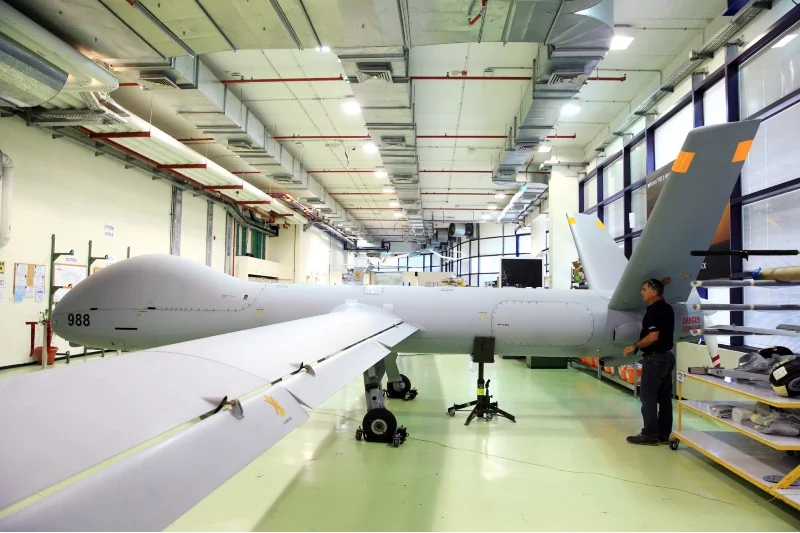
As debate intensifies in the wake of the climate summit COP26 over what role nuclear energy should play in global decarbonization efforts, a new report published on Wednesday highlights the radiological fallout and subsequent evacuations that could happen if a state-of-the-art missile or drone successfully attacks an existing or planned commercial nuclear power plant in the Middle East.
Produced by the Nonproliferation Policy Education Center (NPEC), a Washington, DC-based research institute, the study offers an analysis of conflict risks to nuclear facilities in the Middle East, warning that a successful strike on a commercial nuclear power plant in the region “could result in the evacuation of millions of people, many of whom would not be able to return to their homes for several decades.”
“This report is a disturbing read and suggests that those planning nuclear construction in the region need to rethink just what the safety hazards now are.”
Efforts to decarbonize the global economy drove the world’s policymakers to consider connecting new or additional nuclear power to their electricity grids. The Middle East is no different.
Last year, the United Arab Emirates became the first Arab nation to join the global commercial nuclear power club after the first of four planned reactors at its Barakah nuclear facility in Abu Dhabi went online.
Iran has begun building its second power reactor. Egypt had started the construction of the first of four large Russian-designed power reactors at El Dabaa; Turkey is doing the same at Akkuyu. Saudi Arabia, Jordan, and Algeria, all have plans to join the nuclear plants club in the region, though their ambitions have yet to officially get off the drawing board.
Given the increased interest in nuclear energy in the Middle East, its unique history of airstrikes on nuclear facilities, and the emergence of non-state actors wielding advanced military firepower, NPEC believes that any cost-benefit analysis of commercial nuclear power plants in the region needs to include public disclosure of the potential radiological fallout and population displacements that could result from a successful aerial strike on a facility.
“Nuclear facilities in the Middle East already have been targeted with aerial attacks at least 13 times by Iran, Iraq, the United States, the UK, and Israel. Even the Houthis claimed to have aimed their longest-range missiles against reactors in the UAE. This trend is likely to get worse,” said the report.
To illustrate the potential vulnerability of a nuclear power facility to a high precision missile strike, NPEC analyzed four current and planned nuclear power plants in the region for three scenarios involving the radiological release of cesium-137 (Cs-137) into the atmosphere, which lasts long enough that it can cause a significant increase in the chances of developing cancer among populations.
Significant contamination with Cs-137 can result in hundreds of thousands of people being evacuated from their homes, and they may not be able to return for decades, given it has a 30-year half-life, warns the report.
In the first scenario, the report examined what would happen if a nuclear reactor containment building is breached by an airstrike, resulting in the core being released. The second scenario mapped what would happen if a spent fuel pond were hit and a fire broke out. The third scenario assessed what would happen if a spent fuel pond that is densely packed with radioactive rods were targeted and caught fire.
The three scenarios involving a missile or drone attack on one of the nuclear plants in ME predicted average population displacements ranging from 100 mandatory and 120,000 voluntary evacuations in a low-radiological release simulation involving a core breach, to 6.7 million mandatory and 11 million voluntary evacuations if a densely packed spent fuel pond is hit resulting in a high release of Cs-137.



add your comment
Terms of publication : Not to offend the writer, people, sacred things, or attack religions or the divine self, and refrain from racist incitement and insults.