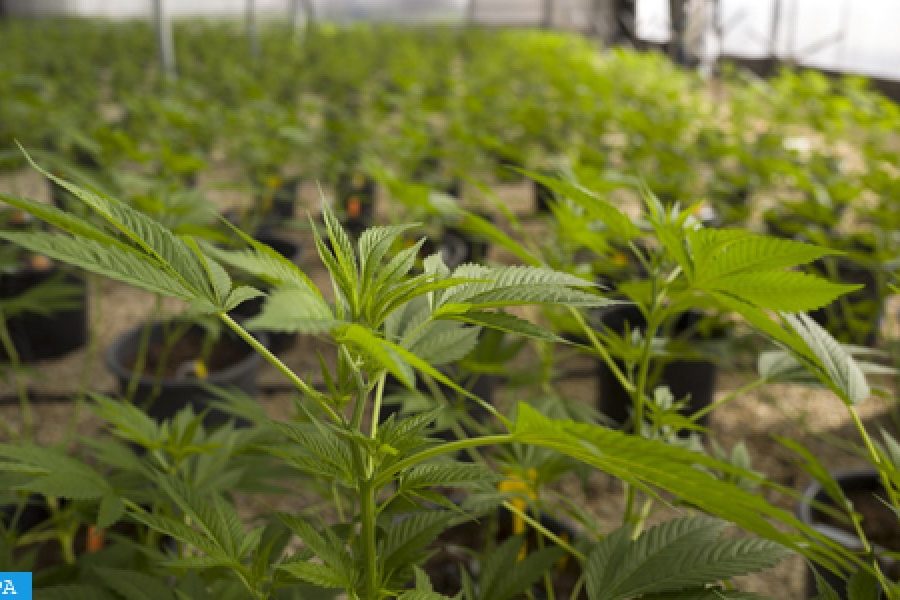
While cannabis sativa has a long history as a medicinal plant, America’s ineffective “War on Drugs” criminalized its use and targeted communities of color disproportionately in prosecuting such crimes.
Cannabis sativa’s long history as a medicinal plant dates back at least 3,000 years. It was available as a licensed medicine in the United States for about a century until federal law first restricted its use and sale in 1937, and the American Medical Association dropped it from the United States Pharmacopoeia in 1942.
The US Food and Drug Administration has only approved marijuana as safe or effective in the treatment of two rare and severe forms of epilepsy. Yet, medical cannabis is widely used in the US to treat chronic pain, nausea and lack of appetite in cancer patients, posttraumatic stress disorder, epilepsy, and degenerative neurological conditions. It is also used in the treatment of alcohol and opioid addiction.
The decades-old “war on drugs” dates back to First Lady Nancy Reagan’s “Just say No!” program. A legalization movement started more than 20 years ago, but it was not until 2012 that Colorado became the first state to legalize marijuana. Now more and more states are legalizing both recreational and medicinal marijuana and redressing injustices.
Four more states in the US have enacted laws legalizing certain aspects of the marijuana industry in just the last two months.
New Jersey legalized adult-use marijuana on February 22, 2021, after NJ voters had overwhelmingly voted in November to amend the state constitution. The new law allows the sale of cannabis to anyone over the age of 21, provides for licensing for cannabis businesses, and reforms penalties for low-level marijuana offenses.
New York legalized marijuana for adult use on March 31. Its law establishes an Office of Cannabis Management to implement a comprehensive regulatory framework that covers medical, adult-use, and cannabinoid hemp. It also creates a social and economic equity program to assist individuals who have been disproportionately impacted by cannabis enforcement who want to participate in the industry.
Virginia enacted legislation on April 7 legalizing the possession of small amounts (an ounce, which is approx. 28 grams, or less) of marijuana by adults over the age of 21 beginning on July 1, 2021.
New Mexico enacted a law on April 12 permitting recreational adult use and providing for criminal record expungement, and targeting April 2022 as the time frame for the recreational marijuana industry to become operational.
New Mexico is now the 17th state, along with Washington, D.C., to legalize marijuana for recreational purposes.
The positive impacts of legalizing adult-use cannabis far outweigh the negatives, according to New York’s Department of Health which conducted a multi-agency study in 2018. The study also found that decades of cannabis prohibition have not only failed to achieve public health and safety goals, but have led to “unjust arrests and convictions particularly in communities of color.”
A study done in Virginia found that Black Virginians were 3.5 times more likely to be arrested on marijuana charges than white people.
Lawmakers in all four states pitched legalization as a means to address the historic harms of the so-called war on drugs which has had a disproportionate impact on Black and brown communities. The new laws of all four states contains provisions to redress these kinds of injustices.
Virginia’s proposal (part of the legislation that will have to be voted on later by the General Assembly) sets aside 30% of funds for communities affected by the war on drugs. New Jersey allocated 70% to such communities.
40% of Virginia’s revenue will be directed toward early childhood education, with the remainder funding public health programs and substance abuse treatment.
The biggest take away of more states legalizing marijuana growing and possession is the potential business and resulting tax revenues it will generate for their economies.
The development of an adult-use cannabis industry in New York State “has the potential to create significant economic opportunities for New Yorkers and the state,” according to Governor Andrew Cuomo, who signed the New York bill into law. In 2018, the New York cannabis market was valued at USD 1.8 billion.
In 2020, California generated $4.4 billion in legal marijuana sales, roughly 20% of global cannabis sales, making it the largest legal cannabis market in the world.
According to experts, although New York is only half the size of the legal cannabis market in California, the state is poised to have an outsized impact on the larger industry and culture beyond its state lines and beyond U.S. borders.
Even though cannabis remains illegal under federal law in the US and only partially legal now in 43 states, New York’s unique global identity and mix of industries may influence broader changes in perception and business operations.
According to John Kagia, chief knowledge officer of New Frontier Data, a marijuana market research firm, New York is expected to generate by 2025 about $3.7 billion in sales, only about half of California’s expected revenue that year.
Taxes from sales of marijuana in New York are expected to generate revenue of $350 million annually, and the state anticipates the potential creation of 30,000 to 60,000 jobs.








add your comment
Terms of publication : Not to offend the writer, people, sacred things, or attack religions or the divine self, and refrain from racist incitement and insults.