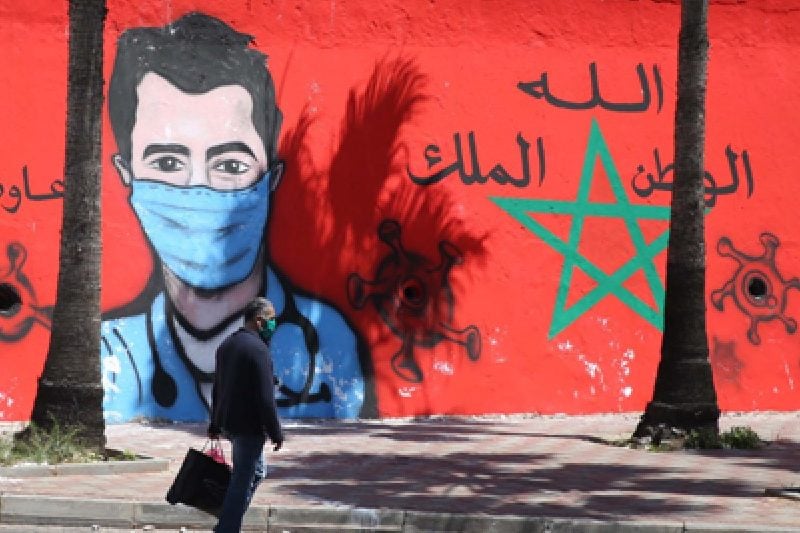
The royal institute of strategic studies (IRES) released on Wednesday its strategic report for the year 2021, titled “Towards a new post-COVID 19 world.”
The 2021 report draws a deep reflection on the state of the world post-pandemic, in order to understand its current issues, while being aware of the “virtual impossibility” of anticipation which makes it difficult to implement appropriate public policies, in a world where the virus continues to circulate.
The report highlights a general lack of preparation and irresponsibility of social networks and media, which maintained fear among citizens, in addition to a growing desire for in-depth change.
The pandemic proved that health should be the main investment sector in the management of economic risk strategies, which need to be accompanied by deep structural measures (global value chains and other dysfunctions of globalization), to ensure that the different socio-economic systems, national and global, will withstand the looming recession, added the report.
After understanding the different aspects of the health crisis, the report tackled the level of uncertainty that characterized 2020, which is likely to mark the next five years, adding that it requires great levels of caution.
A flash-forward to the various factors of change at work makes it possible to distinguish the trends that have accelerated during the pandemic, such as digitization, and those that have become more obvious, such as globalization, stated the report.
The also report monitored the emergence of new ways of thinking about mental health and education, which were largely affected by the pandemic.
The IRES stressed, in the last chapter “levers of action for a new world,” and the necessity of building “a new concept of the state”, a concept that should prioritize health, food, digitalization and employment.
This State of Care, as the report called it, must be concerned not only with the well-being of citizens but also with the safety of natural ecosystems.




add your comment
Terms of publication : Not to offend the writer, people, sacred things, or attack religions or the divine self, and refrain from racist incitement and insults.