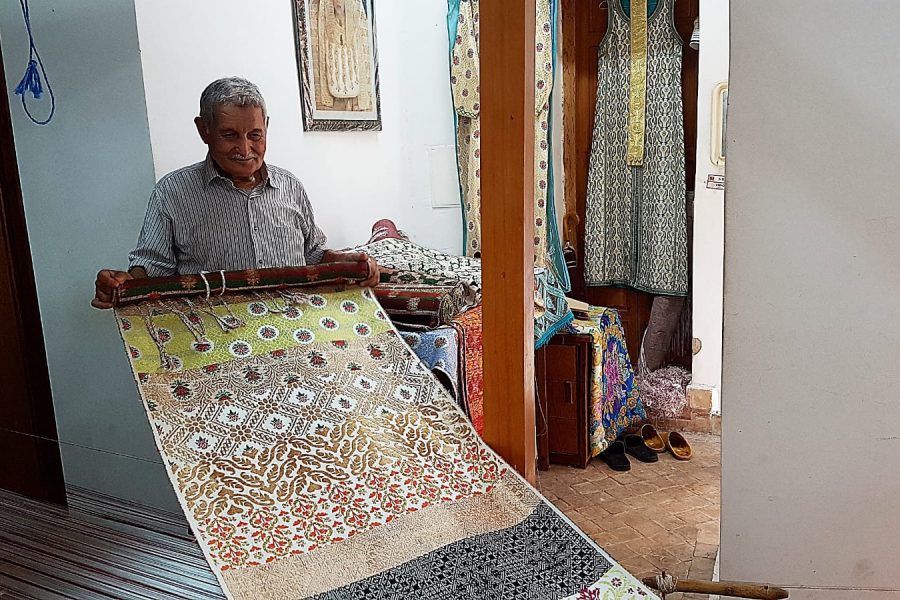
Left in the wake of mass-producing garment factories shipping worldwide at cheap prices, weavers such as 78-year-old Si Abdelkader Ouazzani remain in his workshop in Fez’s old media, loyal to the once celebrated vocation of Brocade.
The last in his family to still carry on the legacy of brocade, the generously decorative woven fabrics, made with colored silks and at times with threads of gold and silver, Ouazzani says the craft to him has come to be embedded in his life story.
“It’s all natural to me now like walking or speaking. It’s something I know,” he spoke to Hespress Eng, without breaking his attention from the machine and the thread in his hands.
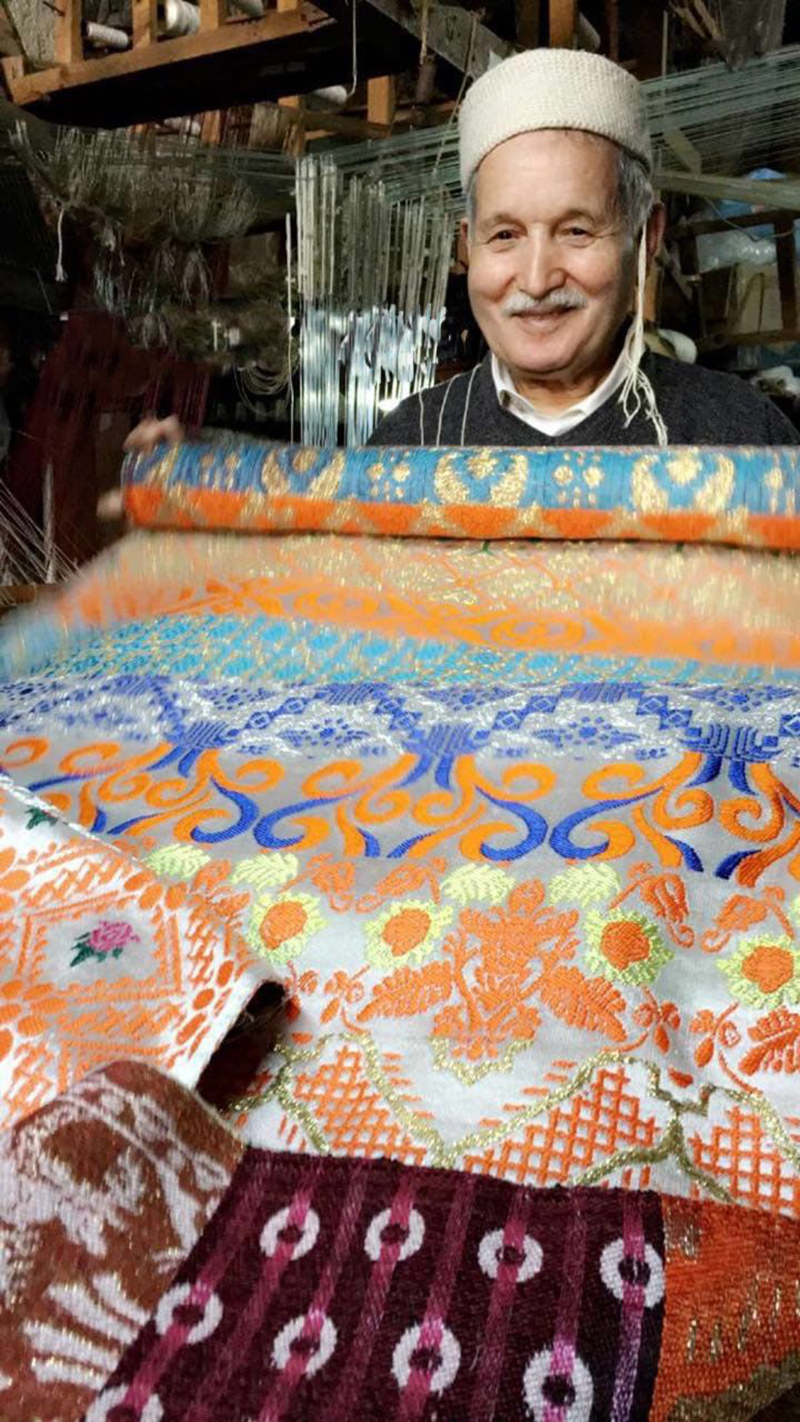
His hands, fingers, and feet all collaborate to create the pieces of fabric, a delicacy that people from Belgium, France, the U.S.A, Canada and the Middle East order from his shop.
His shop is like his little bubble where everything he needs exists just a few steps away from him so he wouldn’t have to leave: a pot where he makes coffee, a little bottle of gas and water to drink.
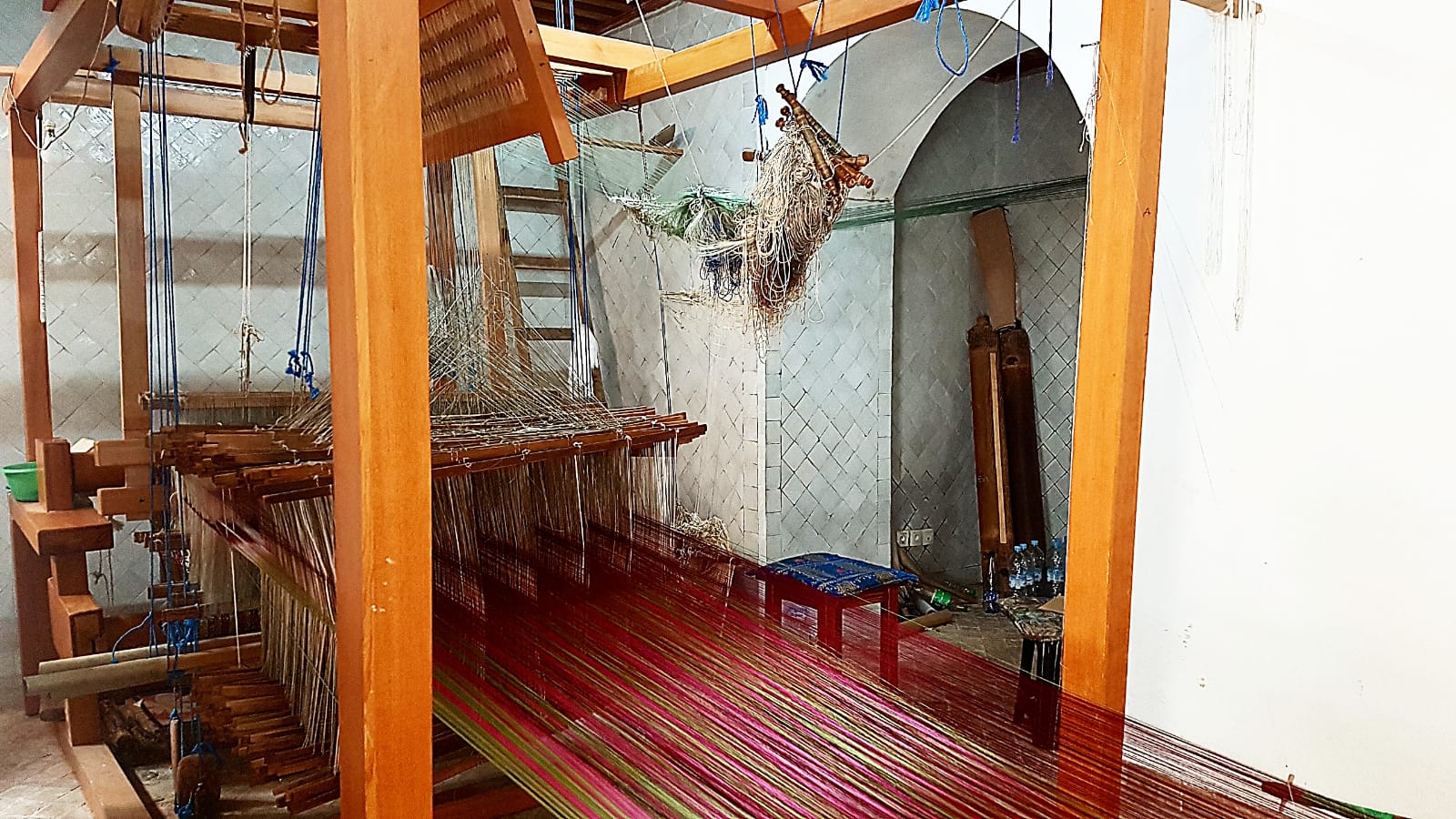
“This certainly is not an easy job,” he said, explaining that one meter of brocade requires him a full day of work. “From Morning till evening without any rest. I sometimes even skip lunch to make use of the time I might lose eating.”
“We can all rest once we are covered by mud,” he says
63 years into the job, Ouzzani recalls his golden 20s, when “things were great.”
“Fes was the city of all crafts. People would travel for days all around Morocco to come to the city of wonders, Fez, buy fabrics, kaftans, brocade, Belghas.”
He says that in his 70s, “things stopped being as good.”
“When I look at how Fez was and how it became, it makes me sad. But that’s life”. “It makes me even sadder the fact that people don’t value handmade stuff as they used to before.”
He blames Chinese competition for making clothes for retail giants at mass scales. “None is interested in our work as before, we can’t deny we have our customers but then you see with the Chinese competition, people go for what is cheap ignoring the quality.”
Despite the hurdles he’s facing, Ouzzani is hopeful that his craft will survive the test of time.
“Some young men are interested in learning this craft so I take them as my students like these two young men here,” he says, lifting his hands from the weaving machine and reaches for a towel near him, and wipes the sweat on his face. The young man next to him waits for him to finish and then they are back to work.
Minutes later, a thread controlled by Ouzzani’s disciple breaks. He gets up and checks it. He looks at the thread and finds that it can’t be fixed. “We need a new Loom,” he says.
“Some of these looms are 10 to 12 years old, but once they are unsuitable for work, we change them just like what’s happening with us at this age of speed.”
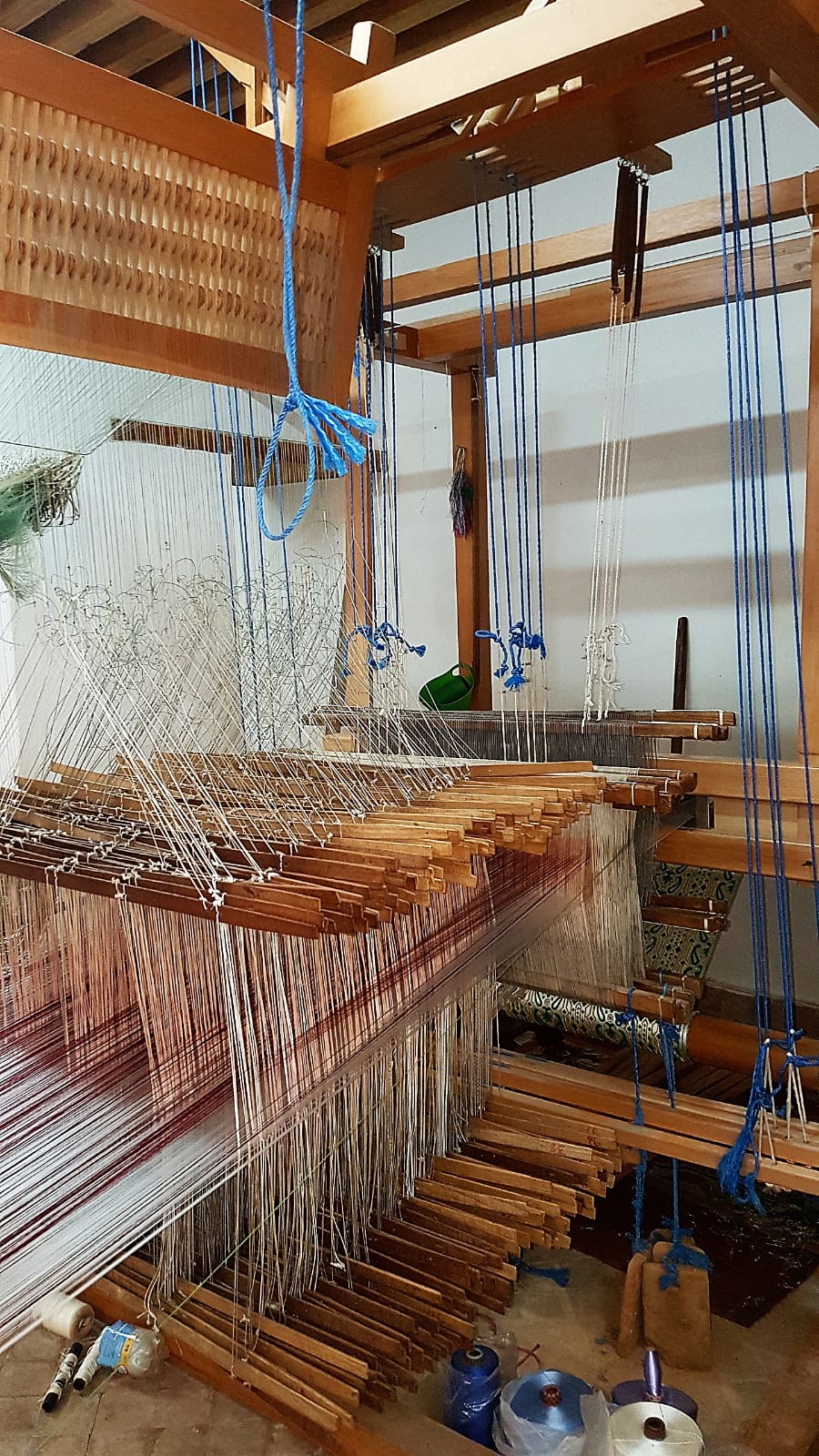
He reminisces over a 200 years-old loom he had used for many years, “but it stopped working so we had to change it with this new one. I prefer the old one but what can you do?” he says almost whispering and then a laugh fills the shop.
He works on a commission that costs up to 1,000 Dh per one meter. “We can make different types of designs based on the client’s wishes.” “They send us a design and then we make it happen.”




add your comment
Terms of publication : Not to offend the writer, people, sacred things, or attack religions or the divine self, and refrain from racist incitement and insults.