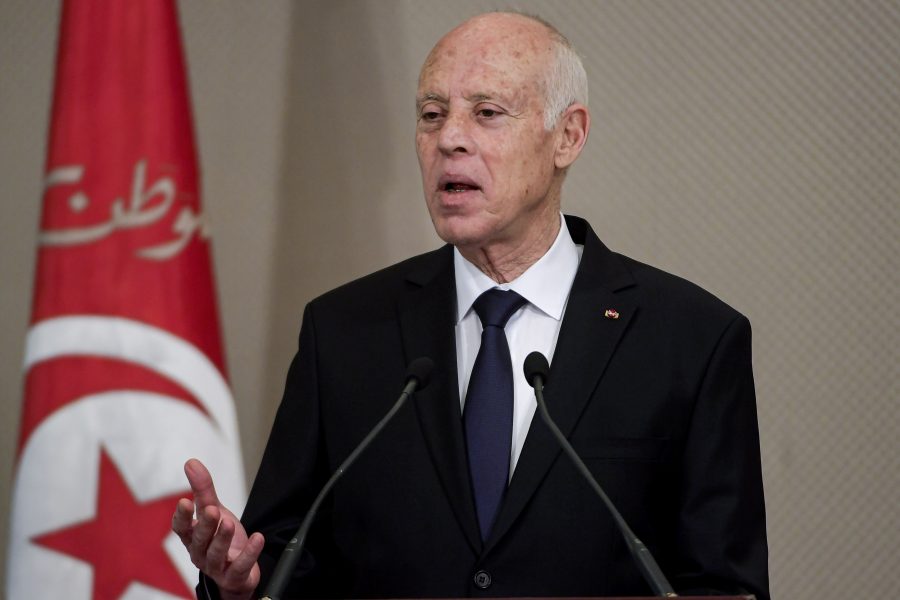
Tunisian president Kais Saied announced on Wednesday that he will rule by decree and ignore parts of the constitution, strengthening the power of his office at the expense of the government and parliament.
The new measures, which were published in the official gazette, come almost two months after Saied’s initial power grab.
“Legislative texts will be promulgated in the form of decrees signed by the President of the Republic,” one of the articles stipulates.
Prior to the new provisions, most of the executive power was in the hands of the government.
The new rules will also allow the president to appoint the Cabinet and see its policy direction and basic decisions without interference.
Saied’s initial moves to freeze parliament and strip MPs of their immunity were welcomed by many Tunisians, however some worry his powers could easily go too far.
Prior to his latest move, Tunisia’s Islamist Ennahdah party said on Tuesday that the presidents’ measures risked “dismantling” the state.
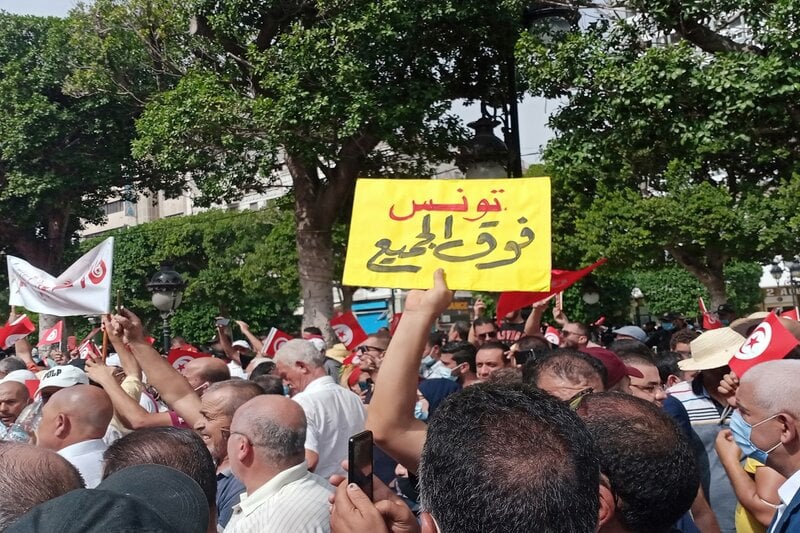
Several hundred protesters, many of them Ennahdha supporters, marched through central Tunis on Saturday to demand a return to parliamentary democracy.
The President repeatedly insisted that his actions are in line with the country’s post-revolution constitution, which allows the head of state to take “exceptional measures” in case of an “imminent danger” to national security, a highly contentious reading of the constitution.
While Saied has yet to put a time limit on his seizure of power, the president said he would appoint a committee to help draft amendments to the 2014 constitution and establish a “true democracy in which the people are truly sovereign.”
In the meantime, only the preamble to the existing constitution and clauses that do not contradict the president’s seized executive and legislative powers will remain in force, the presidency said.






add your comment
Terms of publication : Not to offend the writer, people, sacred things, or attack religions or the divine self, and refrain from racist incitement and insults.