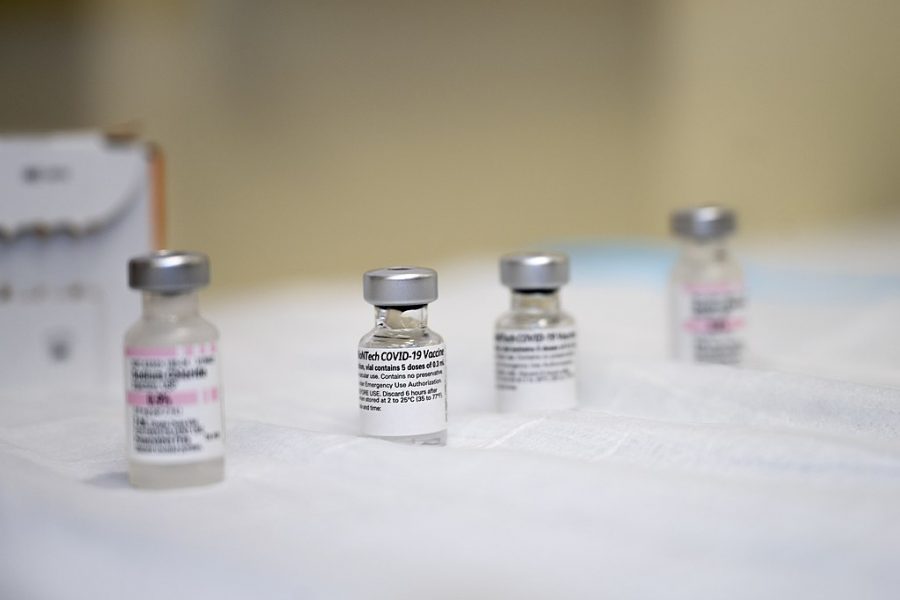
Two doses of the Pfizer/BioNTech, Moderna or Oxford/AstraZeneca are no longer enough to stem the battle against COVID-19 and its variants.
Recent studies done by the American Centers for Disease Control and Prevention (CDC) and British Oxford researchers have shown that the vaccines begin losing their effectiveness against the Delta variant within six months.
The protection built after a double jab of Pfizer vaccine decreases from 88% at one month to 74% at five to six months. While AstraZeneca’s efficiency downgrades from 77% to 67%.
However, the Us Food and Drug Administration parried the studies run about the efficiency to fully approve the New York-made vaccine, authorizing it for usage for individuals 16 years of age or more.
Worst-case scenarios are also foreseen. An expert predicts the wane of the protection to drop below 50% for the elderly and healthcare workers by winter.
At the University of Oxford, UK, the study clarifying the loss of efficiency in the jabs drew on more than 1.2 million test results and participants.
The results were published in a preprint on 19 August suggesting that both vaccines are effective against Delta after two doses, but the protection they offer wanes with time.
In total, as long as anti-Covid-19 vaccines were made, none of them showed an efficiency rate of 100%.
The initial study period of December 14, 2020 to April 10, 2021 asserted the vaccines as effective by 91 percent. Nonetheless, with the abrupt emergence of the ultra-contagious Delta variant, the researches made during August 14 dragged the effectiveness of both Moderna and Pfizer to 66 percent.
Since ever Covid-19 proved its dominance and ascendancy shifting from an epidemic to a pandemic, the bodies of mankind have never witnessed rest.
Earlier during March 2021, studies made in Washington University School of Medicine in St. Louis have depicted that the new Covid-19 variants can evade antibodies that work against the original strain of the virus.
“We’re concerned that people whom we’d expect to have a protective level of antibodies because they have had COVID-19 or been vaccinated against it, might not be protected against the new variants,” said senior author Michael S. Diamond, MD, PhD, the Herbert S. Gasser Professor of Medicine.
By that time, the fall of the adequacy of the virus to protect one’s body with a high rate was already threatened. The SARS-CoV-2 virus uses a protein called ‘spike’ to latch onto and get inside cells. People infected with SARS-CoV-2 generate the most protective antibodies against the spike protein, as explained by Washington University.
“There’s wide variation in how much antibody a person produces in response to vaccination or natural infection. Some people produce very high levels, and they would still likely be protected against the new, worrisome variants. But some people, especially older and immunocompromised people, may not make such high levels of antibodies. If the level of antibody needed for protection goes up tenfold, as our data indicate it does, they may not have enough. The concern is that the people who need protection the most are the ones least likely to have it.” He explains with details.
The months of July and August have witnessed various studies run by various experts in the field and day following another, each of the latter persists to show a different rate that diminishes the efficiency rate of the jabs.






add your comment
Terms of publication : Not to offend the writer, people, sacred things, or attack religions or the divine self, and refrain from racist incitement and insults.