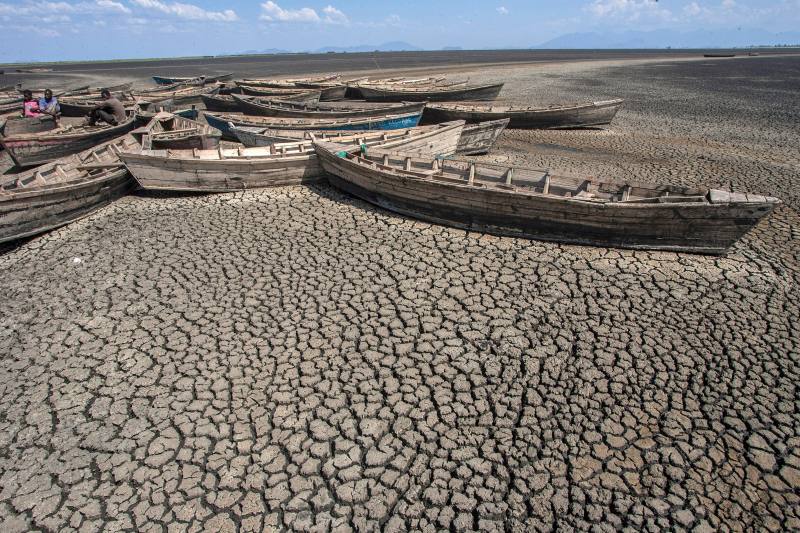
The world is heating so fast that in a decade’s time extreme weather will happen simultaneously with multiple climate disasters, such as droughts, floods, and storms, according to a report released Monday that the United Nations calls a “code red for humanity.”
“Nowhere to run, nowhere to hide,” said report co-author Linda Mearns, convinced that “it’s going to get worse.”
The 234 scientists authoring the 3000 pages report set five scenarios for the future of our planet based on how much carbon emissions are cut, but at any rate, the globe will still surpass the 1.5 degrees Celsius agreed upon by world governments in the Paris agreement by 2030.
In three of those scenarios, heating will reach an alarming 2 degrees Celsius, bringing along far more serious disasters unless the world drastically cuts carbon dioxide, methane, and other greenhouse gas emissions.
The report comes three months ahead of Cop26 in Glasgow, considered a key moment in the fight against climate change.
UN Secretary-General Antonio Guterres called the IPCC’s assessment “code red for humanity”.
“This report must sound a death knell for coal and fossil fuels before they destroy our planet,” he said.
“Countries should also end all new fossil fuel exploration and production and shift fossil fuel subsidies into renewable energy.”
Since industrial times, the burning of fossil fuels like coal and oil has increased the concentration of carbon dioxide in the atmosphere.
Co2 and other gases in the atmosphere block heat from escaping and are described as “forcing” climate change, as they remain semi-permanently in the atmosphere and do not respond physically or chemically to changes in temperature.
In its last report in 2013, the IPCC took on a broader approach, saying humans were the “dominant cause” of global warming since the 50s.
The current wildfires ravaging parts of southern Europe will increase by up to 87 percent if Earth’s average surface temperature warms two degrees Celsius above pre-industrial levels. While 71 percent of the Middle East and North Africa region’s GDP is exposed to high or very high water stress, and 61 percent of its population.



add your comment
Terms of publication : Not to offend the writer, people, sacred things, or attack religions or the divine self, and refrain from racist incitement and insults.