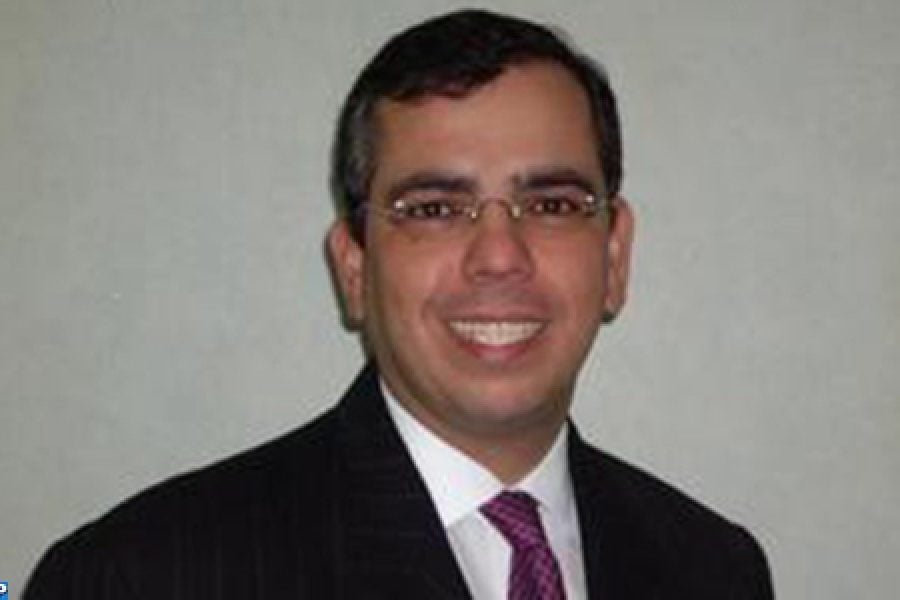
Marcus Vinicius De Freitas, Senior Fellow at the Policy Center for the New South, was interviewed by the Moroccan News Agency (MAP) on the impact of the coronavirus pandemic.
De Freitas, who is currently a visiting professor of International Law and International Relations at China Foreign Affairs University in Beijing, also commented the measures taken by Morocco to curb the spread of the virus and promote a continental response to this crisis.
1- The International Monetary Fund said that the world is facing its worst downturn since the Great Depression. How do you assess the magnitude and the impact of the sudden collapse in economic activity?
The magnitude of COVID-19 is enormous. Differently from recent crises, this one is deeper, broader and more intensive. We are fighting against an invisible enemy with governments completely unprepared to address the challenges imposed. The most significant impact of COVID-19 is also the uncertainty it has generated in the world. We do not know even whether the containment measures adopted are genuinely effective or whether the virus could get more robust. As to the economic policies implemented, they use previous formulas to address the pandemics, not taking into consideration that human behaviour should change and we need to change the economic models under which we live. We have too many people in the world living hand to mouth. Very little savings is an unfortunate reality with people living from paycheck to paycheck. Governments have become too costly. That is why the magnitude is enormous.
Finally, we still do not know even if the second wave would be greater than the first. This level of uncertainty leads to lower investments, lower entrepreneurship and decreased willingness to take risks.
This scenario presents the perfect storm for stretching the recession curve from a V to a U. In order to avoid this, Governments need to deregulate and make business easier. China has to resume consumption. The world relies on Chinese consumption to boost and reignite the world economy. Only China can do it since it currently has the size and the money necessary to do that. Instead of blaming China or trying to use it as a scapegoat for incompetency, let us push for an increased level of domestic consumption for the world economy to start moving again.
2 – The coronavirus pandemic has been a powerful reminder that the basic political and economic unit is still the nation-state. Many great powers are focused on saving themselves. Do you see a shift in the economic globalisation and the current interconnected financial system in light of the greater inequality shown in this global crisis ?
Coronavirus has been transformed into a political issue, not a healthcare concern. There is an ongoing power dispute between the United States and China for global leadership. As a result, we have observed a smear campaign involving all sorts of conspiracy theories. The electoral calendar in the United States has undoubtedly added much fuel to the combustion. The fact that closing borders was one of the first policies adopted, together with a ‘Me-First Strategy’, countries have realised the challenges of depending on just-in-time strategies for the goods they need and also that failures in the global supply chain can be extremely disruptive.
Nonetheless, globalisation is not a problem. The real issue is that governments are not prepared to deal with any significant crises. A closer look at history would provide empirical evidence that pandemics are a constant factor in the history of humankind. Governments, however, have lost themselves in domestic, useless political debates and have abandoned their most important functions which would secure the welfare of their citizenry. This healthcare crisis is the most unequivocal evidence of this situation.
Wealthier countries should be able to recover quicker. The hope is that their quick recovery should trickle down and support the less wealthy to reignite their economies. The greatest challenge is that in times of crisis, the least prepared and in most need are the ones which will suffer the most.
3 – The pandemic has paralysed global supply chains with a shortage of ventilators and other medical equipment. Do you share the view that developing countries should implement structural changes to ensure more self-reliance?
Self-reliance and self-sufficiency are essential policies to guarantee the capacity to respond in emergencies. However, not many countries will have the capacity to produce some of the items at competitive pricing. It will depend on the countries whether they can make their domestic industries competitive enough to compete internationally. Otherwise, we run the risk of having countries doing import substitution and all the gains we have achieved from global trade be done away. Globalisation and free trade have brought up many more advantages than the negativities currently related to Coronavirus.
Countries should have some stockpiles of the items. They should also be able to have plans to revert some companies to produce the items it needed to produce when necessary. However, trade is still the best way for countries to advance economically and become more integrated into the world.
4 – How do you view the efforts of Morocco to mitigate national and regional economic impacts of this unprecedented crisis?
HM King Mohammed VI once again provided the necessary leadership to deal with a crisis. Governments need a unified voice and strategy when dealing with situations of such a proportion. The national emergency fund for health spending is a wise choice, and the building up of this fund will be essential when new pandemics arise. The Spanish flu killed more people from hunger than fever. Therefore, economic measures to ease the impact of such crises are essential for dealing with such situations. Measures that secure economic stability domestically will secure regional stability and should be followed in the region to ensure that the devastation caused by COVID-19 is contained.
5 – Finally, how can technology be leveraged going forward? What does Coronavirus mean for the future of work from home and distance learning?
Coronavirus has expedited a few things: home office and on-line teaching. Universities have been slow in adopting distance learning. On-line tools have shifted the roles of teachers, who should now act more like coaches and mentors than traditional teachers and professors, providing guidance, where needed, and feedback to correct perspectives and increase learning. The Internet has provided more access to a pool of knowledge and the capacity never experienced in the history of humankind. It also allows students to interact more intensively with each other and increase their creativity. Professors, on the other hand, have been forced to reevaluate their teaching techniques in order to ensure classes are interesting and resourceful.
Home offices have been around for some time, but not as much as they could. Companies have learned that they can decrease costs and stimulate improved productivity of workers when they are doing home office activities. Many companies will certainly review their strategies, reducing the size of the offices and other operational costs. Thus, on-line activities should increase in the feature, particularly if they can improve the level of interaction allowed with communication flowing more easily.





add your comment
Terms of publication : Not to offend the writer, people, sacred things, or attack religions or the divine self, and refrain from racist incitement and insults.