Morocco has completed new technical studies for the proposed Ourika Tunnel, a major infrastructure project intended to improve road connections between Marrakech and Ouarzazate, Equipment and Water Minister Nizar Baraka said this week.
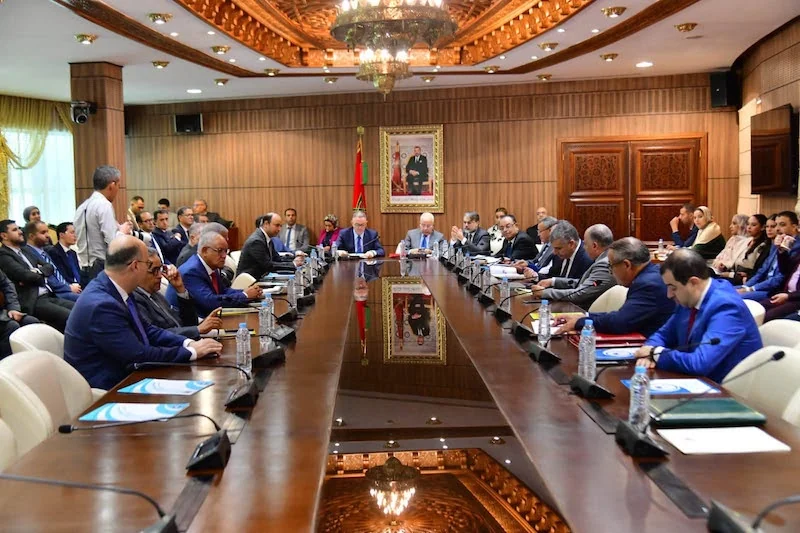
Speaking during an oral questions session at the House of Councillors, Baraka said the ministry had received a new technical study covering the tunnel’s engineering requirements, potentially paving the way for the project to move from the study phase toward implementation.
The Ministry of Equipment and Water is preparing to launch a tender to select the company responsible for carrying out the project. A partnership agreement involving the various stakeholders is also expected to be signed in 2027, the minister said.
The proposed tunnel would extend for approximately 10 kilometers and cost an estimated MAD 10 billion. It is expected to reduce travel time between Marrakech and Ouarzazate by around 90 minutes for passenger vehicles.
Two proposed routes
The ministry previously examined two possible routes for the project.
The first would follow National Road No. 9 through the Tichka Pass, involving a 5.5-kilometer tunnel, the rehabilitation of 8.5 kilometers of access roads and the construction of a bridge. Its estimated cost was MAD 7 billion.
The second option would pass through the Ourika area, requiring a 10-kilometer tunnel, the development of 80 kilometers of connecting roads and the construction of 10 bridges, at an estimated cost of MAD 10 billion.
The technical studies favored the Ourika route because of its greater potential to reduce journey times. According to the figures previously presented, it could cut travel by approximately 80 minutes for passenger vehicles and 112 minutes for trucks.
By comparison, the Tichka option was expected to reduce travel time between Marrakech and Ouarzazate by only 20 minutes for passenger vehicles and 29 minutes for trucks.
Project delays and regional expectations
The tunnel project has remained a subject of public debate in recent years, particularly among residents of the Drâa-Tafilalet region, who have expressed frustration over repeated delays.
Progress had been held back by the need to complete technical and geophysical studies, as well as difficulties faced by several companies tasked with carrying out earlier studies within the deadlines set by the ministry.
Baraka’s latest announcement suggests the project has moved beyond its previous technical-study stage. However, the tender process and the planned partnership agreement remain key steps before construction can proceed.
The agreement expected in 2027 is also due to establish a timetable for completing the works, alongside defining the responsibilities of the different parties involved.





add your comment
Terms of publication : Not to offend the writer, people, sacred things, or attack religions or the divine self, and refrain from racist incitement and insults.