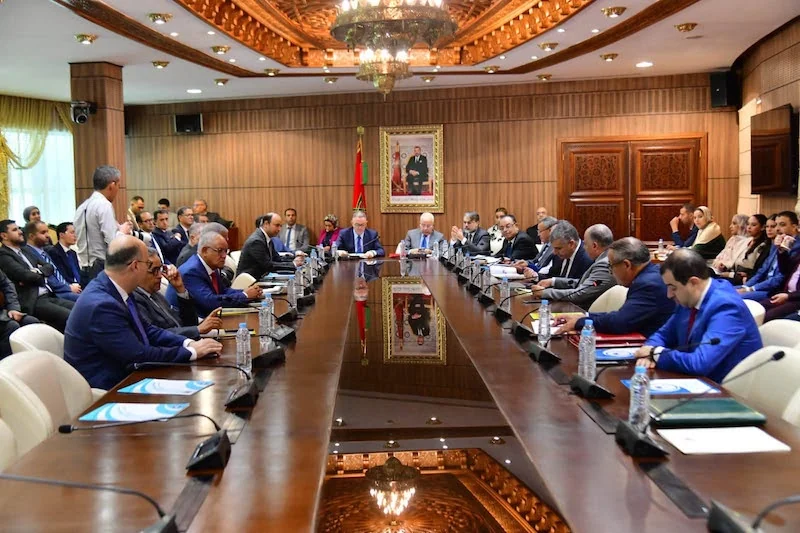
Morocco’s Finance Minister Fouzi Lekjaa on Friday defended the political direction of the government led by Fatima Zahra Mansouri, while outlining plans to increase minimum pensions, raise benefits for widows and expand public-sector recruitment in health and education under the 2027 Finance Bill.
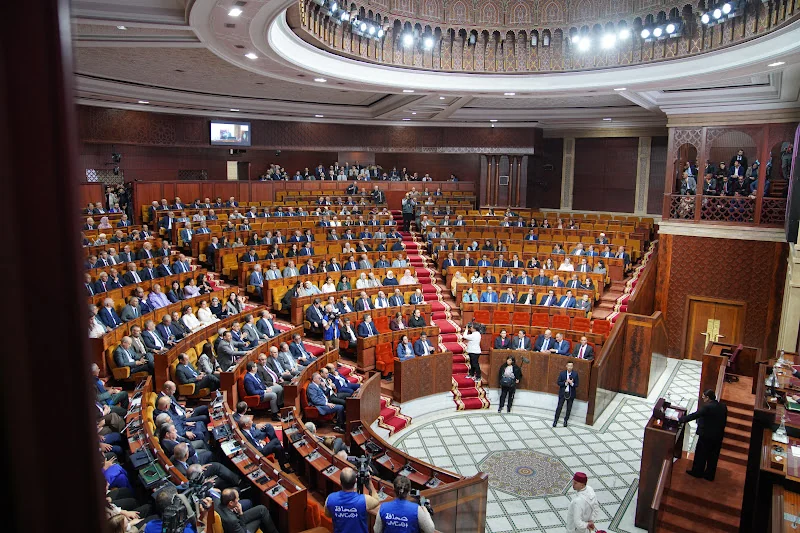
Speaking during a general discussion of the draft budget before the Finance, Planning and Economic Development Committee of the House of Councillors, Lekjaa argued that the government’s political identity should be defined by its shared vision and policy priorities rather than the ranking of parties in the September 23 elections.
His remarks came in response to criticism of the coalition’s composition, which includes the Authenticity and Modernity Party (PAM), the Istiqlal Party, the Socialist Union of Popular Forces (USFP) and the Party of Progress and Socialism (PPS).
Lekjaa said some critics had argued that election results should determine the hierarchy of parties in government, claiming that departing from this order undermined the government’s political character.
He rejected that interpretation, saying a government’s political identity did not simply derive from the presence of political parties or the existence of a political program, but from a coherent framework guiding public policy and linking social and economic developments to an appropriate socioeconomic model.
The fact that several parties shared such a vision did not need to be determined by their ranking in the elections, he said, adding that political parties also had a role to play in opposition when governing parties shared a commitment to changing the country’s course.
The minister urged lawmakers to focus on examining the 2027 Finance Bill rather than revisiting disputes that, in his view, belonged to the election campaign.
He described the September elections as a turning point, arguing that previous policy choices had prioritized narrow interests over the public good and contributed to declining purchasing power, deteriorating social services and uncertainty among young people.
Lekjaa said the government’s change in direction was intended to support the broader effort to build a social state, launched under the directives of King Mohammed VI. He added that the new budget was based on forward-looking priorities drawn from royal directives and the government program, while preserving the cumulative nature of institutional work across successive governments.
Widows’ benefits and minimum pension increases
Turning to social protection measures, Lekjaa said 434,196 widows were receiving direct social assistance as of the end of October, representing 11% of all beneficiary households. Of these, 89,120 were responsible for supporting their children.
He said the government planned to raise widows’ pension benefits from 50% to 100%, with 431,334 women expected to benefit from the measure. Its estimated annual cost stands at MAD 7.33 billion.
The beneficiaries and associated costs are distributed across four social security and pension schemes:
- The National Social Security Fund (CNSS): 205,413 beneficiaries, at a cost of MAD 2.27 billion.
- The Civil Pension Scheme: 117,353 beneficiaries, at a cost of MAD 3.083 billion.
- The Military Pension Scheme: 63,905 beneficiaries, at a cost of MAD 835 million.
- The Collective Retirement Allowance Scheme (RCAR): 44,663 beneficiaries, at a cost of MAD 1.143 billion.
Lekjaa said the government had calculated the financial requirements and secured the necessary resources ahead of announcing the measure, adding that eligible widows would begin benefiting from it in January.
The minister also outlined a gradual increase in minimum pensions, targeting retirees currently receiving the lowest pension levels, as well as those whose pensions exceed existing minimum thresholds but remain below the planned new level.
The current minimum pension is theoretically set at MAD 1,500 in the public sector and MAD 1,000 under the CNSS, according to Lekjaa.
Under the proposed schedule, the minimum pension will rise to MAD 1,700 in January 2027, MAD 2,000 in January 2028, MAD 2,500 in 2029 and MAD 3,000 at the beginning of 2030.
The measure is expected to initially benefit approximately 557,472 people, including 180,000 widows, at an estimated cost of MAD 3.3 billion. The number of beneficiaries is projected to reach 1.2 million by 2031, Lekjaa said.
He argued that the increases would improve living conditions for retirees who had spent their working lives serving the country, dismissing suggestions that the measures were primarily intended to generate electoral support.
Health recruitment and education spending
Lekjaa also said the creation of 8,000 positions in the health sector in 2027 was part of an effort to reach a ratio of 35 health professionals per 10,000 people, in line with the objectives of the national health system reform.
Of the planned positions, 5,400 will be funded through the Health Ministry’s budget, while the country’s six regional health groups will create the remaining 2,600 positions through their own budgets.
The arrangement is intended to support the sector’s governance reforms and allow recruitment to reflect the specific needs of each region, he said.
In education, the government has allocated MAD 106.9 billion for 2027, an increase of MAD 4.7 billion, according to the minister.
The budget will be supplemented by approximately MAD 1.3 billion in contributions from the Mohammed VI Foundation for the Promotion of Social Works for Education and Training, as well as funding from regional authorities for educational projects.
Beyond increasing financial allocations, Lekjaa said the government was prioritizing better planning and more efficient public spending in the sector. This would involve identifying schools’ actual needs while taking demographic changes and regional differences into account, with the aim of improving the allocation of human resources and investment.
Lekjaa defends budget’s compliance with financial rules
Addressing questions about the 2027 Finance Bill’s compliance with the Organic Finance Law and the principles of annual budgeting and credible financial projections, Lekjaa said the draft contained no commitments that violated the annuality principle or undermined Parliament’s oversight powers.
He identified the gradual reform of income tax through 2031 as the only measure in the bill involving implementation over several years.
That arrangement did not conflict with the annual budget principle, he argued, because Parliament would retain the authority to amend the measure when voting on future finance bills.



add your comment
Terms of publication : Not to offend the writer, people, sacred things, or attack religions or the divine self, and refrain from racist incitement and insults.