Russia has defended its decision to vote against a U.S.-drafted Security Council resolution extending the mandate of the United Nations Mission for the Referendum in the Sahara (MINURSO), arguing that the text failed to reflect the positions of both Morocco and the Polisario Front.
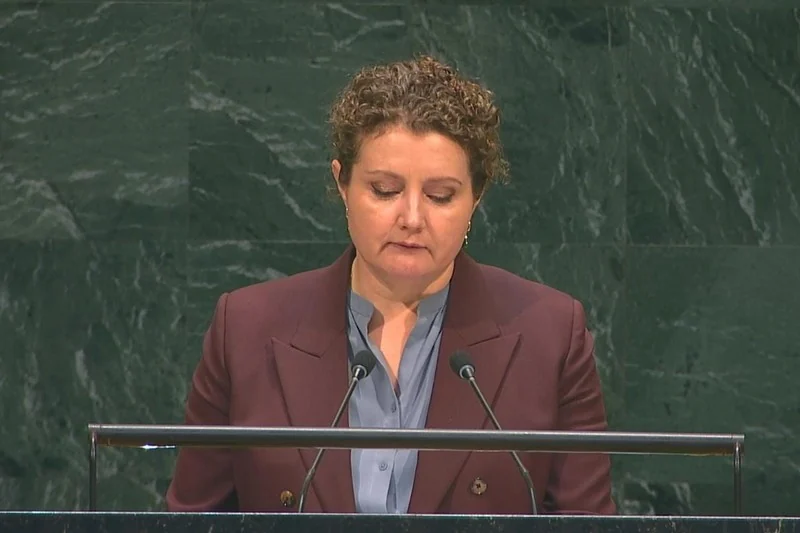
Speaking before the UN General Assembly on Tuesday, the Russian representative said Moscow’s position during the Security Council session on October 30 was based on the need to maintain a balance between the two parties to the dispute. She argued that the U.S. draft did not provide such balance and instead reflected Washington’s position in support of Morocco’s sovereignty over the Sahara.
The diplomat said Russia had called from the outset of negotiations for a text that took into account the positions of both Morocco and the Polisario Front, arguing that this approach was necessary to advance the political process and reach a lasting settlement.
She criticized what she described as an attempt by the United States to impose its national position on Security Council members, saying Washington’s approach, which she said had shifted since 2017, should not become the Council’s collective position.
The Russian representative also cautioned against drawing comparisons between the Sahara and other regional disputes, saying the territory’s final status was supposed to be determined within the UN framework while taking into account the aspirations of its population.
Russia says recent resolutions departed from earlier consensus
Reviewing the history of Security Council resolutions renewing MINURSO’s mandate, the diplomat said such decisions had for many years been adopted unanimously, with only limited exceptions.
She argued that the Council’s approach began to change in 2017, when resolutions started incorporating elements that, in Moscow’s view, undermined the balance of earlier texts. She described Resolution 2351, adopted on April 28, 2017, as the last consensus-based Council decision on the issue.
The latest U.S. draft, she said, had reached a point where it marginalized the Polisario Front. While both Morocco and the Front had presented their respective proposals for a settlement, she argued that the text took only Morocco’s proposal into account.
She also criticized the inclusion of a proposal addressing the issue of Sahrawi refugees, saying its terms had not been agreed upon with the Polisario Front.
The Russian diplomat acknowledged that one of the parties had made efforts to improve living conditions in cities, develop infrastructure and strengthen the economy over the long term. However, she argued that such efforts should not automatically give that party priority in the political settlement process.
Any autonomy arrangement, she added, should take into account the aspirations of the Sahrawis and respect their dignity and right to a fair settlement. She rejected presenting autonomy as the only possible solution to the dispute.
Moscow says it proposed technical extension of MINURSO
In a further explanation of its vote, the Russian representative said Moscow had not abandoned negotiations over the draft resolution and had remained willing until the final stages to support a one-year extension of MINURSO’s mandate on the basis of Resolution 2797, without amendments.
However, she said negotiations encountered positions calling for moving beyond the status quo and supporting the U.S.-led negotiating process, which she said had created new momentum around the dispute.
Russia, she stressed, had not sought to end the UN mission’s presence in the territory. To avoid a deadlock, Moscow had instead submitted an alternative draft resolution consisting of five paragraphs, limited to a technical one-year extension of MINURSO’s mandate without addressing the political substance of the dispute.
The Russian proposal received only two votes, while the remaining delegations abstained, she said. Moscow interpreted the outcome as having led to the termination of the mission’s presence.
She argued that an opportunity to preserve the UN presence had existed but had failed to receive sufficient support, calling for accusations that Russia was responsible for MINURSO’s departure to be withdrawn.
Russia calls for continued UN mediation
Looking ahead, the Russian representative expressed hope that the United Nations would continue supporting efforts to reach a settlement through what she described as a cautious and sustained approach. She invoked the experience of former UN Secretary-General’s Personal Envoy James Baker.
She also welcomed efforts by the United States and the United Nations to revive dialogue between Morocco and the Polisario Front, including three rounds of consultations held during the current year.
Moscow, she said, had stressed from the beginning that the negotiating process should not be tied to Security Council resolutions on the Sahara.
Successful mediation, she argued, required frank dialogue between the parties on an equal footing, alongside consideration of the wishes and recommendations of neighboring countries. Support from both parties, she added, was essential to the success of the process.
The diplomat concluded by saying that the events of October 30 had once again highlighted the importance of the veto as a corrective mechanism when dialogue over proposed resolutions had been exhausted.
Russia, she said, would continue to exercise the right responsibly and resort to it only when absolutely necessary, whether to defend its national interests or help secure a fair settlement to international crises.

add your comment
Terms of publication : Not to offend the writer, people, sacred things, or attack religions or the divine self, and refrain from racist incitement and insults.