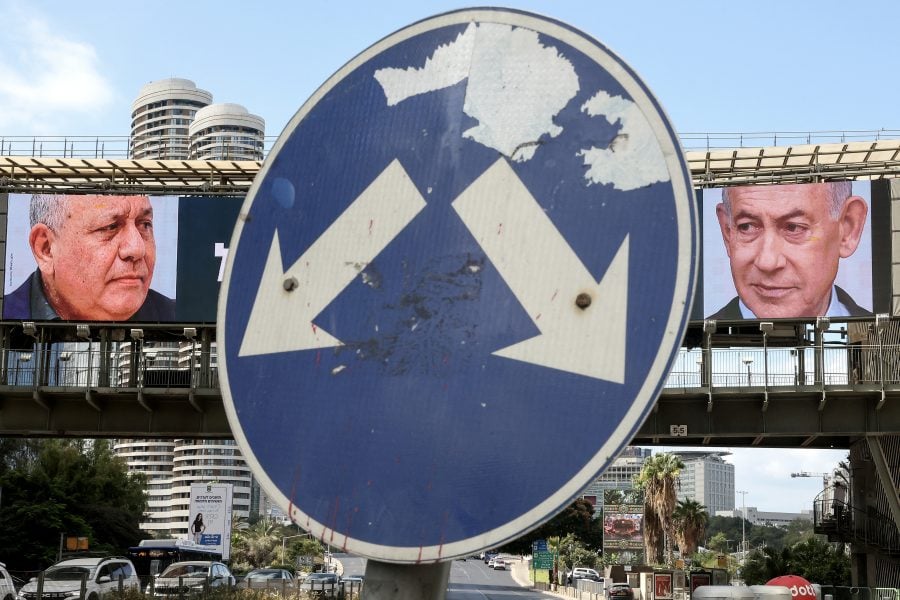
Gadi Eisenkot, the son of Moroccan Jewish immigrants who became Israel’s military chief, enters Tuesday’s election ahead of Prime Minister Benjamin Netanyahu in the final major television polls, as a last-day dispute over possible military action against Iran brought their rivalry over national security into sharper focus.
Surveys published Friday, October 23, by Channel 12, Channel 13 and public broadcaster Kan placed Eisenkot’s Yashar party first, with 22 to 23 seats against 19 to 21 for Netanyahu’s Likud, although neither political camp is projected to secure the 61 seats required to govern.
The former general has brought his Moroccan roots into that contest, campaigning in communities whose support helped establish Likud as a dominant force in Israeli politics.
In Sderot, near Gaza, campaign advertisements combine Hebrew and Moroccan Arabic, presenting Eisenkot as Rosh Memshala Dialna, or “our prime minister.” Likud won 41.5% of the vote in the city in 2022, compared with 23.4% nationally.
Born in Tiberias and raised in Eilat, Eisenkot, 66, is the son of Moroccan Jewish immigrants whose family name, originally Azencot, was changed after his father’s arrival in Israel.
He commanded the Israeli military from 2015 to 2019, joined Netanyahu’s wartime cabinet following the October 7, 2023 attacks and resigned in June 2024 over disagreements about the Gaza war. He founded Yashar in September 2025.
Their dispute over security resurfaced Monday after Channel 12 reported that Netanyahu had clashed with military commanders over a possible operation against Iran.
Netanyahu’s office dismissed the allegations as false, while Defense Minister Israel Katz denied any intention to initiate an attack before the election. Eisenkot warned against placing personal political interests above national security.
The confrontation unfolded as Israel prepared for its first election since October 7, with voters weighing responsibility for the security failures that preceded the attacks, the Gaza war, military conscription exemptions for ultra-Orthodox Jews and Netanyahu’s proposed judicial changes.
Moroccan roots and the battle for Likud voters
Eisenkot’s growing emphasis on his Moroccan origins has brought an older divide back into Israeli politics.Jews from Morocco and other North African and Middle Eastern countries, collectively known as Mizrahim, faced discrimination under Israel’s early, largely European-origin political establishment. Their growing support for Menachem Begin helped Likud win power in 1977, establishing an electoral relationship that has endured for decades.
That history resurfaced on October 17 when pro-Netanyahu television commentator Yinon Magal repeatedly called Eisenkot a “monkey” and suggested that Ashkenazi Jewish elites were controlling him.
Eisenkot’s party accused Magal of racism and responded with billboards linking the commentator to the prime minister.
Eisenkot’s Moroccan heritage distinguishes his background from Netanyahu’s, but their positions on Palestinian statehood remain similar.
Both reject the establishment of an independent Palestinian state. Eisenkot opposes Israeli annexation of Gaza and the construction of settlements there, while calling for Hamas to be removed from power.
As a general, he also publicly advocated the Dahiya doctrine, a strategy associated with disproportionate force and widespread destruction in populated areas used by armed groups. United Nations investigators later identified elements of that doctrine in Israel’s 2008–2009 Gaza offensive.




add your comment
Terms of publication : Not to offend the writer, people, sacred things, or attack religions or the divine self, and refrain from racist incitement and insults.