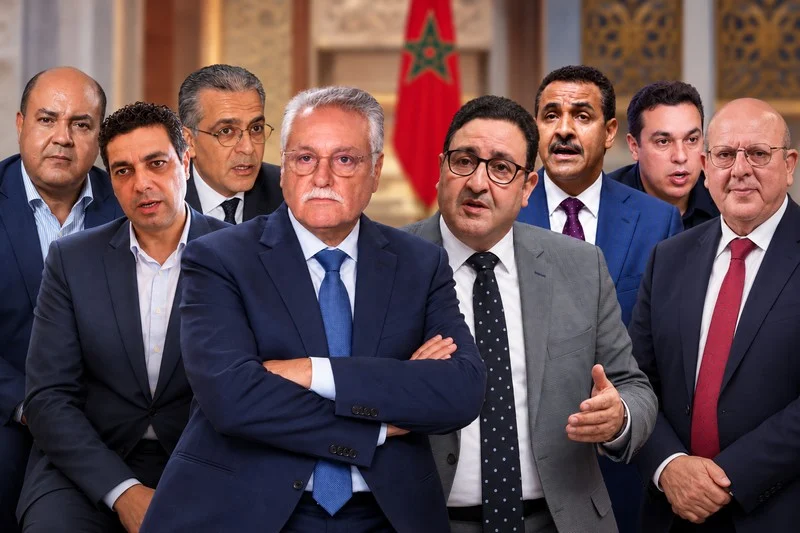
Fouzi Lekjaa now oversees not only Morocco’s finances but public-sector performance. Nabil Benabdallah has been given responsibility for education from preschool through vocational training. Agriculture has acquired an explicit food-sovereignty mandate, while artificial intelligence has been elevated to a ministry of its own.
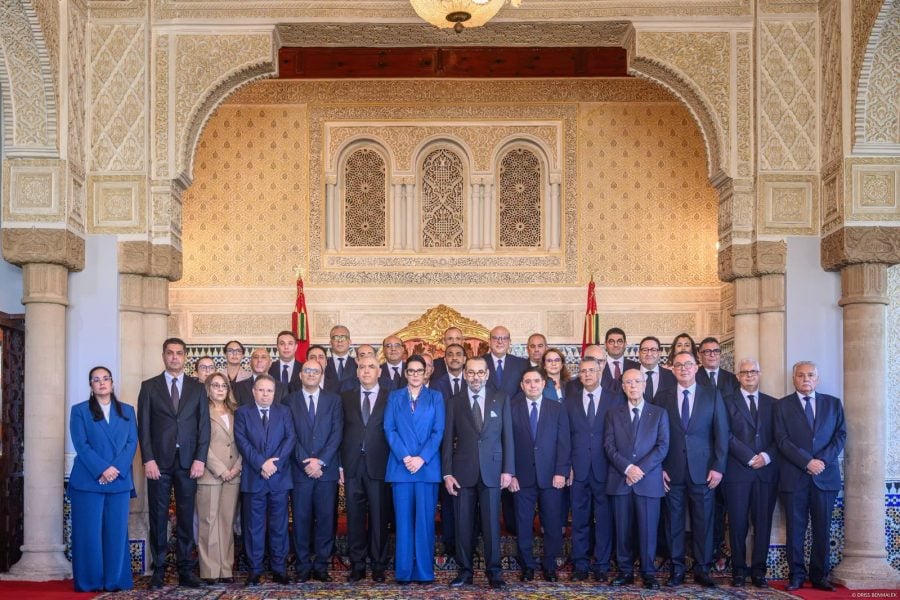
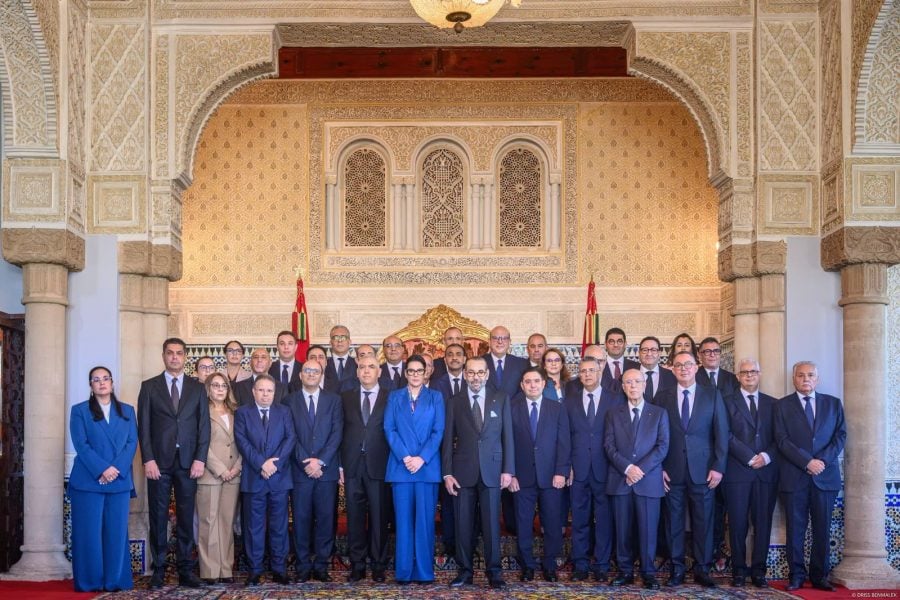
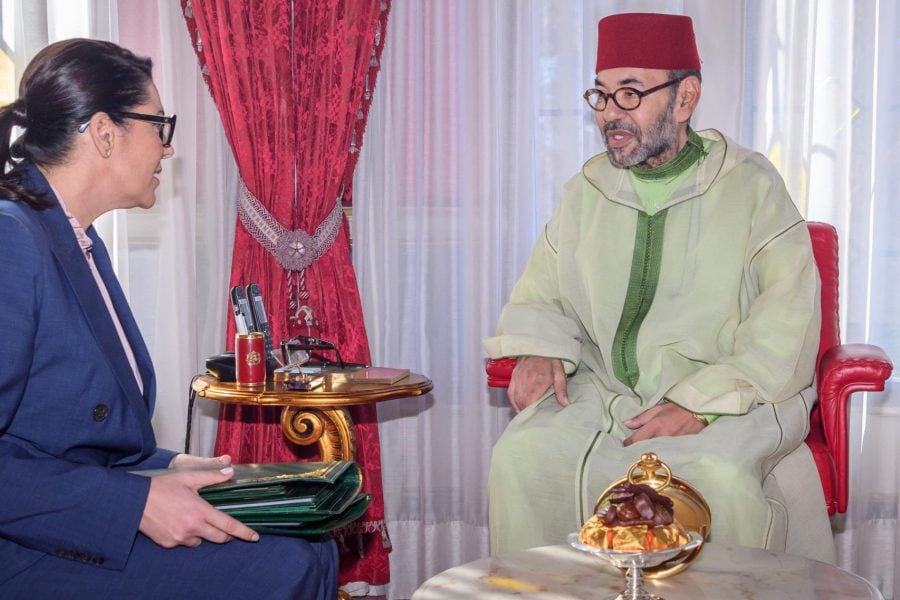
These are among the more consequential changes in the 32-member government appointed by King Mohammed VI on Friday, October 16, under Fatima Ezzahra El Mansouri. Alongside the redistribution of portfolios among four coalition parties, the new cabinet brings together responsibilities previously handled separately, gives several prominent party figures major executive roles and retains experienced officials in key state ministries.
The resulting structure offers an early indication of how the government intends to organize its work, although the extent to which these changes translate into different policies, faster decisions or better public services remains to be tested.
Political leadership returns to the foreground
Mansouri’s coalition brings together the Authenticity and Modernity Party (PAM), Istiqlal, the Socialist Union of Popular Forces (USFP) and the Party of Progress and Socialism (PPS), four parties with different political histories and constituencies.
Several appointments place established political figures in charge of ministries where decisions are likely to involve difficult choices over public spending, social protection, employment and economic development.
PPS secretary-general Nabil Benabdallah takes charge of national education, preschool education, vocational training and qualification. Istiqlal leader Nizar Baraka retains equipment and water, now including forests, while USFP parliamentary figure Abderrahim Chahid assumes responsibility for employment and social dialogue.Their presence gives party leaders and experienced political figures a more visible role in the management of major policy areas.
That matters because many of the decisions awaiting the new government cannot be resolved through administrative expertise alone. Determining where public money should go, how quickly social programs should expand, which sectors receive investment and how the costs of reform should be distributed involves competing economic and social priorities.
A minister must be able to negotiate those choices within the government, defend them before Parliament and explain their consequences to the public.
Political experience may help with that task, particularly when ministers have spent years dealing with elected institutions, party organizations and social demands. It does not, however, replace technical knowledge or the ability to direct an administration.
For Mansouri, the additional difficulty lies in maintaining a common government position among coalition partners whose approaches to the economy, labor relations and social spending are not identical.
The four parties hold 207 seats in the 395-member House of Representatives, giving the coalition a majority but also making cooperation among its members essential to passing legislation.
Bigger ministries, broader responsibilities
The new cabinet reorganizes several areas of government around larger portfolios, bringing related policies under the authority of a single minister.
Lekjaa’s appointment as minister of economy, finance and public performance is one example. His responsibilities now formally connect fiscal management with the question of how effectively public resources are used.
The addition of public performance to the ministry’s title places greater emphasis on assessing whether government spending produces the intended results, rather than measuring action primarily through allocated budgets or announced projects.
In education, the portfolio assigned to Benabdallah links schooling, preschool education, vocational training and qualification, areas that are closely connected in practice but have often been managed through separate administrative arrangements.
The relationship is particularly important as Morocco seeks to improve educational outcomes while addressing the difficulties young people face when moving from school into employment.
Bringing these responsibilities together creates an opportunity to coordinate curricula, qualifications, training programs and labor-market needs.
Yet the organizational change will matter only if the institutions concerned can align their planning, budgets and implementation procedures. Placing several responsibilities under one minister does not automatically eliminate the administrative divisions that previously separated them.
A comparable approach appears in agriculture, where Khalid Hatimi becomes minister of agriculture, maritime fisheries and food sovereignty, and in the ministry of industry, trade, investment and economic inclusion, led by Ryad Mezzour.
The wider portfolios potentially allow ministers to address problems that cross traditional departmental boundaries. They also increase the number of agencies, programs and competing priorities each minister must manage.
Continuity in key state ministries
The return of prominent political figures is accompanied by considerable continuity in areas considered central to the functioning of the state.
Abdelouafi Laftit remains minister of the interior, Nasser Bourita retains foreign affairs, African cooperation and Moroccans living abroad, while Ahmed Toufiq continues to oversee Islamic affairs.
Abdellatif Loudyi also retains responsibility for national defense administration.
Their continued presence preserves institutional experience and established working relationships in ministries responsible for long-running national policies and commitments.
The cabinet therefore does not represent a wholesale replacement of the previous executive. It combines changes in political leadership and ministerial responsibilities with the retention of officials who have served across successive governments.
That mixture creates its own questions about the extent of change. Continuity can protect ongoing projects from disruption, particularly when their implementation stretches across several years. But retaining experienced officials does not necessarily improve administrative performance, just as appointing new ministers does not guarantee a departure from existing practices.
The balance will become clearer as ministries begin making decisions on budgets, staffing, programs and the management of their departments.
Women, younger figures and access to authority
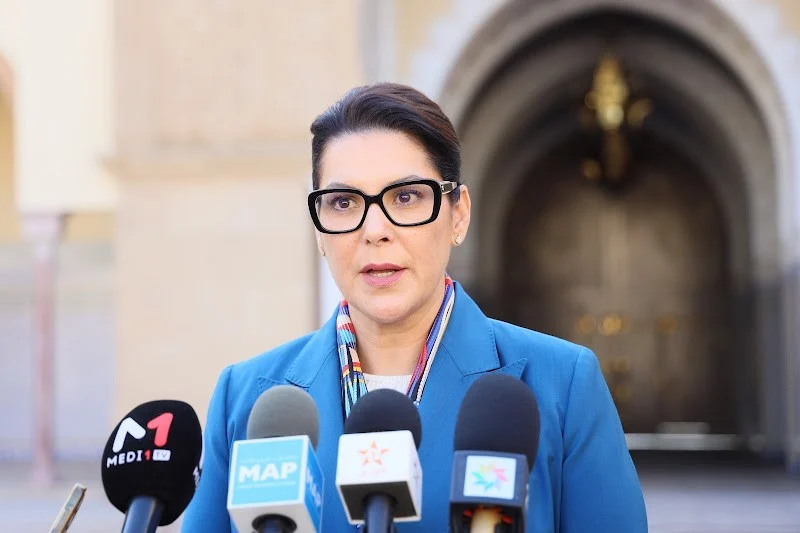
Mansouri’s appointment as Morocco’s first female head of government gives the question of women’s access to executive authority particular significance.
Her arrival changes the gender composition of the country’s highest executive office, a position previously held exclusively by men. But the broader question for the cabinet concerns the responsibilities women exercise across government and their influence over decisions affecting economic and social policy.
Among the appointments is Najwa Koukouss as minister of family, social development and equality, placing several issues relating to family policy, social inclusion and equal opportunity within one ministerial portfolio.
The cabinet also includes women holding delegated responsibilities in housing, vocational training, relations with Parliament and administrative reform.
The presence of women in government is one measure of participation. The authority attached to their portfolios, their access to resources and their role in government decision-making are others.
Questions of generational renewal require similar scrutiny.
The appointment of newer political figures can widen the paths through which people enter national executive office, particularly for those whose experience comes from local government, Parliament or party organizations.
But renewal cannot be measured simply through the appearance of unfamiliar names. It depends partly on whether political parties are developing new leadership, giving those figures genuine responsibility and opening opportunities beyond their established circles of recruitment.
Artificial intelligence enters the cabinet
One of the most distinctive organizational changes is the creation of a ministry for artificial intelligence, digital transformation and administrative reform, headed by former Competition Council president Ahmed Rahhou.
The new portfolio gives artificial intelligence explicit ministerial responsibility, placing it alongside digital infrastructure and reform of public administration.
Its scope reaches beyond the adoption of new technologies.
For public services, the challenge includes simplifying procedures, improving the exchange of information between institutions, protecting personal data and reducing the time citizens and businesses spend dealing with administrative requirements.
Aïcha Kellaa’s appointment as minister delegate for administrative reform creates a direct link between technological modernization and changes to the way public institutions operate.
That relationship could prove important. Moving an administrative procedure online does little to simplify it if citizens are still required to submit the same documents, secure the same authorizations or navigate the same institutional delays.
Effective digital reform may therefore require changes to administrative rules and decision-making authority as much as investment in software and equipment.
There is also an economic dimension. Artificial intelligence and other emerging technologies raise questions about training, research capacity, business competitiveness and Morocco’s ability to develop technological expertise rather than depend entirely on imported applications.
The ministry’s effectiveness will depend on how it works with education, higher education, industry and other departments whose responsibilities overlap with its own.
Food sovereignty and the pressure on natural resources
The introduction of food sovereignty into the agriculture ministry’s title places another issue more visibly within the government’s stated priorities.
Morocco’s agricultural sector faces persistent pressure from water scarcity, climate variability and fluctuations in international commodity prices.
These challenges affect not only agricultural output but also the reliability of food supplies, the cost of imports and the ability of domestic producers to meet demand.
A food-sovereignty approach potentially connects agricultural production with storage, distribution, processing, water management and the resilience of supply chains.
It also raises difficult questions about how Morocco balances export-oriented agriculture with domestic food requirements, particularly when water resources are limited.
The relationship between Hatimi’s ministry and the equipment, water and forests portfolio led by Baraka will consequently be important.
Agricultural choices depend on the availability and sustainable use of water, while water-management decisions affect production, rural employment and food prices.
The revised portfolios create a framework for closer coordination between these responsibilities. Whether that coordination changes investment priorities or production practices is a separate question.
Social policy and territorial inequality
Education, healthcare, employment and access to basic services remain central to the challenges facing the new executive.
Youns Bjijou’s appointment to health and social protection places healthcare provision and the expansion of social coverage under one ministry.
The relationship between the two is crucial: extending legal eligibility for healthcare or social benefits does not necessarily mean that people can obtain timely treatment, find medical professionals or access the services to which they are entitled.
The government will need to address the capacity of healthcare institutions alongside the financing and administration of social protection programs.
Similar concerns apply to education and employment, where expanded programs must ultimately be judged by the quality of teaching, the skills students acquire and their opportunities after leaving school.
These challenges are also geographical.
Access to transport, schools, hospitals, housing and employment differs substantially between Moroccan regions and between urban and rural areas.
Reducing those disparities requires more than distributing projects across a map. Infrastructure investment must be connected to local economic activity and the availability of public services, with priorities based on the needs of individual territories.
The responsibilities assigned to the ministries of equipment and water, territorial planning and housing, education and health intersect directly with those questions.
Their decisions will also depend on cooperation with regional and local authorities, particularly where projects involve multiple administrations, funding sources and implementation schedules.
Without that coordination, individual investments may be completed without producing the wider improvements in living conditions they were intended to support.
More delegated ministers, no secretaries of state
The government also makes extensive use of delegated ministers while dispensing with secretaries of state.
The arrangement assigns specialized responsibilities within larger ministries, including preschool education and school dropout, vocational training, foreign trade, fisheries, housing, youth affairs, social inclusion and administrative reform.
At education, for example, two delegated ministers will oversee preschool education and vocational training under Benabdallah’s wider authority.
Foreign trade has a dedicated minister delegate within Mezzour’s expanded industry and investment portfolio, while fisheries has its own delegated minister within the agriculture ministry.
The arrangement may allow closer attention to individual policy areas without separating them into entirely independent ministries.
Its effectiveness, however, will depend on the division of authority between ministers and their delegates.
Unclear responsibilities can produce overlapping instructions, additional approval procedures and disputes over who has the final say. Delegation is useful only when the officials involved have sufficient authority to manage their files and clear mechanisms for resolving disagreements.
Removing secretaries of state does not, by itself, establish that the resulting administration will be simpler.
From political appointments to measurable results
The clearest test of the new cabinet will come in the decisions its members make together.
Employment and social dialogue, now under Chahid, will involve negotiations over wages, working conditions and labor-market policy, often requiring agreements between unions, employers and the government.
Social protection and education will demand sustained financing, while infrastructure, housing and regional development will require coordination across institutions with different budgets and responsibilities.
These are precisely the areas in which a four-party coalition must turn its political agreement into workable decisions.
The appointment of recognizable party figures makes responsibility for those decisions more visible, but it also exposes the parties to scrutiny over the results.
The addition of public performance to the finance ministry reinforces the question of how those results should be measured.
Announcing projects, allocating funding and reorganizing ministries are administrative steps. Their public value depends on whether projects are completed, services improve, delays fall and resources reach the communities and groups for which they were intended.



add your comment
Terms of publication : Not to offend the writer, people, sacred things, or attack religions or the divine self, and refrain from racist incitement and insults.