
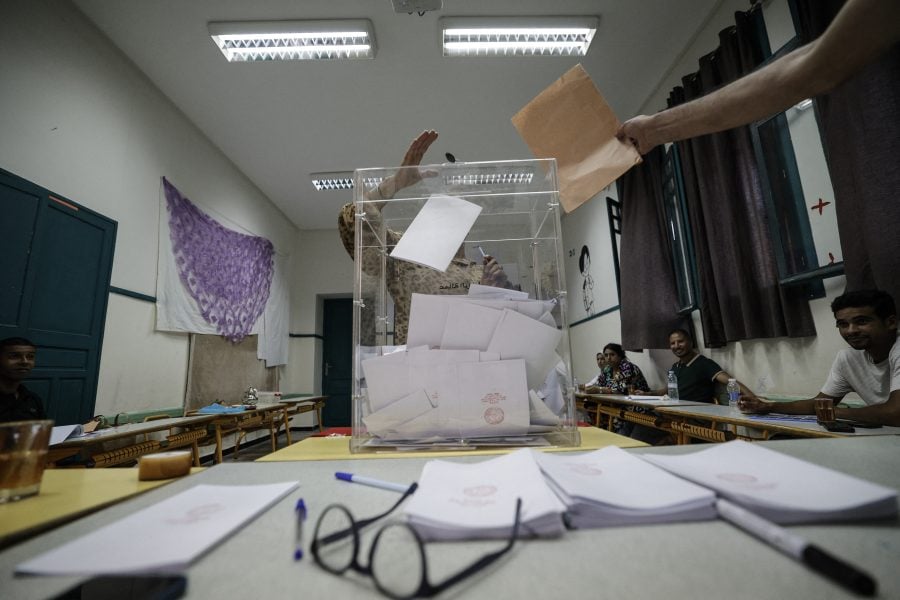
The September 23 legislative election has changed the makeup of Morocco’s next parliament, with women’s representation rising and the age and education profiles of elected MPs shifting.
A Hespress AR analysis of Ministry of Interior data from the 2026 election, compared with the 2016 and 2021 polls, looks at the national picture as well as local and regional constituencies.
At the national level:
Across all constituencies, the final results of the September 23 election show that men won 72.91% of seats, compared with only 27.09% for women.
Women’s share rose from 24.3% in 2021 to 27.09% in 2026, compared with 20.5% in 2026.
This shows that women’s representation has continued to rise over the past decade, but gains of 3 to 7 percentage points between elections still leave it below the constitutional goal of parity.
In terms of age, MPs over 55 made up the largest group at 42.78%, followed by those aged 45 to 55 at 32.91%.
Together, MPs over 45 account for 75.69% of the new House. Those aged 35 to 45 make up 14.94%, while MPs under 35 account for just 9.37%.
The figures show a House that leans more toward experience and seniority than generational change.
At the local level: men still dominate
The gender gap is much wider in local constituencies.
Men won 94.43% of seats, compared with just 5.57% for women.
This is up from 1.97% for women in 2021, when men won 98.08% of local seats.
In terms of age, MPs over 55 made up 49.18% of those elected, followed by the 45-55 group at 34.75%.
Together, those over 45 account for more than 83% of winners. Those aged 35 to 45 made up 13.44%, while those under 35 accounted for less than 3%.
Since local constituencies account for most House seats, their results have a strong impact on the overall makeup of the new parliament.
At the regional level:
Regional constituencies, which are reserved entirely for women, show a very different picture.
In terms of age, the women elected through these lists are more evenly spread across age groups.
Those under 35 make up 32.22%, the highest share of young MPs across all levels in this comparison.
Women aged 35 to 45 account for 20%, those aged 45 to 55 for 26.67%, and those over 55 for 21.11%.
In terms of education, 91.11% of the women elected through regional constituencies have a higher education level. Primary and secondary education account for only small shares, while almost none have no formal education.


add your comment
Terms of publication : Not to offend the writer, people, sacred things, or attack religions or the divine self, and refrain from racist incitement and insults.