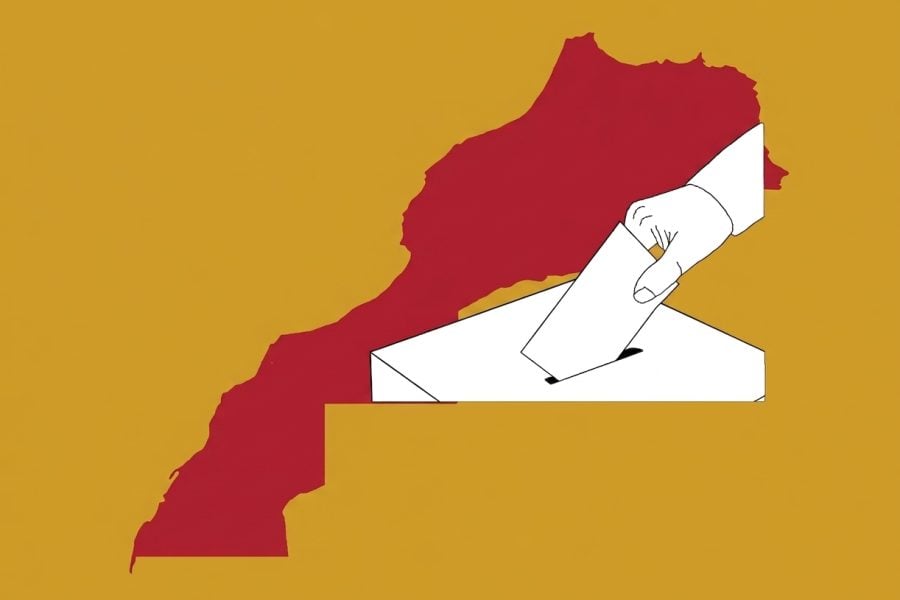
Part 1 of a series on Morocco’s 2026 elections, set for September 23.
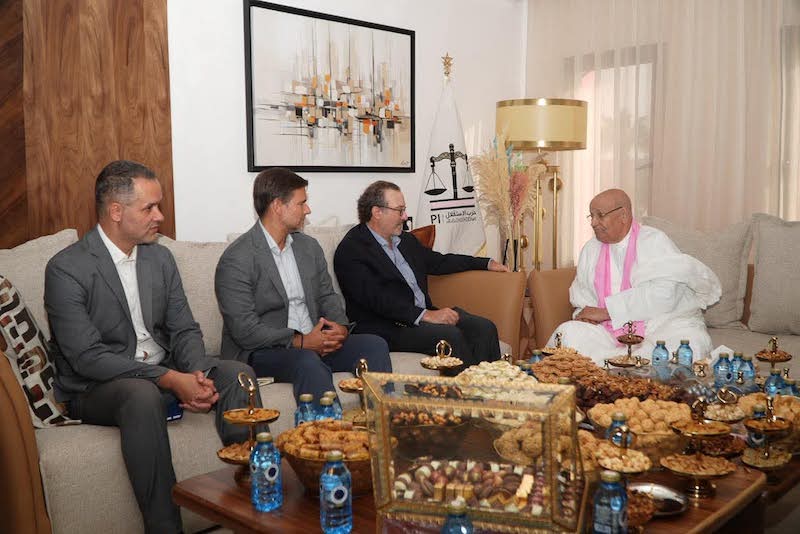
On August 25, Morocco’s National Rally of Independents accused its own governing partner of poaching its lawmakers, naming eight officials it said its coalition partner, the Authenticity and Modernity Party, or PAM, had lured to defect.
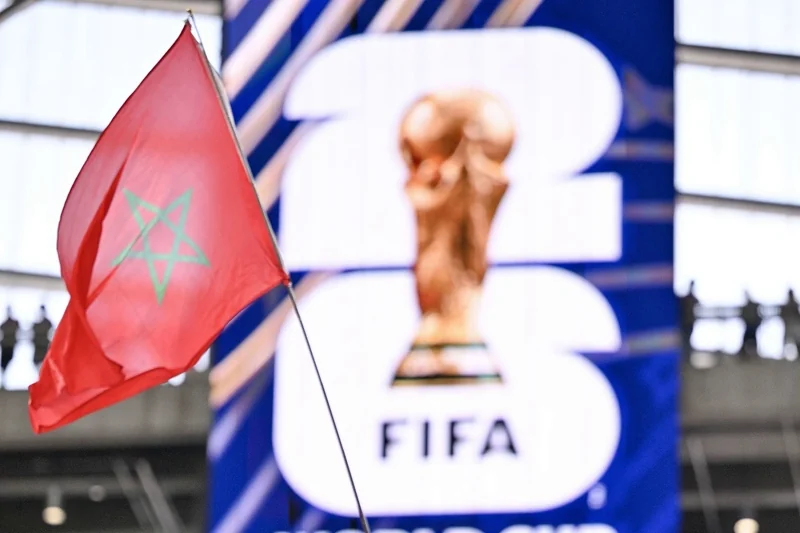
Then a recording leaked, attributed to RNI’s own House Speaker, joking that politics doesn’t run on FIFA transfer rules and vowing that budget minister Fouzi Lekjaa would never get the Finance Ministry.
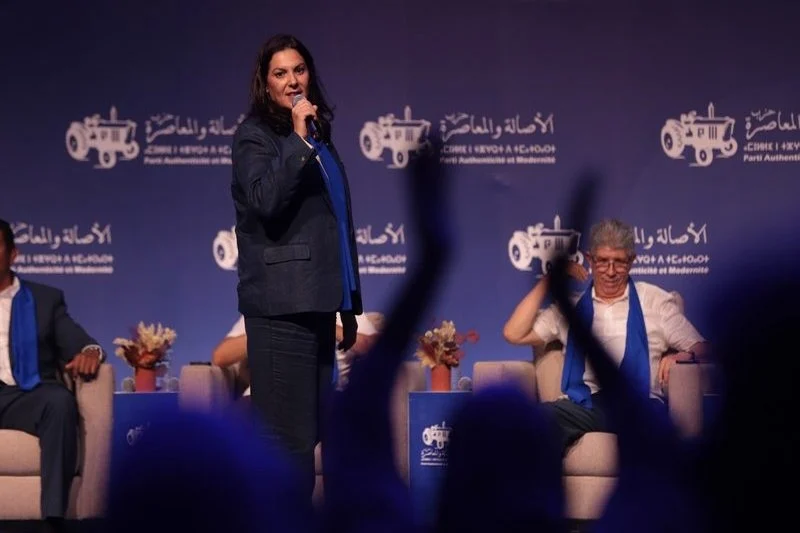
PAM’s leadership then reminded RNI that it had done exactly this in 2021, absorbing more than seventeen lawmakers from five rival parties, six of them from PAM alone. And a few days later, at a rally in Fkih Ben Saleh, Lekjaa called unnamed rivals “the real terrorists” for letting meat prices climb past 150 dirhams a kilo, though no one in the room mistook who he meant.
Istiqlal, the coalition’s third party, hasn’t stayed above any of it either and has attacked its own government’s record on prices and social aid, positioning itself as the credible alternative to a coalition it still belongs to. RNI, for its part, is out promising to raise the minimum wage to 5,000 dirhams, a pledge Lekjaa turned around and endorsed before pivoting the endorsement into an attack: bring it to the next government council.
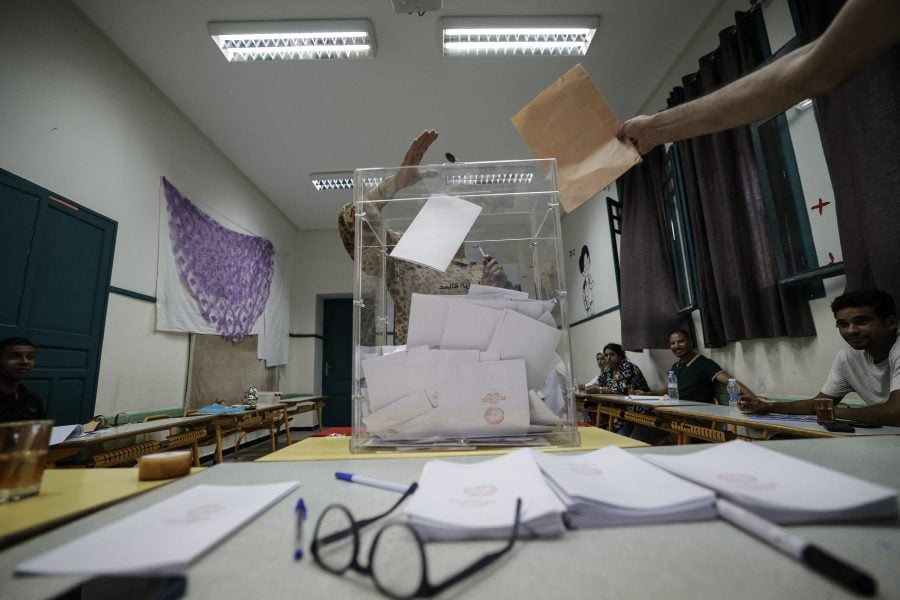
These three parties have governed Morocco together since 2021, holding 270 of parliament’s 395 seats between them, comfortably more than the 198 seats they need. In two weeks, they’ll ask voters to choose among them. And if the last two elections are any guide, they may well end up back at the same table afterward, regardless of how this summer feud went.

Nothing obligates them to hurry. Elsewhere, it usually would. Germany’s parties sign a detailed coalition contract before a chancellor is even sworn in, settling the big fights up front. Spain gives its candidate two shots at a confidence vote; if both fail, the country goes back to the polls. Morocco has no equivalent automatic deadline for failed formation talks.
The rule that decides less than it seems to
What Morocco has is Article 47 of the constitution, which requires the King to appoint the head of government from whichever party wins the most seats, full stop, nothing about who else joins, how large the coalition should be, or what happens if talks fail.
And that appointment is only the first step because under Article 88, a government isn’t legally in office until the head of government has presented a program to both houses of parliament and won it by an absolute majority, 198 votes, in the House of Representatives. The constitution sets no clock and no fallback if negotiations fail, although it provides powers to dissolve parliament.
That gap between the two thresholds – named leader and seated government – has produced two very different outcomes within five years, and there’s no way to know in advance which one will repeat.
Two elections, two very different outcomes
In 2016, the Islamist PJD won the most seats, 125 of them, its strongest result ever, and its leader, Abdelilah Benkirane, tried to renew the coalition he already had.
RNI, then a minor player with 37 seats, refused to join unless the alliance grew to six parties, arguing a broader majority would govern more credibly. Benkirane called that a dilution of the mandate voters had just given him and wouldn’t budge. Five months went by, the 2017 budget stalled, along with reform legislation that depended on it; ministries kept the lights on through emergency decree, but nothing new got passed.
Eventually the King replaced Benkirane with a more accommodating figure from his own party, Saadeddine Othmani, who accepted the six-party coalition RNI had wanted and cleared the Article 88 threshold within three weeks.

In 2021, none of that friction showed up, and RNI’s Aziz Akhannouch won with 102 seats, opened talks with four parties, and settled on PAM and Istiqlal within days, arguing the three shared enough policy ground and had won strong enough mandates to govern together. Their combined 270 seats cleared the Article 88 threshold easily, and the government was in office within weeks.

A formula no one else uses
Part of why an outright majority is difficult to achieve comes down to how votes translate into seats, and a change adopted in 2021 set that bar deliberately high.

Picture an apartment building voting on a big decision, say, replacing the elevator.
Normally, whoever gets the most votes among the residents who actually show up wins. Now imagine the building’s rules instead measure that threshold against every apartment in the building, including ones sitting empty or owned by landlords who never bother to vote. Suddenly the bar is much higher, and a resident who wins nearly every vote actually cast can still fall short.
Morocco’s electoral law works the same way inside each voting district, and the number of votes needed to win a seat is calculated using every registered voter in the district, not just the people who actually turned out, a method no other country uses.
The Council of Europe observers said the design made it “almost impossible” for one party to win more than a seat in a district, a cap PJD’s own leaders said was aimed squarely at them, after the party had taken three of Tangier’s seats in 2016.

The formula, though, only explains part of what happened to the PJD that year. Its actual vote share collapsed too, from nearly 28% to just over 4%, and most analysts trace that mainly to a decade of governing that delivered subsidy cuts, a higher retirement age and wage pressure.
It comes down to ministries, not ideology
That formula is also what makes the August feud almost beside the point because no single party can realistically reach 198 seats alone, whoever wins on September 23 will need partners.

Ideology won’t be what decides it because RNI, PAM and Istiqlal all campaign inside roughly the same lane, broadly supportive of the same national development priorities and differing more in emphasis than in direction, so there isn’t much ideological ground for a coalition deal to actually bridge.
What the negotiation is really over is ministries; real control of departments like Finance or Economy.

Under Article 47, it’s the head of government who nominates the cabinet, which the King then formally appoints; in practice, that nomination gets negotiated department by department with whichever parties are joining the government, since each wants visible control of the areas that matter most to its base.
A 2023 comparative study of Morocco and Iraq, by Lise Storm and Dylan O’Driscoll, found this ministry-by-ministry bargaining shapes Moroccan coalitions more than any shared platform does.
Inmaculada Szmolka’s research on the seat formula points the same way: it’s built to deny any single party a clean mandate, which means a coalition- likely some version of the current one is the only outcome on the table.



add your comment
Terms of publication : Not to offend the writer, people, sacred things, or attack religions or the divine self, and refrain from racist incitement and insults.