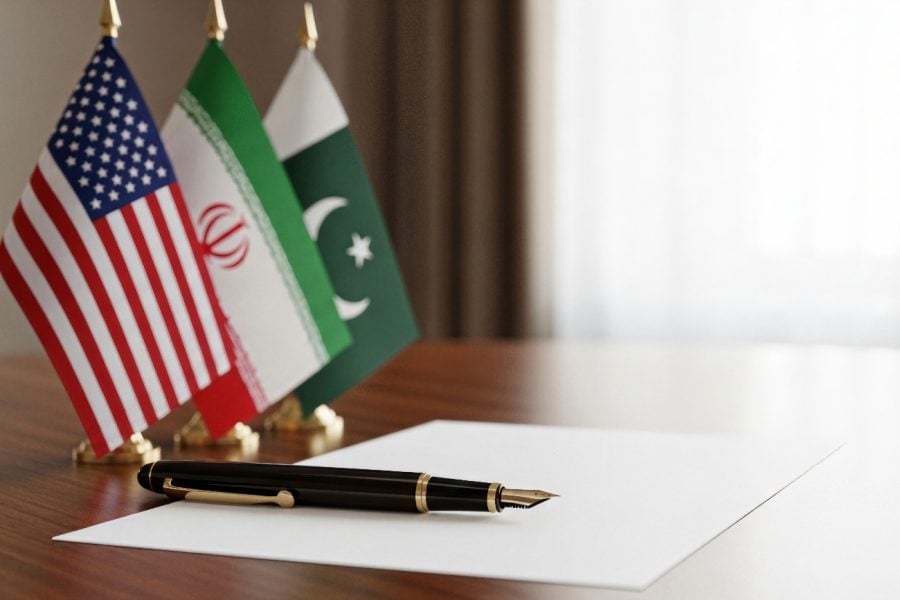
Pakistan’s growing engagement with Syria’s new authorities may be about more than strengthening bilateral ties. The recent visit by Syrian Foreign Minister Asaad al-Shaibani to Islamabad, including meetings with Pakistan’s political and military leadership, points to a broader effort by Islamabad to establish a role in post-Assad Syria at a time when the regional balance of power remains unsettled.
The official agenda was centered on regional developments and expanding political, security and defense cooperation between Pakistan and Syria. Yet the composition of the visit, particularly al-Shaibani’s meeting with Army Chief Field Marshal Asim Munir, raises a broader question about the strategic calculations behind Pakistan’s outreach.
One of the most important questions is how this emerging relationship could affect Syria’s relationship with Iran.
Beyond a conventional diplomatic opening
Al-Shaibani’s August 19–20 visit was the first by a Syrian foreign minister to Pakistan in nearly two decades. His meetings with Foreign Minister Ishaq Dar, Prime Minister Shehbaz Sharif and Field Marshal Asim Munir placed Syria-Pakistan relations within both diplomatic and security frameworks.
Pakistan’s military said the meeting with Munir focused on the regional security environment and expanding defense and security cooperation. The Foreign Ministry similarly highlighted political, security and defense issues.That combination is significant.
Pakistan’s engagement with Syria is taking place at a moment when the country is undergoing a fundamental political and strategic transformation following the fall of Bashar al-Assad in December 2024. Damascus is attempting to establish new relationships while managing a complicated regional environment involving Turkey, the Gulf states, Israel, the United States, Russia and Iran.
For Islamabad, establishing ties with the new Syrian leadership could provide an opportunity to increase its diplomatic relevance in a region where it has historically maintained relationships with competing powers.
The Iran question
Iran was one of the most important external supporters of the Assad government. Over more than a decade of war, Tehran established extensive political, military and security networks inside Syria and used the country as a strategic link connecting Iran to Iraq and Lebanon.
The fall of Assad significantly disrupted that network. For Iran, therefore, Syria is not simply another country with which it lost diplomatic influence. The collapse of the previous Syrian government removed an important component of Tehran’s regional strategy.
The question now is whether Iran will remain largely excluded from the new Syrian order or eventually regain some form of political presence.Pakistan could potentially become relevant to that question.
This does not necessarily mean Islamabad is seeking to restore Iran’s previous influence in Syria. There is currently no public evidence establishing such a policy. Rather, Pakistan’s own strategic interests could encourage it to maintain channels with both Damascus and Tehran and avoid a regional environment in which Iran becomes completely isolated.
Pakistan’s balancing act
Pakistan has its own reasons for maintaining a working relationship with Iran. The two countries share a border and face a range of security, economic and regional issues that require continued communication.
At the same time, Islamabad has developed relationships with Arab states and other regional powers and has an interest in expanding its diplomatic role beyond South Asia.
Engaging Syria’s new leadership could therefore serve several purposes simultaneously.
It could strengthen Pakistan’s political and security ties with Damascus, give Islamabad greater visibility in discussions surrounding Syria’s future and provide another channel through which it can engage with the wider Middle East.
Maintaining communication with Tehran could serve a similar purpose. Rather than choosing between competing regional camps, Pakistan may have an incentive to preserve relationships across them.
Why the military dimension matters
The meeting between al-Shaibani and Munir suggests that Islamabad sees its relationship with Syria not solely through the traditional diplomatic lens. Security cooperation and the wider regional security environment are clearly part of the relationship being developed.
That could become particularly important as Syria attempts to reorganize its security institutions and redefine its relationships with neighboring and regional powers.
For Pakistan, participation in that process could increase its strategic relevance. It could also give Islamabad a better understanding of the security calculations shaping post-Assad Syria.
At the same time, maintaining contacts with Iran gives Pakistan an additional diplomatic channel at a moment when Tehran is attempting to adjust to the loss of one of its most important regional partners.
Damascus is the key variable
Whether Pakistan can eventually play a role between Damascus and Tehran, however, depends primarily on the position of the Syrian government.
Al-Shaibani has publicly adopted a cautious position toward any potential Iranian return.
When asked whether Pakistan had offered to mediate between Syria and Iran, he said that no formal proposal had been made during his visit. At the same time, he indicated that Iran would first need to acknowledge its actions in Syria and toward the Syrian people before meaningful discussion about future mediation could take place.
That position suggests that Damascus is not necessarily closing the door to all future contact with Tehran. Instead, it appears to be seeking to establish the conditions under which such contact could occur.
For the new Syrian leadership, this distinction is crucial. Reopening diplomatic communication with Iran would not necessarily mean allowing Tehran to restore the political, military and security networks it developed under Assad. Damascus could seek limited diplomatic or economic engagement while attempting to prevent the reconstruction of Iran’s former influence.
A possible political opening for Tehran
For Iran, even limited political normalization could nevertheless be valuable.
A return would not necessarily begin with a large military presence or the immediate reconstruction of its former networks. It could start with diplomatic contacts, followed by consular, economic or humanitarian cooperation.
Over time, those channels could provide opportunities for Tehran to rebuild relationships with political figures, local actors and other institutions inside Syria.
This is why Pakistan’s role could become strategically important even if Islamabad has no intention of acting as an explicit mediator.
By maintaining relations with both Damascus and Tehran, Pakistan could help preserve a channel of communication that might otherwise remain closed.
That would not make Pakistan an Iranian ally in Syria. It would instead position Islamabad as one of the regional actors capable of communicating across a divide that has widened considerably since Assad’s fall.
A broader Pakistani strategy
Pakistan’s outreach to Syria may ultimately be part of a broader strategy of expanding its diplomatic footprint in the Middle East.
The country has long attempted to balance relationships with Saudi Arabia, the Gulf states, Iran and other regional powers. Its relationship with Turkey has also become increasingly important.
Post-Assad Syria presents another opportunity.
By engaging early with Damascus and incorporating security cooperation into the relationship, Pakistan can position itself as a relevant partner in the reconstruction of Syria’s political and security order.
At the same time, keeping channels open with Tehran could prevent Islamabad from being locked into one side of the region’s competing geopolitical alignments.
The strategic value of such a position may be greater than any immediate economic or diplomatic gains from the Syria relationship itself.
Between mediation and balancing
The significance of Pakistan’s Syria policy, therefore, may lie less in whether Islamabad is actively trying to restore Iranian influence than in whether it is attempting to preserve a channel through which Tehran can remain politically relevant.
For Damascus, reopening that channel carries risks. Any normalization that allows Iran to rebuild its political, economic or security networks could complicate the new leadership’s efforts to establish a post-Assad order independent of the structures that sustained the previous government.
For Pakistan, however, maintaining communication with both sides could serve its own strategic interests.
The challenge will be to deepen its relationship with Syria’s new authorities without being perceived as facilitating a return of Iran’s former influence.
If Islamabad succeeds, it could emerge as a useful intermediary and a more consequential regional actor. If it fails, its Syria outreach could instead become entangled in the broader competition between those seeking to shape Syria’s post-Assad order and those seeking to prevent Iran from regaining its former position.
For now, the official story is one of expanding Pakistan–Syria political, security and defense cooperation. The more consequential question is what this new relationship could eventually mean for the regional actors that were displaced by Syria’s political transformation, particularly Iran.




add your comment
Terms of publication : Not to offend the writer, people, sacred things, or attack religions or the divine self, and refrain from racist incitement and insults.