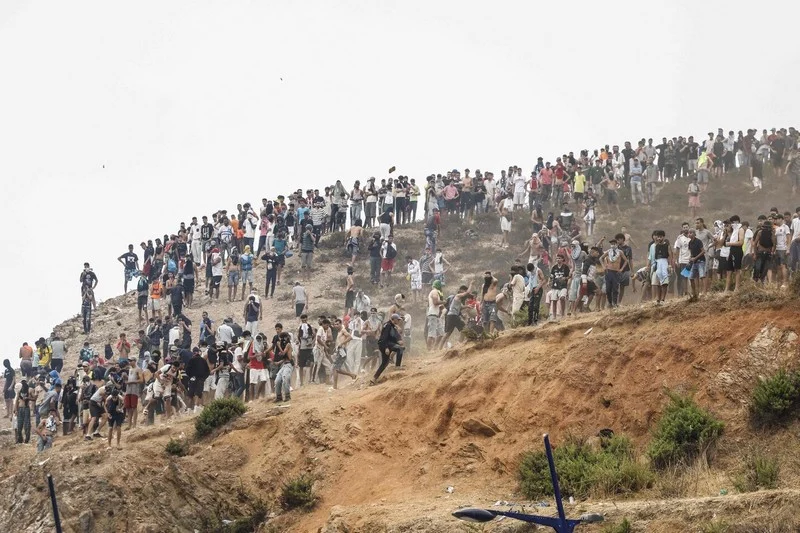
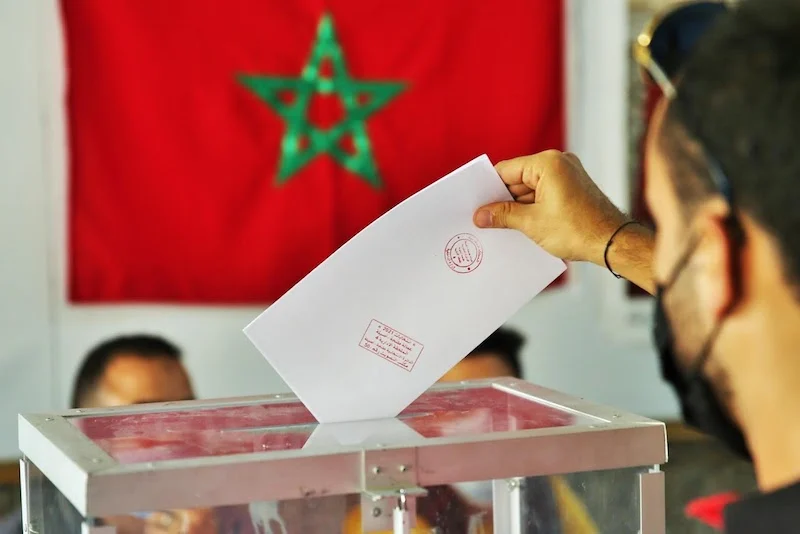
A month before Moroccans went to vote, Sept. 23 was already circulating in WhatsApp groups for a different reason: as the next date to try to reach Ceuta. It has since traveled a long way from those group chats.
Two Spanish ministries, Moroccan security forces and diplomats from both governments are now treating it as a matter serious enough to prepare for at the state level even though officials say, clearly, that nothing circulating so far comes close to the scale of what happened in July.
Where the date came from
The date emerged after an Aug. 15 attempt ran into a heavy Moroccan security deployment. Spain’s RTVE analyzed more than 12,000 messages, audio recordings and videos exchanged in WhatsApp groups between Aug. 4 and 13, material that initially focused on Aug. 15 before some users shifted to later dates, including Sept. 23.
One message, reportedly written in Darija, read: “Guys, I’ll give you some advice: anyone who doesn’t want problems shouldn’t cause trouble on the 15th, because there is no plan. There will be an attempt on the 23rd because there are elections.” Other posts read “Ceuta, God willing” and urged people to cross the border fence “in silence.”
Where it’s spreading
The mobilization has moved beyond TikTok and Instagram into closed groups on Telegram, WhatsApp, Discord and Facebook, including one private channel called “From Morocco to Ceuta” with close to 100,000 members, and Gen.Z.212, a private Facebook group with more than 91,000 members named after Morocco’s youth-led protest movement.
According to El Confidencial, the messages present Moroccan security forces’ focus on the election as an “exceptional opportunity” to slip past border controls.
From anonymous chatter to a state response
What started as a rumor passed between phones is now being handled the way a security threat is handled. Foreign Minister José Manuel Albares said Monday that Madrid had activated preventive measures and remained in regular contact with Moroccan authorities.
Interior Minister Fernando Grande-Marlaska announced additional security units for Ceuta and Melilla and said intelligence services were actively monitoring the mobilization. Albares is set to meet his Moroccan counterpart, Nasser Bourita, in person during the United Nations General Assembly in New York, and has asked Rabat to mobilize its forces ahead of Wednesday.
Spain has also launched a counter-messaging campaign, with consulates in Morocco and the embassy in Rabat distributing information on the consequences of irregular entry, and stressing that crossing into Ceuta or Melilla does not grant a right to remain indefinitely in Spain or the rest of the European Union.
Yet Albares was just as clear about what this isn’t. “There are messages on social media that, for the moment, are not gaining traction among the population or having the impact that the calls to enter Ceuta on July 30 had,” he said. A warning from the Spanish embassy’s Internal Affairs Office said there were no indications the elections would affect border security.
What Morocco has already done
Morocco adjusted its approach after Aug. 15. Authorities detained at least 111 people heading toward Ceuta after that round of calls, with checks reinforced around Fnideq and on approach routes to the border.
Moroccan media separately reported 294 people intercepted in that operation, including 248 sub-Saharan Africans and 46 Moroccans, part of a broader shift toward stopping people before they reach the border area rather than waiting for them to gather there.
Why the stakes are high anyway
Even at a smaller scale, officials aren’t taking chances, because of what July showed a similar campaign could turn into.
Declassified Spanish intelligence reports found the July mass crossings were preceded by comparable social media campaigns and coincided with the redeployment of some border personnel to Tetouan for Throne Day celebrations.




add your comment
Terms of publication : Not to offend the writer, people, sacred things, or attack religions or the divine self, and refrain from racist incitement and insults.