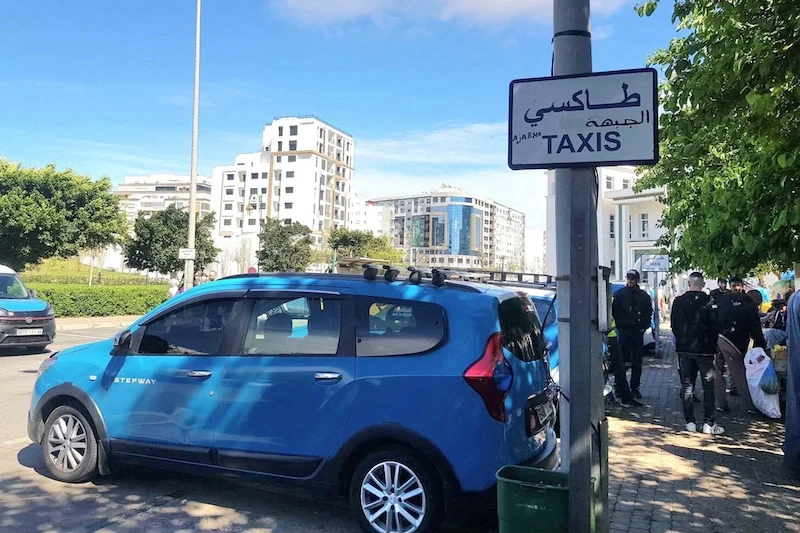
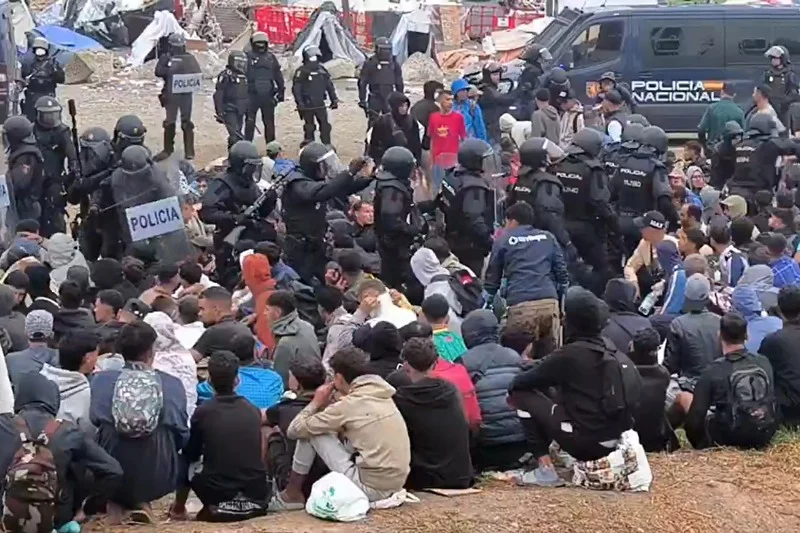
A Moroccan judicial source has defended the convictions of several taxi drivers in connection with the recent mass migration attempt toward the Spanish enclave of Ceuta, saying the cases were based on evidence of their alleged knowledge of passengers’ intentions and their role in facilitating irregular migration.
The source, speaking to Hespress AR, said the convictions were not based simply on the drivers transporting passengers from Tetouan to Fnideq, nor on their work as professional taxi drivers.
The clarification comes after the sentences sparked controversy among taxi workers and unions, who argued that drivers had been held responsible for actions beyond their legal duties. The judicial source said it was important to distinguish between the broader political and human rights debate surrounding the Ceuta events and the individual criminal responsibility assessed by the courts.
According to information reviewed by Hespress, the two cases resulting in convictions involved specific circumstances that prosecutors presented as evidence that the drivers knew some passengers intended to attempt irregular migration.
In the first case, a large-taxi driver working on the Tetouan-Fnideq route transported seven people for 20 dirhams each. The case file also indicated that he hid his two sons in the vehicle’s trunk. According to the judicial source, the driver acknowledged that the trip was intended to facilitate their attempt to migrate irregularly.
The second case involved two drivers operating routes between Chefchaouen and Tetouan and between Tetouan and Fnideq. According to the source, the drivers acknowledged transporting people they knew were planning to migrate irregularly and dropping them near the exit of the highway leading to Fnideq so they could continue toward the crossing area.
The source stressed that Moroccan law does not require taxi drivers to investigate passengers’ intentions or perform the duties of law enforcement officers.
Transporting people between Moroccan cities is a lawful activity, and freedom of movement within the country is protected by law, the source said. However, criminal liability can arise when a court establishes that a driver knew about an unlawful purpose and intentionally contributed to facilitating it.
The source said the central legal question before the court was therefore not whether transporting passengers to Fnideq was lawful, but whether the drivers knew the purpose of the journeys and whether their actions were intended to facilitate irregular migration.
“[The court] did not criminalize the profession of transport or movement to Fnideq,” the source said, arguing that the distinction lies between legitimate professional transport and knowingly assisting in the commission of a crime.
The judicial source also rejected the argument that freedom of movement should prevent criminal liability in such cases. Rights and freedoms, the source said, do not prevent the application of criminal law when an otherwise lawful act is deliberately used to facilitate an offense.
Court says migration attempt remains legally irregular
The source also addressed questions over the use of the term “irregular migration,” saying that the public nature of the attempted crossings or their extensive media coverage does not change their legal classification.
The relevant criterion, according to the source, is whether the procedures governing departure from Moroccan territory were followed, rather than whether the attempted crossings took place openly or in front of the media.
The source also clarified references to “border crossings” in the case, saying the expression was used descriptively and procedurally to refer to the movement of people and control points.
Such wording, the source said, does not constitute legal or political recognition of Spanish sovereignty over Ceuta and cannot alter Morocco’s official position that the city is occupied.
Drivers waived right to appoint lawyers, source says
The judicial source also addressed concerns over the defendants’ right to legal representation during proceedings held amid a lawyers’ strike.
According to the source, the defendants in the two cases waived their right to appoint lawyers, as recorded in the court session records.
The source said that assessing whether defendants’ rights to a defense were respected must be based on the documents contained in the case files, rather than simply on the absence of a lawyer during the hearings.
There is a legal distinction, the source said, between a defendant who was deprived of the right to defense and one who voluntarily waived that right in circumstances permitted by law.
Convictions do not settle responsibility for wider Ceuta crisis
The judicial source stressed that the convictions do not establish responsibility for the wider events in Ceuta.
Instead, the cases concern the individual criminal responsibility of the people brought before the court, the source said. Investigations into other possible responsibilities can continue alongside prosecutions of individuals whose involvement in criminal acts is established.
The source also rejected the suggestion that the Interior Ministry’s announcement that investigations had been opened amounted to interference with the Public Prosecutor’s Office.
Government institutions, the source said, can inform the public about events and administrative or security measures, while criminal investigations, decisions on whether to close cases, prosecutions and referrals to court remain within the exclusive authority of the judicial authorities.
The mere issuance of a government statement does not establish interference with judicial independence, the source said. Such a claim would require evidence of actual intervention in judicial decision-making.
Source rejects claims taxi drivers were made “scapegoats”
The judicial source also rejected claims that taxi drivers had been made “scapegoats” for the wider migration crisis.
Courts, the source said, do not judge people because of their profession but determine individual criminal responsibility based on evidence and established facts.
The source argued that portraying the defendants simply as taxi drivers who transported Moroccan citizens to Fnideq did not reflect the full circumstances contained in the two case files.
The cases included, according to the source, alleged admissions that some drivers knew passengers were heading toward the area to attempt irregular migration, as well as the alleged concealment of two children in the trunk of one vehicle.
The source stressed, however, that the evidence and legal classification remain subject to judicial review and that the defendants have the right to challenge both the evidence and the legal basis of their convictions through the available appeals process.
The judicial clarification comes as debate continues in Morocco over the causes and handling of the mass migration attempt toward Ceuta. The source said the public has the right to debate the political, social and human rights dimensions of the events, but that such debate does not remove the courts’ responsibility to determine individual criminal liability.
The source concluded that taxi drivers are not legally responsible for the intentions of their passengers, but they are not immune from prosecution if a court establishes that they knowingly and intentionally contributed to an unlawful scheme.
Whether such knowledge, intent and evidence have been sufficiently established, and whether defendants’ rights to a fair trial were respected, remain matters for the courts and the appeal process.








add your comment
Terms of publication : Not to offend the writer, people, sacred things, or attack religions or the divine self, and refrain from racist incitement and insults.