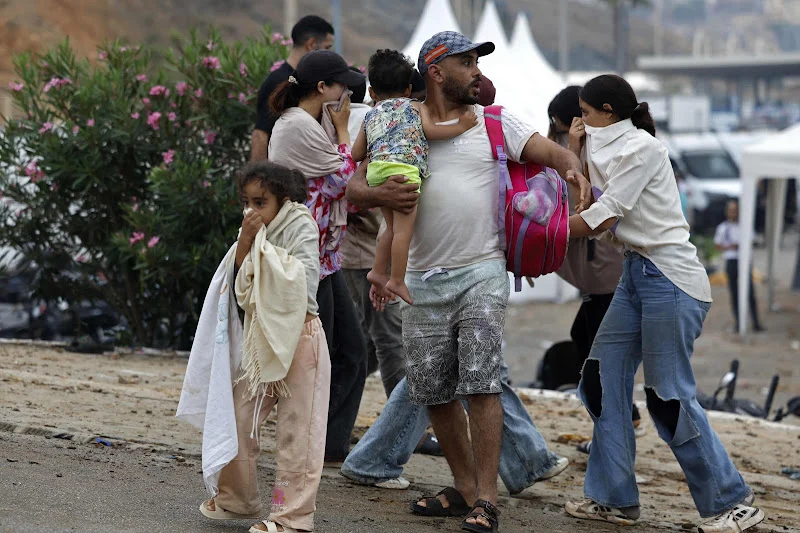
The mass crossings into Ceuta at the end of July were the result of weeks of legal confusion, online mobilization, and steadily rising arrivals that initially attracted little attention outside the border region before erupting into an international crisis.
June 29: Supreme Court ruling changes return procedures
Spain’s Supreme Court heard a case brought by an Algerian migrant, identified in court records as “Cándido,” who had been intercepted while swimming toward Ceuta in November 2024 alongside two other migrants. Guardia Civil officers rescued him from the water and immediately handed him over to Moroccan authorities at the Tarajal border crossing without initiating the standard return procedure. Two lower courts had previously ruled against the Spanish government’s handling of the case.
June 29: Judgment 814/2026
The Supreme Court unanimously ruled that the “hot return” procedure—allowing authorities to summarily return migrants to Morocco—can only be applied when migrants breach a physical border barrier, such as the Ceuta fence. Cameras, drones, and other surveillance systems do not constitute physical barriers.
Because migrants arriving by sea do not cross the fence, they cannot be summarily returned and must instead undergo Spain’s ordinary immigration procedure.
The ruling does not legalize irregular entry into Spain or guarantee migrants the right to remain in the country.
July 8: The ruling becomes public as a second judgment is issued
The Supreme Court publicly released the June 29 judgment. According to Spanish broadcaster RTVE, the decision quickly spread across Moroccan social media, where many users misinterpreted it as meaning that anyone entering Ceuta by sea could no longer be deported.
The same day, the court issued a second ruling (STS 868/2026), striking down parts of Spain’s 2024 Aliens Regulation and restoring stronger obligations to immediately provide care for unaccompanied migrant minors. Ceuta Mayor Juan Jesús Vivas later described the ruling as an additional challenge for managing arrivals.
Early to mid-July: Online mobilization quietly gains momentum
An intelligence report by Spanish security analyst Chema Gil, based on open-source and social media monitoring conducted between June 1 and Aug. 1 across TikTok, Facebook, Instagram, X, and WhatsApp, documented increasing online activity from early July onward, intensifying after the court ruling became public.
According to the report, a decentralized network emerged in which some accounts created mobilizing content while others amplified it. WhatsApp groups circulated routes, transportation options, schedules, and meeting points near the Tarajal breakwater.
The participating accounts were traced to Morocco, Algeria, Tunisia, France, and the United States, collectively generating an estimated 11 million impressions.
Activity peaked in the days leading up to Morocco’s Throne Day. The report did not identify any central organization directing the campaign or attribute responsibility to specific individuals.
July 20–29: Arrivals increase as online networks expand
Roughly 1,500 people reached Ceuta during this 10-day period, an unusually high number, most of them young Moroccan men swimming around the Tarajal and Benzú breakwaters, while others arrived aboard small boats.
Spain’s Interior Ministry later reported that land arrivals into Ceuta during the first half of 2026 reached 2,582, a 164% increase compared with 978 during the same period in 2025, even as irregular migration declined elsewhere in Spain.
The ministry said it believed trafficking networks were exploiting the Supreme Court ruling to encourage undocumented migrants, particularly young people, to attempt the crossing.
At this stage, coverage remained largely confined to local media outlets in Ceuta.
July 30: Crossings explode into an international crisis
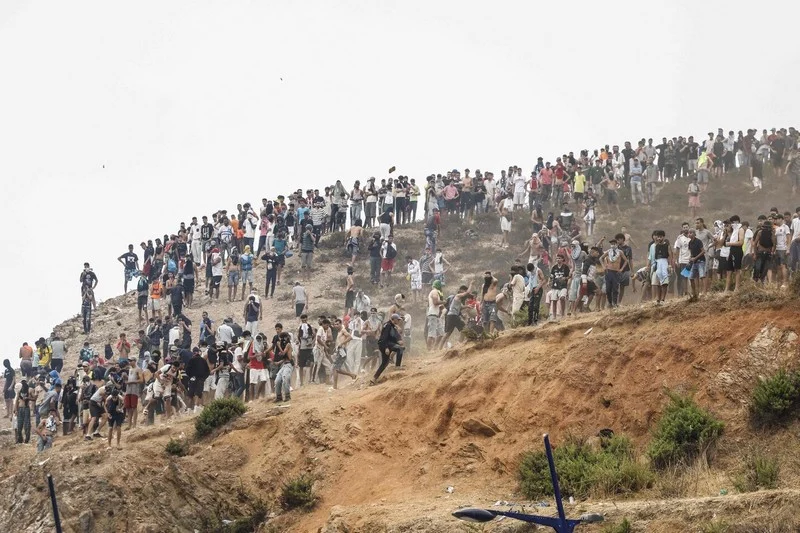
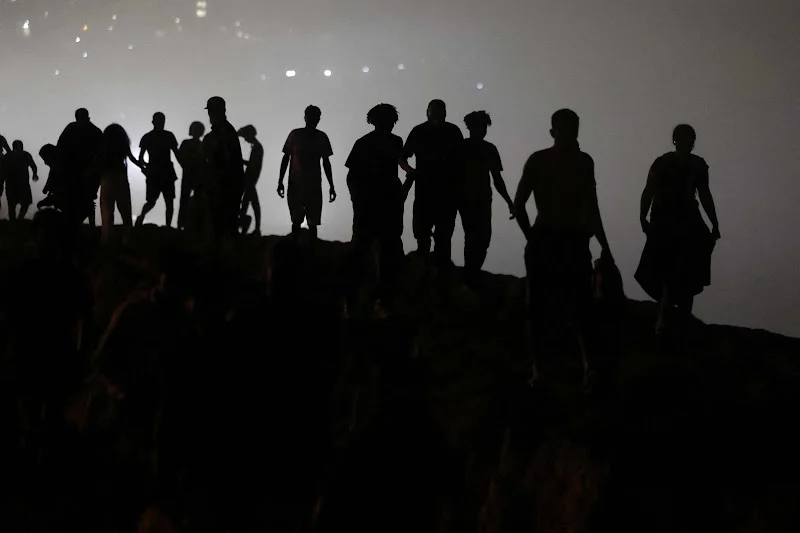
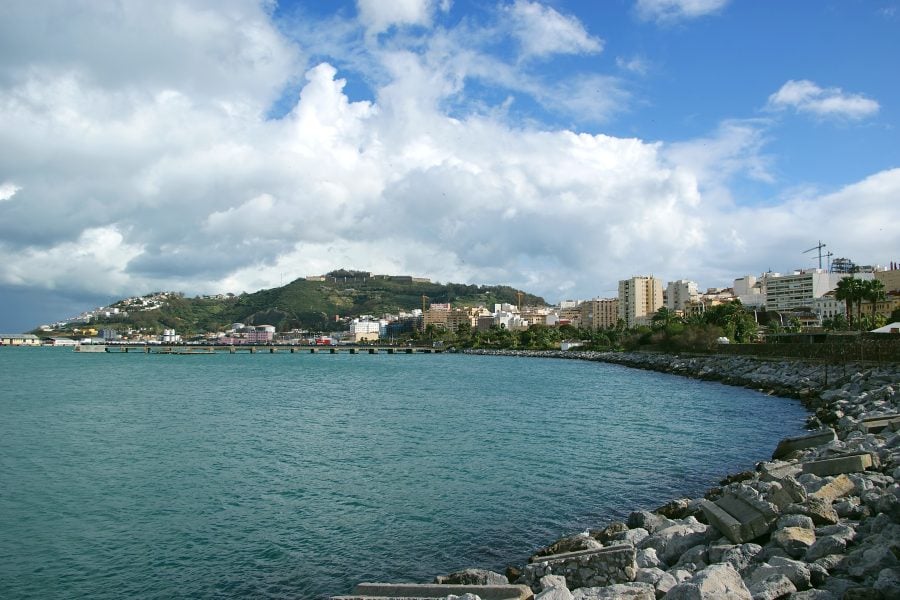
Large crowds attempted to enter Ceuta simultaneously by land and sea, overwhelming Civil Guard officers stationed at the border fence and along the breakwaters.
Mayor Juan Jesús Vivas requested that Madrid declare a national emergency, but Spain’s Interior Ministry declined, stating that migration flows are not classified as a national security emergency under existing legislation.
Reception centers quickly exceeded capacity. Facilities for unaccompanied migrant minors reportedly reached approximately 2,400% of their intended capacity, while around 1,000 adults remained outside the Temporary Immigrant Reception Center or in provisional shelters.
The Civil Guard, National Police, Maritime Safety and Rescue Society, and the Spanish Red Cross deployed rescue boats and emergency teams to assist migrants suffering from hypothermia, dehydration, heat exhaustion, and injuries.
Spain’s Interior Ministry estimated that roughly 50,000 people had crossed from Morocco since Thursday morning, describing the situation as a violation of Spain’s territorial sovereignty.
By the end of the day, at least 18 deaths had been reported.
On the Moroccan side of the border, security forces clashed with migrants near Fnideq while attempting to prevent further crossing attempts.
Spain’s Interior Ministry announced that Madrid and Rabat had agreed to cooperate on the urgent return of new arrivals.
That evening, Italian Foreign Minister Antonio Tajani called for Spain to be suspended from the Schengen Area, describing the scenes in Ceuta as “shocking.” Spanish Foreign Minister José Manuel Albares rejected the remarks as “unbecoming” and summoned Italy’s ambassador to Madrid.
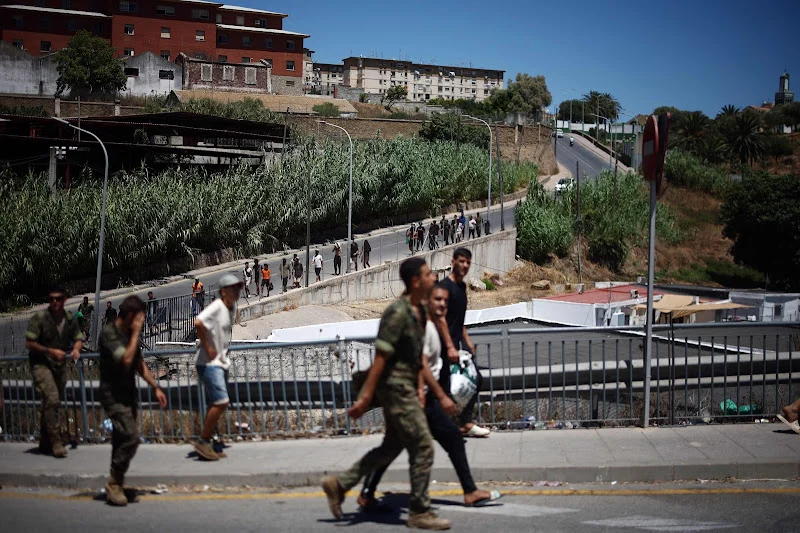
Spain also announced the deployment of 60 soldiers to reinforce border operations.
July 31: Death toll rises as Spain and Europe respond
Authorities estimated that approximately 60,000 people had crossed into Ceuta by land and sea over the previous 24 hours, temporarily increasing the city’s population of around 85,000 by more than half.
The reported death toll rose to 67, with many migrants believed to have drowned during the crossing.
Spain’s Interior Ministry said approximately 25,000 people had already returned to Morocco earlier that day before revising the total number of returns to around 48,300 by the evening.
Prime Minister Pedro Sánchez traveled to Ceuta to oversee the government’s response, stating that Moroccan authorities had informed him trafficking networks had deliberately misrepresented the Supreme Court ruling to encourage migration.
Diplomatic tensions intensified. European Commission President Ursula von der Leyen described the scenes in Ceuta as “unacceptable,” while French Interior Minister Laurent Nuñez announced France would tighten controls along its border with Spain. Sánchez criticized what he described as the “selfish” reactions of several EU member states.
Aug. 1: Floating barrier installed as political tensions deepen
Italy’s Interior Ministry, led by Matteo Piantedosi, announced a one-month suspension of Schengen free movement with Spain, introducing additional controls at air and sea entry points for non-EU travelers.
Meanwhile, Spain’s Civil Guard began installing a 500-meter floating barrier near the Tarajal breakwater, arguing that the measure would help restore immediate return procedures while complying with the Supreme Court ruling.
Businesses in Ceuta gradually reopened. The United States issued a Level 3 Travel Advisory urging Americans to reconsider travel to the area.
Far-right figures also traveled to Ceuta. Member of the European Parliament Alvise Pérez called for mass expulsions before being confronted by local residents and escorted away by police. Around 20 members of the neo-Nazi group Núcleo Nacional were similarly removed after clashes with residents.
Aug. 2: Death toll increases as the city begins to stabilize
The confirmed death toll rose to at least 72, including migrants who drowned and others reportedly killed during a stampede near a breakwater barrier.
Most of the estimated 60,000 arrivals had returned to Morocco, although some remained in the surrounding hills while Civil Guard vessels continued searching coastal waters for bodies.
Signs of normality gradually returned to Ceuta as shops, cafés, and restaurants reopened, even as debate continued over responsibility for the crisis.
Morocco’s Interior Ministry estimated that approximately 40,000 people had headed toward Ceuta during the week, a lower figure than Spain’s estimate of between 50,000 and 60,000.
The ministry rejected suggestions that the surge had been spontaneous, blaming misinformation spread through digital platforms, trafficking networks, and widespread misinterpretations of Spain’s Supreme Court ruling, which falsely convinced many people they could reach Europe without consequences.
Morocco also reported 11 deaths, substantially fewer than the figures released by Spanish authorities. The ministry noted that the narrow stretch of water separating Morocco from Ceuta—less than 70 meters wide at some points—made mass swimming attempts possible.
Aug. 3: Local backlash grows as EU coordination begins
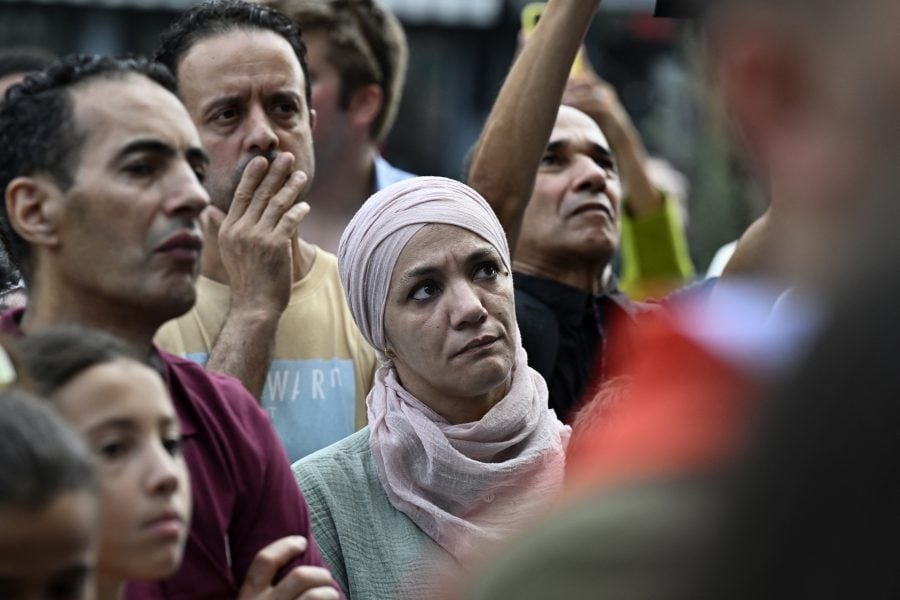
Hundreds of people gathered in Ceuta’s Plaza de los Reyes to demand tighter border controls, while a counter-demonstration—composed largely of Ceuta residents of Moroccan origin—called for preserving the city’s tradition of coexistence and rejected the narrative promoted by visiting far-right activists, including Vito Quiles and Alvise Pérez.
Meanwhile, 22 European Union heads of government sent a letter to European Commission President Ursula von der Leyen arguing that an earlier Spanish migrant regularization measure had acted as a significant “pull factor” behind the Ceuta crisis, broadening the debate beyond the Supreme Court ruling itself.
EU member states prepared to meet the following day to coordinate a bloc-wide response to the crisis.

add your comment
Terms of publication : Not to offend the writer, people, sacred things, or attack religions or the divine self, and refrain from racist incitement and insults.