
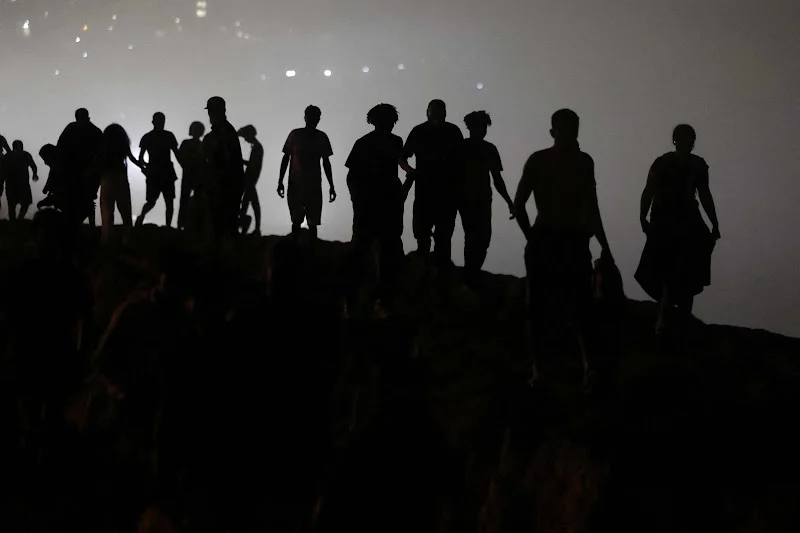
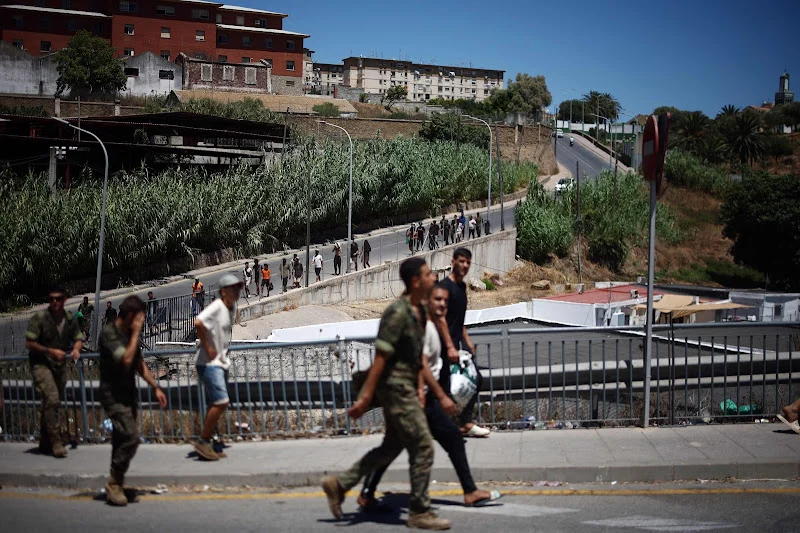
Spain’s National Court has opened a preliminary investigation into the recent mass irregular crossings into the Spanish enclave of Ceuta, while associations representing judges and prosecutors have called for the migration crisis to be handled in accordance with the rule of law and human rights, warning against using it to fuel anti-migrant rhetoric.
Investigating Judge María Tardón ordered the opening of a preliminary inquiry following a complaint filed by Iustitia Europa, a Spanish civil society organization that litigates cases it considers to be in the public interest and related to the defense of the rule of law.
The judge ruled that the complaint contained sufficient indications to warrant an investigation into whether criminal offenses may have been committed.
Tardón instructed the National Police’s Central Unit Against Illegal Immigration Networks and Document Forgery (UCRIF Central) to prepare a detailed report on the crossings into Ceuta, particularly those that took place on July 30 and 31.
Investigators have been tasked with determining whether the crossings were coordinated by a criminal organization or group, and with gathering all available information on individuals who may have participated in planning, organizing, or facilitating the operations.
The court also asked police to establish whether they possess information about any individuals or groups that may have encouraged or facilitated the crossings before deciding whether the National Court has jurisdiction over the case. The order has also been forwarded to Spain’s Public Prosecutor’s Office for review and any appropriate action.
In its complaint, Iustitia Europa argued that the mass crossings could constitute offenses related to crimes against state security, participation in a criminal organization, facilitating irregular migration, and failure to prosecute criminal acts. The organization called for an investigation into all those found to be involved, including individuals, public officials, foreign entities, or criminal networks.
The organization further argued that the events suggest the existence of an organized structure capable of mobilizing hundreds of people simultaneously. It cited the circulation of messages on digital platforms containing detailed instructions on crossing times and entry points as evidence warranting further investigation into whether the operation was coordinated.







add your comment
Terms of publication : Not to offend the writer, people, sacred things, or attack religions or the divine self, and refrain from racist incitement and insults.