
The recent surge in irregular migration attempts to the Spanish enclave of Ceuta is exacting a growing human toll, with unidentified migrants being buried, families searching for missing relatives and an increasing number of women and children risking the dangerous sea crossing.
Spanish newspaper El Faro de Ceuta reported that Moroccan authorities rescued a woman and her three children on Tuesday after intercepting them at sea while they were attempting to swim to Ceuta.
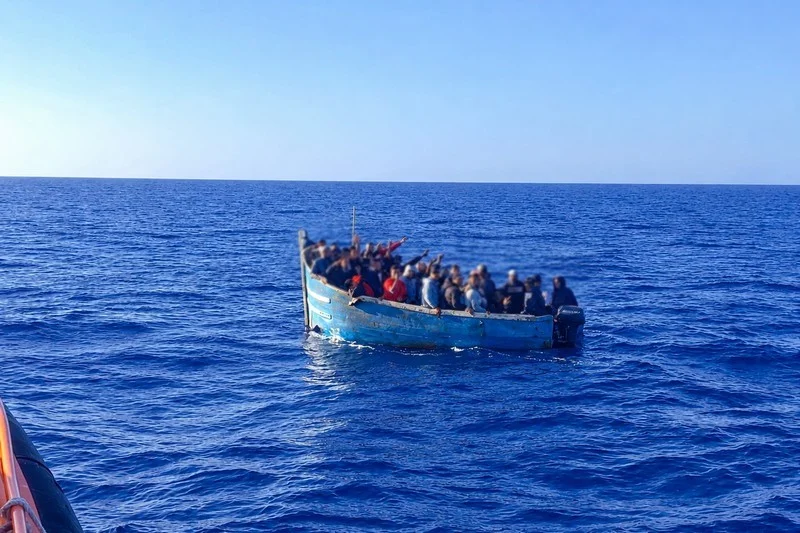
The rescue came as hundreds of migrants entered the water in a fresh wave of crossing attempts that stretched rescue operations on both sides of the border.
According to Spanish media, dozens of migrants entered the sea simultaneously early Tuesday, while dense fog hampered rescue efforts by Morocco’s Royal Navy and Spain’s Civil Guard.
As rescue operations continued, authorities in Ceuta buried two unidentified young men whose bodies had been recovered from the sea over the weekend. Officials said the victims had likely remained in the water for about a week, leaving their bodies too badly decomposed for visual identification.
Before the burial, Spain’s Civil Guard collected fingerprints and created forensic records in the hope that future DNA comparisons provided by relatives could eventually establish their identities.
Spanish authorities recovered four migrant bodies from waters surrounding Ceuta over the weekend alone, bringing the number of migrant deaths recorded in the area since the beginning of the year to 27, according to Spanish media. Eight of those fatalities occurred in July.
Meanwhile, reports of missing migrants continue to increase. Spanish media have published the names and photographs of several people, including minors, whose families say disappeared after leaving Morocco’s northern coast in an attempt to reach Ceuta. According to relatives, they have neither arrived in Spain nor returned home.
Authorities are urging families to formally report disappearances to police in Spain or their countries of residence and to provide DNA samples, particularly from mothers or siblings, to facilitate the identification of unidentified remains recovered at sea.
The latest fatalities follow one of the largest migration waves toward Ceuta in recent years.
Over the past several days, hundreds of migrants attempted the crossing. Morocco’s Royal Navy intercepted approximately 300 people at sea, while Spain’s Civil Guard rescued around 100 others. Spanish authorities said more than 50 migrants nevertheless managed to reach Ceuta’s coastline.
The renewed wave of crossings has underscored the continuing humanitarian risks along one of the Mediterranean’s shortest yet most dangerous migration routes, where even brief sea journeys can quickly become fatal due to strong currents, poor visibility and overcrowded rescue operations.





add your comment
Terms of publication : Not to offend the writer, people, sacred things, or attack religions or the divine self, and refrain from racist incitement and insults.