
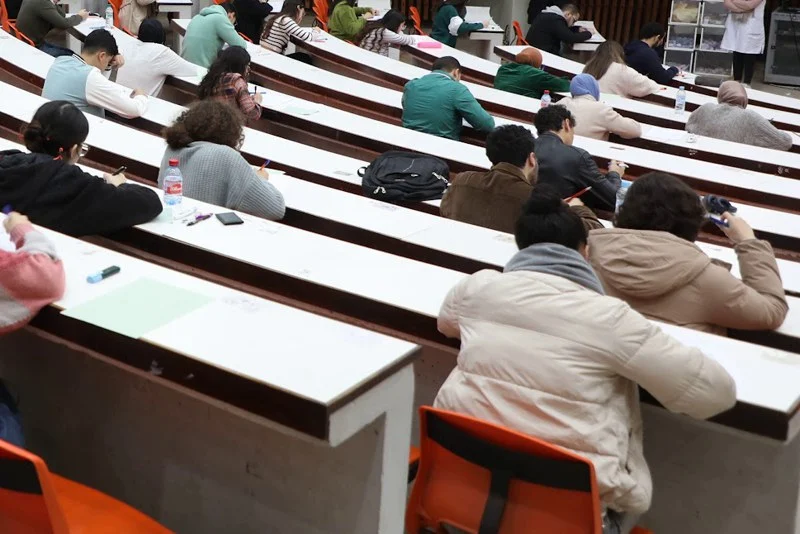
As Moroccan public universities move to introduce a unified annual fee of MAD 20,000 for flexible-schedule PhD programs, unionists and prospective doctoral candidates continue to push back, saying the policy undermines the principle of free public higher education.
The measure, set to take effect in the 2026-2027 academic year, is part of a nationwide fee structure for flexible-schedule programs that also sets annual registration fees at MAD 5,000 for Licence degrees, MAD 18,000 for bachelor’s programs, and MAD 15,000 for master’s degrees.
“The fees are an attempt to solve universities’ financial problems from citizens’ pockets,” Mustapha Azaitraoui, deputy secretary-general of the National Union of Higher Education and a university professor, told Hespress English.
He argued that “the government should instead seek alternative ways to finance universities and provide the funding needed to keep them operating.”
The MAD 20,000 annual fee for the first four years of flexible-schedule PhD studies first sparked backlash when Chouaib Doukkali University announced that it would apply the fee starting in the next academic year.
Social media users described the amount as excessive and warned that it could discourage scientific research in Morocco.
“If I had to pay MAD 20,000 a year over four years, I wouldn’t enroll,” said Saif Eddine Bouounat, an education professional who had considered applying to Chouaib Doukkali University before removing it from his list of options.
The controversy has since intensified after it was confirmed that the same fee would be introduced across all Moroccan public universities, following a recommendation by the Conference of Moroccan University Presidents.
The move also comes under Law 59.24, which Azaitraoui said union bodies had rejected, arguing that “it undermines free public education and was introduced without proper consultation.”
The legislation was approved by Parliament earlier this year, with Higher Education Minister Azzedine El Midaoui saying it was designed to improve the quality of higher education, strengthen scientific research, and enhance university governance as part of efforts to build the “university of the future.”
“Public universities should remain free and accessible to anyone wishing to pursue higher education,” Azaitraoui stressed.
Youssef El Kouari, deputy secretary-general of the National Union of Higher Education, rejected the decision, saying a “PhD is built on the academic relationship between a doctoral researcher and their supervisor and should not be subject to the same fee-based logic as other flexible-schedule programs.”
“Charging for doctoral studies would devalue the country’s highest academic qualification,” he emphasized.
The unified fee structure still needs approval by the governing councils of Morocco’s public universities before it can be formally adopted.
The Conference of Moroccan University Presidents also recommended in December 2025 that low-income students be exempted from tuition fees for flexible-schedule programs.




add your comment
Terms of publication : Not to offend the writer, people, sacred things, or attack religions or the divine self, and refrain from racist incitement and insults.