
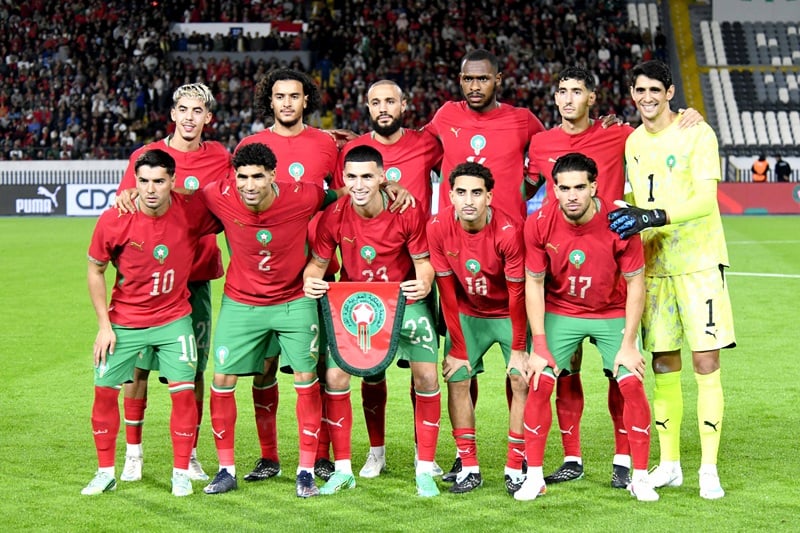
Morocco’s national football team faces its first real knockout-stage test at the 2026 FIFA World Cup when it takes on the Netherlands in what Moroccan coaches and football experts expect to be one of the tournament’s most competitive Round of 32 fixtures.
Despite the challenge posed by the Dutch side, the analysts believe the Atlas Lions have the quality to advance, provided they capitalize on their chances, maintain tactical discipline, and avoid costly defensive mistakes.
Former Morocco international and current coach Youssef Rossi said the Atlas Lions’ performances during the group stage demonstrated that they are capable of going deep into the tournament and potentially surpassing the historic achievement of reaching the semifinals at the 2022 World Cup in Qatar.
Rossi credited head coach Mohamed Ouahbi with quickly implementing a more flexible tactical approach despite having only a short time in charge.
Rather than relying primarily on defensive football and counterattacks, Morocco has adopted a more adaptable style, changing formations according to the flow of matches, he said.
The former international added that the team has shown greater technical maturity and mental strength, pointing to its ability to recover after conceding two goals in its final group-stage match.
Rossi described the Netherlands as Morocco’s first major test of the knockout rounds, noting that the Dutch side is built around possession football, high pressing, and players competing in Europe’s top leagues.
However, he argued that the Netherlands also has weaknesses that Morocco’s coaching staff can exploit.
According to Rossi, attacking efficiency will likely determine the outcome, as Morocco is expected to create fewer scoring opportunities than it did during the group stage.
“Knockout matches are usually decided by small details,” he said, stressing that Morocco’s forwards must make the most of every chance.
He also warned that defensive errors, which occasionally surfaced during the group stage, could prove decisive at this stage of the competition, saying the team that makes the fewest mistakes will likely advance.
Moroccan coach Abdessalam Sikabi also described the encounter as one of the strongest fixtures of the round, saying neither team enters as a clear favorite despite some observers giving the Netherlands a slight edge.
Sikabi said Morocco has already demonstrated its ability to defeat elite national teams and argued that qualification remains well within reach if the players maintain the defensive discipline and fighting spirit displayed throughout the tournament.
He predicted a balanced contest that could extend into extra time or even a penalty shootout.
Sikabi suggested Morocco would improve its chances significantly by scoring first and maintaining its defensive organization, while warning that conceding an early goal would favor a Dutch team known for managing games effectively after taking the lead.
He identified Morocco’s defensive solidity, led by Achraf Hakimi, Yassine Bounou, and Chadi Riad, along with the team’s pace on the counterattack and strong mentality in high-profile matches, as its principal strengths.
By contrast, Sikabi highlighted the Netherlands’ potent attack, which scored 10 goals during the group stage, as well as its ability to dominate possession, capitalize on set pieces, win aerial duels, and control midfield play.
He also warned that the Dutch are particularly effective at punishing defensive mistakes, requiring Morocco to remain fully focused from the opening whistle.
Despite acknowledging the difficulty of the challenge, Sikabi said Morocco possesses the necessary tools to reach the next round, citing its defensive organization, goalkeeper Yassine Bounou, quick transitions, and the experience many players have gained against top international opposition.
He concluded that Morocco’s path to the quarterfinals will depend on tactical discipline and clinical finishing, predicting the Atlas Lions could secure qualification either in regular time or through a penalty shootout if they maintain the same spirit and organization shown during the group stage.


add your comment
Terms of publication : Not to offend the writer, people, sacred things, or attack religions or the divine self, and refrain from racist incitement and insults.