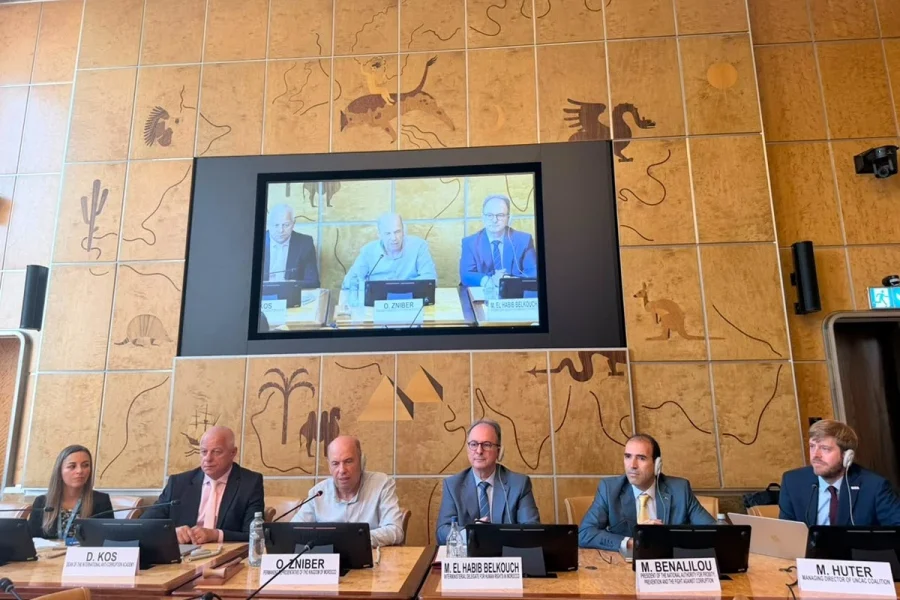
Morocco called on the United Nations Human Rights Council to treat corruption prevention as a tool for protecting fundamental rights, arguing that graft restricts access to justice, healthcare, education and public services.
Speaking at an event held during the council’s 62nd session in Geneva, ministerial human rights delegate Mohamed El Habib Belkouch said international institutions increasingly recognise the connection between corruption and rights violations.
Corruption has traditionally been addressed through governance reforms and criminal prosecution. Belkouch said that approach should be expanded to account for its direct impact on citizens, particularly women, children and marginalised groups.
Money lost through corruption, he said, deprives schools, hospitals, social programmes and other public services of funding, while weakening trust in institutions and widening inequality.
Belkouch cited the UN Convention against Corruption, the Marrakech Declaration and Human Rights Council Resolution 59/6, adopted in July 2025, which describes anti-corruption work and human rights protection as mutually reinforcing.
He said access to information, freedom of expression, public participation, accountability and the rule of law should also be treated as corruption-prevention mechanisms.
Morocco called for closer cooperation between anti-corruption bodies, human rights institutions, civil society and national reporting mechanisms, as well as stronger coordination between UN work in Geneva, Vienna and New York.



add your comment
Terms of publication : Not to offend the writer, people, sacred things, or attack religions or the divine self, and refrain from racist incitement and insults.