
Archaeologists found hundreds of animal bones, mostly from small animals like rodents, along with dozens of human-made stone tools, both dating back between 95,000 and 182,000 years, at the Jorf Lhmam site in the Bir Kouat area of Essaouira province.
The discovery is part of a research program bringing together researchers from Morocco’s National Institute of Archaeology and Heritage (INSAP), the University of Arizona, Harvard University, Aix-Marseille University, and Hassan II University in Casablanca.
The work on the microfauna was conducted by Sabah Boula, a PhD student at INSAP, while the dating techniques were supervised by Zohour Borqane, a researcher at the Luminescence Laboratory Dating, INSAP.
Abdeljalil Bouzouggar, director of the National Institute of Archaeology and Heritage (INSAP), told Hespress English that excavations at the Jorf Lhmam cave began in 2021 and revealed a site particularly rich in small animal remains, especially rodents, which are rarely found in such large numbers at other archaeological sites.
He said the finding is important because these species help researchers have an idea about past climate conditions, as their numbers can change with even slight temperature shifts.
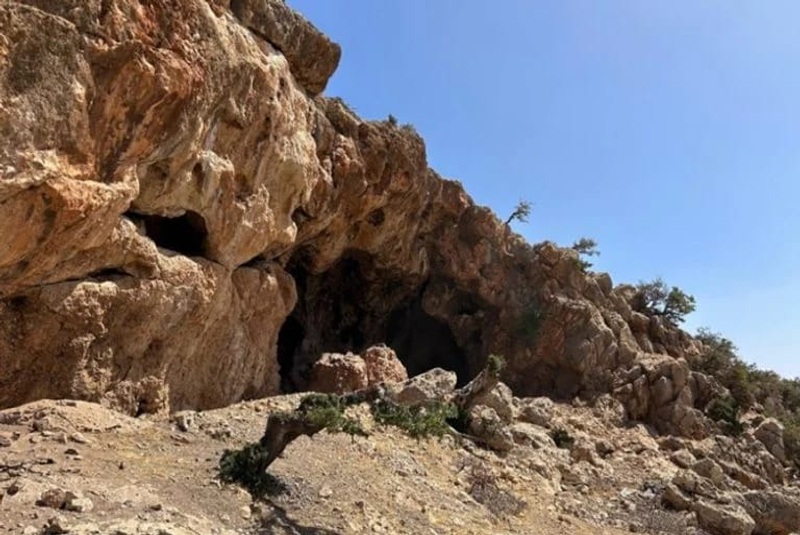
The excavations also found bones of extinct animals such as antelopes and deer, as well as remains of predators, alongside dozens of stone tools dating to the Middle Stone Age, he revealed.
Bouzouggar said the research team also worked with Morocco’s National Center for Energy, Science, and Nuclear Techniques in Maamora to date key archaeological layers to more than 95,000 years ago and over 182,000 years ago.
He said the findings are particularly important given the site’s proximity to Bizmoune Cave near Essaouira, where archaeological layers dating between around 150,000 and 142,000 years ago have also pointed to an ancient human presence in the region.
The expert noted that the findings, particularly from ancient fauna and small animal remains, show that animals moved between North Africa and sub-Saharan Africa when the Great Sahara was smaller and less arid, supporting the idea that North Africa was never fully separated from sub-Saharan Africa.
“Jorf El Hamam is so far the oldest Middle Stone Age archaeological sequence at the gates of the Great Sahara,” Bouzouggar emphasized.
He added that these animal movements may also help explain human migration patterns between the two regions, offering new insight into human activity over thousands of years.
Bouzouggar noted that the Great Sahara was not always the vast desert it is today but was once a greener corridor that allowed both humans and animals to move across the region, helping explain the presence of species associated with sub-Saharan Africa in North Africa.






add your comment
Terms of publication : Not to offend the writer, people, sacred things, or attack religions or the divine self, and refrain from racist incitement and insults.