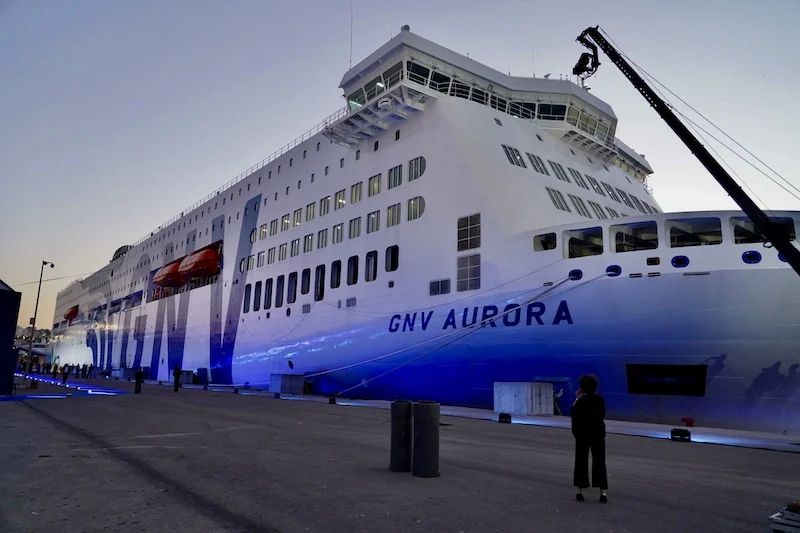
Morocco’s transport and tourism ministers highlighted the country’s maritime ambitions during the inauguration of the new ferry GNV Aurora at the Port of Tangier City on Monday, describing the vessel as a symbol of modern, sustainable transport and stronger connections between Morocco and Europe.
Speaking at the ceremony, Transport and Logistics Minister Abdessamad Kayouh said the launch marked the beginning of a new chapter in maritime mobility, economic development and international connectivity.
Built in 2026, the GNV Aurora belongs to a new generation of ferries designed to meet the challenges of 21st-century maritime transport, Kayouh said.
The vessel will operate alongside its sister ship, GNV Virgo, on routes linking Tangier Med with Barcelona, Genoa, Sète and Civitavecchia. The minister said these routes serve as strategic corridors connecting Morocco with its diaspora in Europe.
“These maritime links are more than commercial or transport routes,” Kayouh said. “They are human bridges connecting millions of Moroccans living abroad with their homeland.”
The minister added that the integration of GNV Aurora into Operation Marhaba 2026, Morocco’s annual program facilitating the return of expatriate Moroccans during the summer, would strengthen transport capacity on long-distance routes and improve comfort, reliability and service quality for travelers.
Kayouh said the launch comes as Morocco implements a new national maritime strategy aimed at developing an integrated, innovative and competitive maritime ecosystem.
With more than 3,500 kilometers (2,175 miles) of coastline, a strategic location along major global shipping routes and modern port infrastructure, Morocco has the potential to establish itself as a leading regional maritime power, he said.
The strategy includes expanding the commercial fleet, modernizing maritime administration, improving logistics competitiveness, encouraging innovation, developing maritime skills and accelerating the sector’s environmental transition.
Tourism Minister Fatim-Zahra Ammor said Italy represented Morocco’s fifth-largest tourism market, with more than 1 million visitors traveling to the kingdom in 2025.
Approximately 15% of Italian visitors arrive by sea, she said, adding that the new liquefied natural gas-powered ferry reflects Morocco’s commitment to more frequent, sustainable and efficient transportation links.
“The goal is not growth for its own sake,” Ammor said. “What matters is the value we create for local communities, businesses, employment and the quality of the visitor experience.”
She said the vessel would help promote Moroccan destinations and generate economic benefits for local communities, tourism operators and entrepreneurs.
The inauguration ceremony was attended by company executives, partner organizations, the Italian ambassador to Morocco, local officials and port authorities. The event included cultural performances and presentations showcasing the vessel’s features and capabilities.





add your comment
Terms of publication : Not to offend the writer, people, sacred things, or attack religions or the divine self, and refrain from racist incitement and insults.