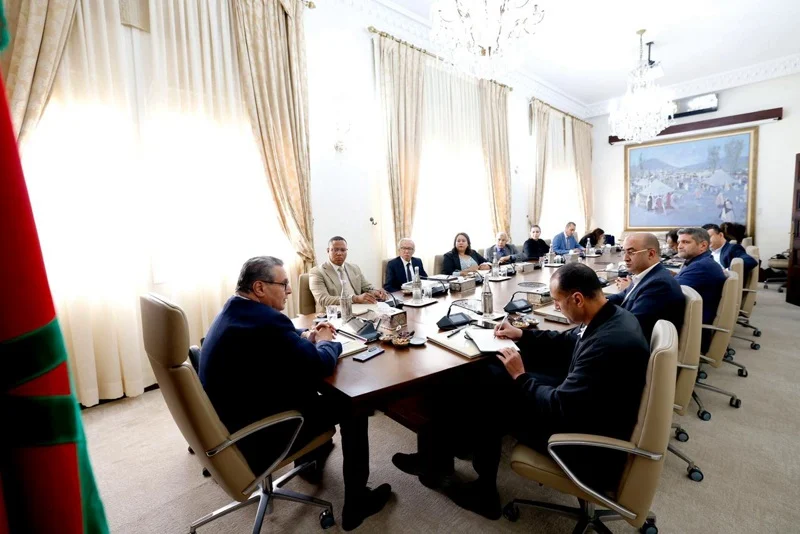
Moroccan Prime Minister Aziz Akhannouch said Thursday that building a social state cannot be achieved through slogans alone, stressing that strong economic foundations are essential to sustaining social reforms and public welfare.
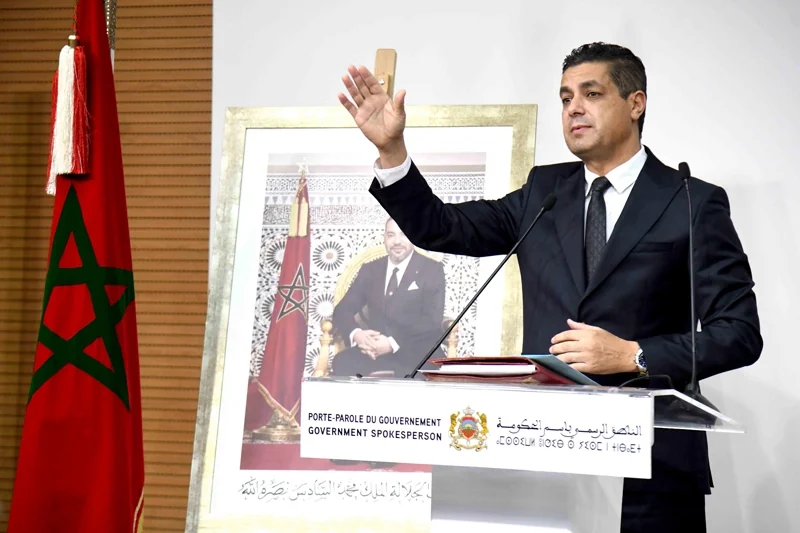
Speaking during a press meeting in Rabat, Akhannouch said his government’s success has come from maintaining what he described as a balance between economic strength and social responsibility.
“It is easy to make promises and seek public sympathy,” he said. “What matters most is having the means to deliver and preserving economic balances.”
Akhannouch said Morocco does not operate in isolation, but in coordination with major international institutions such as the International Monetary Fund, the World Bank and credit rating agencies.
He said maintaining positive economic indicators is necessary to preserve investor confidence and ensure the country can continue attracting financing and investment.
The prime minister also addressed controversy surrounding the government’s presentation of its midterm record in April, drawing a comparison with the previous administration led by the Justice and Development Party.
He said that government had failed to present a proper midterm review because its coalition lacked sufficient internal cohesion.
“The previous majority was not cohesive enough to agree on presenting a real government record,” Akhannouch said, referring to former Prime Minister Saad Eddine Othmani. “It was only presented at the end of July, as if the matter had ended without real public debate, just before entering elections.”
He said his government deliberately created space for broader public discussion by presenting its record earlier and encouraging citizens to examine both achievements and shortcomings.
“We took the necessary time to create real public debate, allowing citizens to follow the figures, assess what is positive and what is not,” he said.
Akhannouch said political parties and ministers must now play a larger role in explaining government performance and clarifying their positions ahead of the next electoral cycle, expected to intensify by the end of summer.
He described the government’s record as “positive and strong,” saying it had been presented in detail and remained accessible for public review.
Reflecting on the start of his administration in October 2021, Akhannouch said the government inherited difficult economic conditions as Morocco was still dealing with the aftermath of the COVID-19 pandemic.
He noted that borders did not fully reopen until February 2022, while the economy was facing factory shutdowns, shortages of raw materials, supply chain disruptions, rising transport costs and inflation.
Faced with those challenges, he said the government had two options: wait or act.
“We chose action,” he said. “We maintained the government program while adapting to urgent developments, especially inflation and the need to restart economic activity.”
He added that the government decided against cutting budgets and instead injected resources into the national economy to support recovery.
That included support for struggling businesses, restarting delayed projects, assisting the tourism and hotel sectors, reviving air transport and opening the market to low-cost airlines.
He also cited efforts to ensure continuity in essential public services and accelerate urgent infrastructure projects, including water connectivity programs.
As a result, Akhannouch said, the economy gradually regained momentum and tax revenues improved, allowing the government to prioritize investment and respond to urgent social issues in line with royal directives, particularly in health and education.
He said the administration adopted a practical approach based on clear “roadmaps” rather than relying only on long-term strategies, arguing that faster implementation was needed.
Those roadmaps, he said, covered multiple sectors and contributed to visible progress, especially in tourism and healthcare, through infrastructure improvements and the opening of new hospitals and medical centers.




add your comment
Terms of publication : Not to offend the writer, people, sacred things, or attack religions or the divine self, and refrain from racist incitement and insults.