
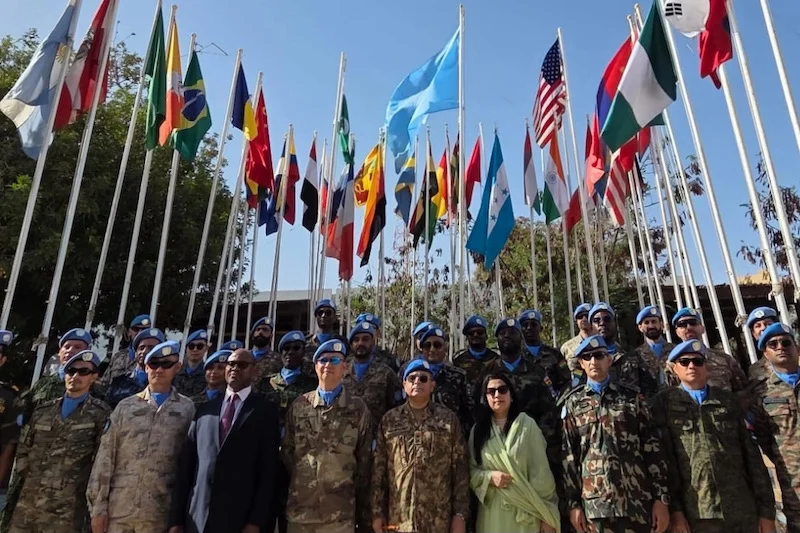
Alexander Ivanko, the U.N. secretary-general’s special representative and head of the U.N. Mission for the Referendum in the Sahara (MINURSO), visited Washington this week for a series of meetings with U.S. officials and international partners as part of ongoing efforts to advance the U.N.-led political process over the regional dispute in the Sahara.
According to the United Nations office in Washington, the visit focused on strengthening coordination over MINURSO’s mandate, reviewing field developments, and supporting diplomatic efforts aimed at reviving the stalled political process.
The visit comes at a significant moment, coinciding with preparations for a second key session scheduled for Thursday, during which the results of the strategic review of MINURSO’s mandate are expected to be presented.
The review has drawn wide attention within U.N. circles because of its potential implications for the future role and structure of the mission.
U.N. sources said the review is based on a series of field visits conducted in Morocco’s southern provinces, the Tindouf camps in Algeria, and Mauritania.
The aim, according to the sources, is to build a comprehensive assessment based on direct observation of all parties involved, while taking into account the security, humanitarian and political changes affecting the region.
The same sources previously indicated that briefings delivered by U.N. officials before the U.N. Security Council last week reflected a serious move toward reassessing MINURSO’s tasks as part of a broader evaluation process that has gained near-international consensus.
The final conclusions are expected to be presented during the council’s October session.
Observers say the assessment could mark a turning point in reconsidering MINURSO’s mandate, particularly regarding the nature of its responsibilities, operational mechanisms and field deployment.
Calls for updating the mission have grown in recent years as regional dynamics have shifted and questions have emerged over how to improve the effectiveness of U.N. resolutions on the issue.
The current U.N. efforts are part of broader attempts to restore momentum to the political process under U.N. supervision by creating conditions for renewed negotiations based on established international parameters.
The outcome of the review is being closely watched by Security Council members because of its direct impact on the future of the U.N. mission and its role in supporting a political settlement and regional stability.



add your comment
Terms of publication : Not to offend the writer, people, sacred things, or attack religions or the divine self, and refrain from racist incitement and insults.