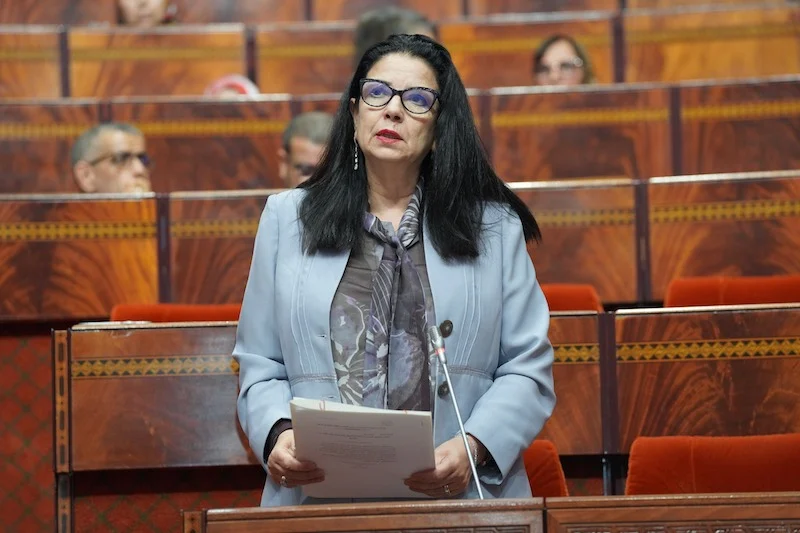
Digital Transition Minister Amal El Fallah Seghrouchni told parliament today that reviewing the country’s GMT+1 time system, remains “complex” and governed by “legal and institutional constraints,” as a renewed petition campaign calls for its cancellation.
Speaking during an oral questions session in the House of Representatives, Seghrouchni said decisions on legal time are not handled at sector level but are framed by existing laws and regulations, including the 1967 royal decree and a 2018 decree that added 60 minutes to standard time with seasonal suspension during Ramadan.
The remarks come as activists mobilise signatures for a petition seeking a return to GMT, reviving a debate that resurfaces regularly despite the system remaining unchanged since 2018.
Seghrouchni said assessing the impact of GMT+1 requires a “comprehensive approach” balancing economic integration needs with public expectations, adding that the government has adjusted working hours in public administration and school schedules to mitigate its effects.
The institutional framing underscores the limited scope for rapid policy change. Under existing rules, time setting is governed by regulatory texts rather than discretionary decisions, meaning any revision would require formal legal adjustment rather than administrative action.
The government has long defended GMT+1 on economic grounds, particularly alignment with European markets and the outsourcing sector, while critics point to social costs, especially for students and families during winter months.
Seghrouchni said the government remains aware the issue affects “daily life in all its dimensions,” but stressed that any decision would follow a participatory and legally grounded process aimed at ensuring stability in public policy.
In parallel, the minister outlined progress in digital infrastructure, saying more than 10,690 areas are now covered by mobile networks under the first phase of the national broadband plan, with a second phase targeting 2,000 additional rural zones in 2026.
She added that 5G services are now available in more than 50 cities, reaching about 7 million users, with operators expected to invest over 80 billion dirhams by 2035 to expand coverage to 85% of the population.










add your comment
Terms of publication : Not to offend the writer, people, sacred things, or attack religions or the divine self, and refrain from racist incitement and insults.