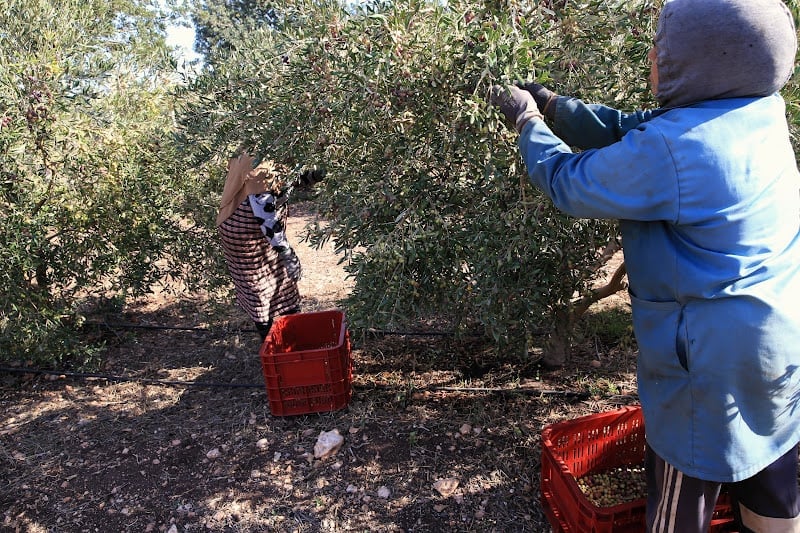
Agricultural researchers and farming experts in Morocco have presented the results of a nationwide program aimed at improving olive cultivation, reporting significant gains in productivity and farmer income while calling for expanded research and innovation in the sector.
The results of the Applied Field Platforms (PFD) program for olive farming during the 2024–2025 agricultural season were presented Thursday during an online meeting attended by researchers, agricultural engineers and professionals involved in the initiative known as Al Moutmir Initiative.
Participants described the program’s outcomes as positive, highlighting improvements in crop yields and farming practices across several olive-producing regions of the country.
The applied field platforms form a core pillar of the Al Moutmir initiative, which relies on ongoing research conducted by Mohammed VI Polytechnic University and other partners to promote best agricultural practices and sustainable development in Morocco’s farming sector.
At the end of the meeting, experts outlined several strategic recommendations aimed at strengthening national agricultural research and development.
Among the priorities identified was expanding studies on rational fertilizer use, particularly focusing on phosphorus, as well as evaluating the effectiveness of different fertilization methods, including soil-based and foliar applications.
Participants also emphasized the importance of studying micronutrients and their impact on improving the quality of olive production in several regions where the field platforms operate.
Other recommendations focused on water management, including the use of controlled deficit irrigation techniques and modern technologies to help farmers adapt to climate change.
Experts also called for increased agricultural mechanization, particularly in the harvesting of olives and in the deep application of fertilizers for fruit trees.
Since the launch of the Al Moutmir initiative, more than 7,300 olive field platforms have been established across Morocco.
During the 2024–2025 agricultural season alone, 391 new platforms were created across 23 provinces and 106 municipalities, covering all major olive-producing regions of the country.
Program officials said the initiative provided direct support to more than 241 farmers, while indirectly benefiting over 4,000 farmers through field schools and digital training programs.
The platforms were distributed across different production systems, with 73% located in irrigated areas, 16% in rain-fed regions, and 11% in mountainous zones, including the provinces of Azilal, Khénifra and Chefchaouen.
The platforms operate using an integrated technical framework known as the Integrated Crop Program (ICP).
The approach relies on four main components: efficient irrigation management, balanced fertilization based on soil analysis conducted by mobile laboratories, integrated crop protection and the use of specialized agricultural inputs.
The system is supported by digital and technological tools, including “Smart Blender”, a smart fertilizer production unit that creates tailored nutrient formulas, and “Agritrial,” a mobile application used for real-time digital monitoring of crops.
According to the results presented during the meeting, the applied field platforms significantly outperformed conventional farms using traditional practices.
Average yields reached 7.9 tons per hectare, compared with 6.3 tons per hectare in control fields, representing an increase of 25%.
Water productivity also improved, reaching 1.98 kilograms of olives per cubic meter of water, compared with 1.51 kilograms in traditional fields — an increase of 31%.
Farmers’ incomes also benefited. The average profit margin rose to 23,093 Moroccan dirhams per hectare, compared with 18,184 dirhams in conventional fields, representing a 27% increase in net income.
Researchers also reported improvements in plant growth and fruit quality. Vegetative growth of young branches increased by 15%, while the weight of every 100 olives increased by 14% compared with fields using traditional practices.
Several provinces recorded particularly strong results.
In Beni Mellal, yields reached 12.5 tons per hectare, compared with 8.5 tons in traditional fields, an increase of 47%.
In Taourirt, production reached 13.1 tons per hectare, compared with 11.1 tons in control plots, while Al Haouz Province recorded 11.1 tons per hectare, representing a 29% increase.
Similarly, Kelaat Sraghna achieved yields of 9.5 tons per hectare, exceeding traditional farms by 25%.
Researchers attributed these results to favorable climatic conditions combined with the accurate implementation of fertilization and crop protection techniques.
Experts said the long-term sustainability of Morocco’s olive sector depends on balancing economic, environmental and social factors.
Researchers from the National Institute for Agricultural Research and the African Plant Nutrition Institute said the economic dimension lies in improving farmers’ income and ensuring stable production, while environmental sustainability depends on better management of soil and water resources and protecting biodiversity.
The program also aims to strengthen rural development and support agricultural cooperatives, highlighting its social impact in olive-producing communities.
Participants concluded that stronger partnerships between research institutions, farmers and policymakers are essential to translate scientific findings into practical agricultural solutions and enhance the competitiveness of Morocco’s olive sector.







add your comment
Terms of publication : Not to offend the writer, people, sacred things, or attack religions or the divine self, and refrain from racist incitement and insults.