
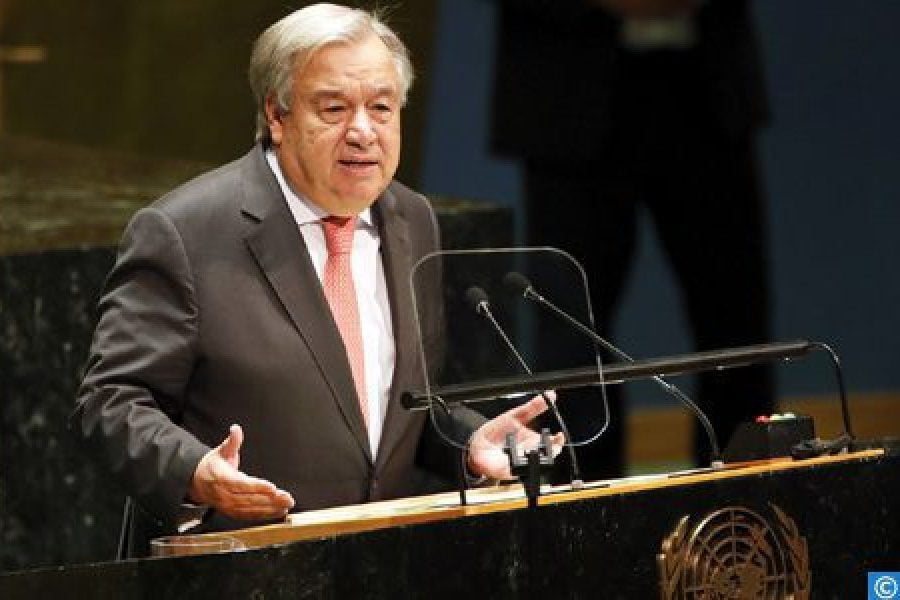
The United Nations said Wednesday that recent talks on the Moroccan Sahara held in Washington opened the door to deeper discussions but stopped short of any breakthrough, adding that major work is still needed on the core issue of self-determination.
U.N. spokesman Stéphane Dujarric said the talks took place on Feb. 23 and 24 and were co-chaired by Staffan de Mistura, the U.N. secretary-general’s personal envoy for the Moroccan Sahara, and Michael Waltz, the U.S. permanent representative.
The meetings were held in close coordination with the United States, which acts as penholder on the Sahara at the U.N. Security Council.
Dujarric said the talks also had “vital support” from Massad Boulos, a senior adviser to the U.S. president on Arab and African affairs.
According to the U.N., this was the third interministerial meeting on the Moroccan Sahara co-chaired since January, signaling a renewed diplomatic push around the long-running conflict.
“The negotiations saw in-depth discussions, taking as a basis Morocco’s autonomy proposal,” Dujarric told reporters, referring to the plan backed by Rabat and cited in United Nations Security Council Resolution 2797 adopted in 2025.
He described the talks as “encouraging,” but quickly added that they are far from resolving the dispute.
“Significant work will still be required, including on the key issue of self-determination for the people of Western Sahara, to reach a mutually acceptable solution to the conflict,” he said.
Dujarric also addressed questions about why de Mistura has not spoken publicly since the Washington meetings.
He pushed back against suggestions that the envoy was avoiding the media, saying the decision was linked to the sensitivity of the talks rather than any reluctance to face questions.
“I think he is like me, not afraid of microphones or cameras,” Dujarric said with a light tone. “But given how sensitive these discussions are, he decided not to speak publicly for now. When he feels he can, I know he will.”
This round of discussions looks different from past negotiation cycles, with the U.N. appearing to play a less visible role than before and the United States taking a more active lead in shaping and hosting the talks.




add your comment
Terms of publication : Not to offend the writer, people, sacred things, or attack religions or the divine self, and refrain from racist incitement and insults.